0% read
Last updated:
Samuel Chen
Samuel Chen is an entrepreneur and technology professional whose work has focused on artificial intelligence, blockchain, innovation, and finance. He is co-founder and director of KULA and previously served as Director of the Disruption Lab at the University of Illinois Urbana-Champaign's Gies College of Business. [6]
Education
Chen attended UCLA, where he earned a BA in Business Economics and a BS in Physics. He later earned his Master of Engineering in Applied and Engineering Physics. [5]
Career
Chen co-founded KULA in January 2022 and has served as a director since its establishment. His work at the firm has centered on investment opportunities involving technology, finance, and community development, with an emphasis on applications of AI and blockchain. From January 2021 to April 2025, Chen served as Director of the Disruption Lab at the University of Illinois Urbana-Champaign's Gies College of Business. In that role, he led a cross-disciplinary program in which students worked on projects involving AI, blockchain, extended reality, and robotics, while developing partnerships between academic and industry participants. His work at the lab combined strategy, product development, and emerging-technology applications. [4]
Interviews
KULA’s Story
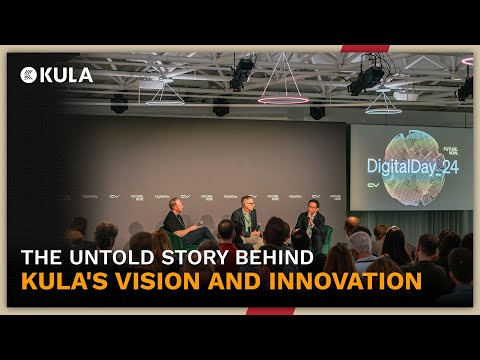
In a December 2024 fireside chat at Future Now's Digital Day event, Chen and co-founder Chris Turner discussed their backgrounds and the motivations behind their work in international development and blockchain. Chen described his experience with ineffective aid projects and explained how his background in astrophysics, algorithms, and AI influenced his interest in using blockchain to improve capital allocation and resource transparency, particularly in developing countries where asset ownership and resources can be difficult to track. The discussion examined how blockchain's transparency and immutability, along with smart contracts and decentralized autonomous organizations, could support community participation and decision-making in development projects. Chen and Turner also discussed challenges involving inefficient funding, community participation, and regulatory requirements, while emphasizing persistence in developing their approach. They cited a community project in Zambia as an example of the model's practical application, describing increased local incomes, microbusiness activity, and infrastructure development. [1]
Panels
Unlocking Off-Chain World
In a November 2025 panel at Taipei Blockchain Week, Chen participated alongside Henry Zhang of DigiFT, Bobby Sim of DatoDurian, and Daniel Kim of Tiger Research, with the discussion moderated by Caroline York of Serotonin. The panel examined potential real-world assets for tokenization, including unconventional and future-oriented assets, and compared the development of RWA markets across Asian jurisdictions such as Singapore, Japan, South Korea, and Taiwan. The speakers identified regulatory complexity, limited investor accessibility, and user-interface and experience issues as barriers to broader adoption, while noting that institutions and innovative projects were among the primary users of tokenized assets. They emphasized that the value of tokenization would depend on practical applications such as liquidity, collateral, and new financial products rather than tokenization alone. The discussion concluded with an optimistic outlook for an increasingly onchain financial system in which a wider range of assets could be tokenized, traded, and used through Web3 infrastructure. [8]

See something wrong?

Official Website:
Social Profiles: