0% read
Last updated:
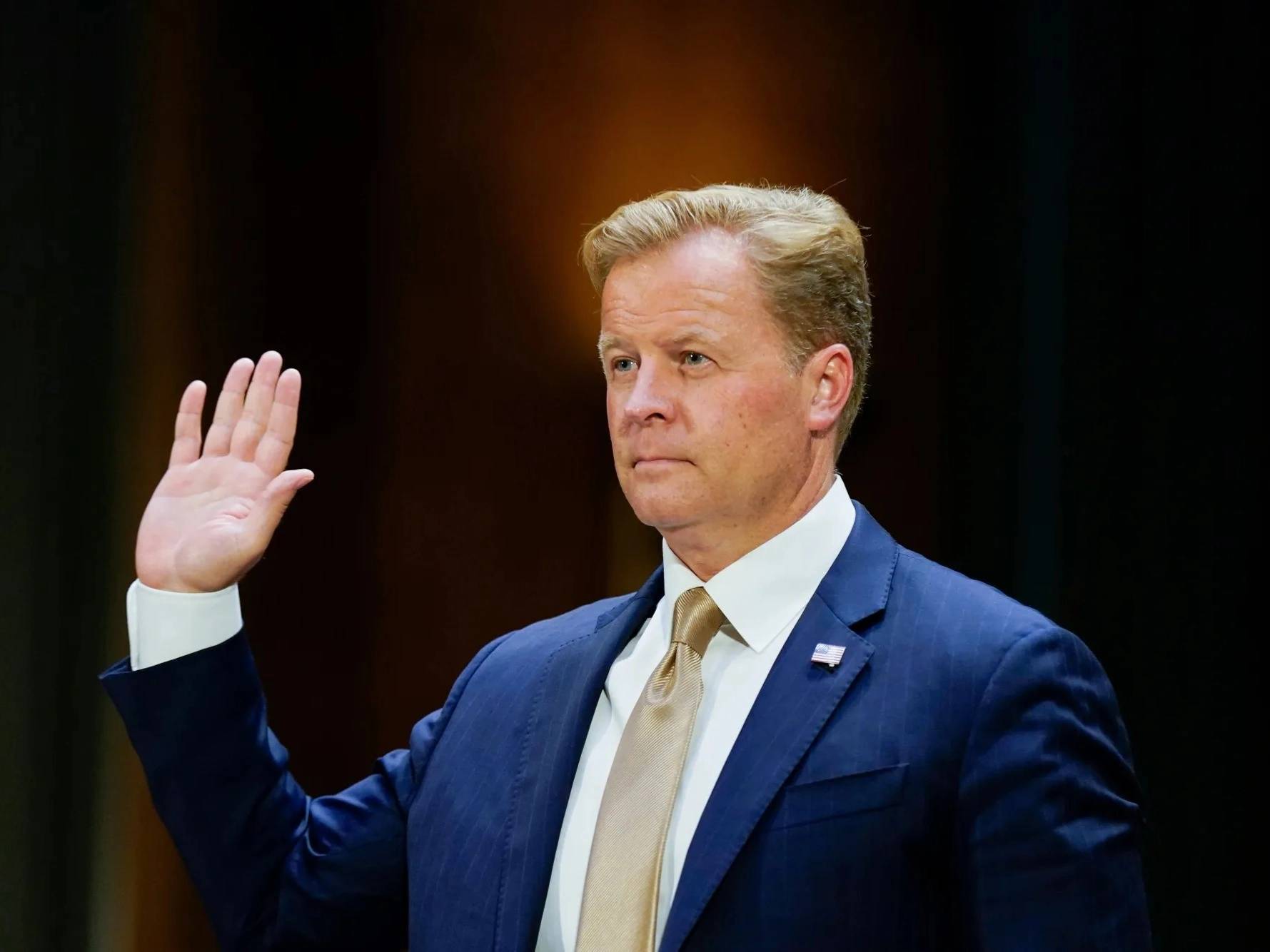
Brian Quintenz
Brian D. Quintenz is a member of the Board of Directors of Kalshi and he served as a Commissioner of the Commodity Futures Trading Commission (CFTC), where he played a significant role in advocating for innovative policies to foster growth in emerging financial sectors like cryptocurrency and prediction markets. [2]
Education
Brian Quintenz received a Bachelor of Arts (BA) from Duke University, where he studied from 1995 to 1999. He later earned a Master of Business Administration (MBA) from Georgetown University McDonough School of Business, attending the program from 2007 to 2009. [3]
Career
Early Career and Policy Roles
Brian Quintenz worked in public policy from 2001 to 2007 as a Senior Policy Advisor in the U.S. House of Representatives. During this period, he served as Senior Policy Advisor to Congresswoman Deborah Pryce and held the same position within the House Republican Conference, which served as a basis for later work with digital assets.
In 2009, Quintenz joined Hill-Townsend Capital LLC as a Senior Associate. There, he worked as a buy-side analyst for a U.S. equity long-short hedge fund focused on the financial sector. In 2013, he served as an Outside Consultant for Merrill Lynch Private Wealth. Later that year, he founded Saeculum Capital Management and served as its Founder and Managing Principal until 2016.
Commissioner at the Commodity Futures Trading Commission
In August 2017, Quintenz was nominated by President Donald Trump and confirmed by the United States Senate as a Commissioner of the U.S. Commodity Futures Trading Commission (CFTC). He served in the position until September 2021.
During his term at the CFTC, his work included matters related to financial technology, blockchain technology, decentralized finance (DeFi), and digital asset markets. He also addressed regulatory issues associated with emerging financial technologies and evolving market structures.
Venture Capital and Advisory Roles
After leaving the CFTC, Quintenz joined Andreessen Horowitz (a16z) as an Advisory Partner in September 2021. In December 2022, he became Head of Policy for the firm's crypto division, a role he held until October 2025. His responsibilities included policy-related matters concerning digital assets and cryptocurrency markets.
Quintenz has held advisory positions with several companies. He served as a member of the Advisory Council of Crypto.com from November 2021 to November 2022. In November 2025, he became an Advisor to Ubyx Inc.
He has also participated in financial technology initiatives involving digital assets, stablecoins, and blockchain-based financial services through advisory and investment-related activities.
Board Memberships
In November 2021, Quintenz joined the Board of Directors of Kalshi, a CFTC-regulated prediction market platform. His board service has coincided with the company's operations within the regulated prediction market sector. Discussions regarding a potential return to the CFTC drew attention to his position at Kalshi because of potential conflict-of-interest considerations.
Since January 2022, Quintenz has served as Chairman of the Board of Next Level Derivatives, LLC. In January 2026, he became a Director of Sui Group Holdings (Nasdaq: SUIG).
Industry and Regulatory Discussions
Quintenz has participated in public discussions concerning financial regulation, digital assets, financial technology, and prediction markets. His public statements have addressed regulatory frameworks, digital asset markets, and the distinction between regulated prediction markets and gambling activities.
Throughout his career, his work has involved both regulatory institutions and private-sector organizations operating in financial markets and financial technology. [1] [2] [3] [4] [5] [6] [7] [8] [9] [10] [11] [12]
Interviews
Discussion of U.S. Crypto Regulation #01
On January 27, 2023, Brian Quintenz appeared on the Thinking Crypto podcast to discuss topics including Web3, cryptocurrency regulation in the United States, digital asset markets, and recent events affecting the crypto industry.

During the interview, Quintenz discussed his transition to a16z Crypto and outlined his views on blockchain networks, digital assets, and Web3 technologies. He stated that these technologies could be used in areas such as digital identity, asset ownership, and online network participation. He also described a16z Crypto's focus on supporting projects and companies operating within the digital asset sector.
Quintenz addressed the failures of companies including FTX and Celsius, distinguishing those events from the operation of decentralized blockchain protocols. According to Quintenz, the issues associated with those firms were related to the activities of centralized organizations and should be evaluated separately from decentralized networks and open-source software systems.
The discussion also covered cryptocurrency regulation in the United States. Quintenz stated that existing regulatory frameworks do not fully address certain characteristics of digital assets and blockchain-based systems. He expressed support for regulatory approaches that focus on the activities of businesses and intermediaries, while considering the technical structure of decentralized protocols.
In addition, Quintenz discussed legislative and regulatory developments involving digital assets. He stated that regulatory uncertainty and enforcement actions have influenced the operating environment for cryptocurrency-related businesses and projects. The interview included discussion of potential legislative efforts involving digital asset markets and stablecoins, as well as the roles of federal agencies responsible for financial oversight.
The interview also examined topics related to decentralized autonomous organizations (DAOs) and privacy-focused technologies. Quintenz discussed legal questions surrounding the governance and regulatory treatment of DAOs, including issues related to organizational structure, liability, and compliance. He also commented on regulatory considerations associated with privacy-preserving software and digital asset transactions.
Toward the end of the interview, Quintenz discussed the participation of financial institutions such as BlackRock and Nasdaq in cryptocurrency-related activities. He stated that interest from these organizations reflected demand for digital asset products and services. The conversation concluded with a discussion of Web3 applications, self-custody, digital ownership, and the relationship between decentralized networks and traditional financial systems. [13]
Crypto Regulation and Agency Jurisdiction #02
In an interview published on September 20, 2023, on the Forward Guidance YouTube channel, Brian Quintenz discussed cryptocurrency regulation in the United States. As a former Commissioner of the U.S. Commodity Futures Trading Commission (CFTC) and Head of Policy at a16z Crypto at the time of the interview, he addressed regulatory jurisdiction, legislative proposals, derivatives markets, decentralized finance (DeFi), and international regulatory approaches.

During the discussion, Quintenz described the regulatory uncertainty surrounding digital assets, particularly regarding the respective roles of the CFTC and the U.S. Securities and Exchange Commission (SEC). He stated that the absence of clearly defined jurisdictional boundaries has created uncertainty regarding the classification and oversight of certain crypto assets.
Quintenz also discussed the application of existing securities laws to digital assets. He stated that many blockchain-based networks operate differently from traditional corporate structures and noted ongoing legislative efforts intended to define concepts such as decentralization and fully functional blockchain networks. According to Quintenz, these definitions may influence how particular digital assets are regulated under U.S. law.
The interview included comments on enforcement actions taken by U.S. regulatory agencies. Quintenz stated that some actions by the SEC and the CFTC extended beyond authorities that, in his view, had been expressly granted by Congress. He also referenced court cases involving challenges to regulatory decisions and discussed legal principles related to administrative agency authority.
In addition, Quintenz addressed cryptocurrency derivatives markets, including futures contracts linked to digital assets such as Ether. He discussed the relationship between asset classification and regulatory oversight, noting that regulatory determinations may affect the availability and structure of derivatives products. The conversation also covered decentralized finance protocols, the regulation of derivatives platforms, and the role of automated systems in market operations.
Other topics included fraudulent activity involving digital assets, such as deceptive token offerings and promotional practices. Quintenz discussed existing anti-fraud authorities and referenced legislative and regulatory discussions concerning advertising, disclosures, and liability for promotional activities related to crypto assets.
The interview also examined regulatory developments outside the United States. Quintenz referenced approaches adopted or considered by jurisdictions including the United Kingdom and the European Union, as well as discussions within international regulatory organizations regarding digital assets and decentralized finance.
The conversation concluded with a discussion of the negative oil futures prices observed in April 2020. Drawing on his experience at the CFTC during that period, Quintenz described market conditions surrounding the event and discussed the relationship between market structure, regulatory oversight, and risk management. [14]
See something wrong?