0% read
Last updated:
ETHGas
ETHGas is a blockchain infrastructure platform for the Ethereum network that structures transaction fees and blockspace into tradable assets. Founded by Kevin Lepsoe and launched on the mainnet in 2025, the protocol provides tools for faster transaction processing, real-time state updates, and market mechanisms to manage gas costs and block inclusion. [2]

Overview
ETHGas is a blockchain infrastructure project focused on creating a structured market for transaction fees and blockspace on the Ethereum network. It introduces systems that allow participants to reserve or trade blockspace in advance, thereby reducing uncertainty about transaction costs and confirmation times. By organizing blockspace allocation through commitments or pre-confirmations, the system attempts to provide greater predictability for traders, decentralized applications, and other network users. The platform also includes tools intended to manage gas fees within decentralized applications. These include mechanisms that allow applications to sponsor or reimburse transaction fees for users and potential hedging instruments that enable developers to lock in predictable gas costs. In addition, the model creates new participation opportunities for validators and other infrastructure providers by allowing blockspace to be sold or allocated in advance, forming a market-based approach to transaction inclusion and execution on the Ethereum network. [3]
ETHGas Foundation
The ETHGas Foundation is a decentralized, community-governed organization focused on improving the efficiency and accessibility of Ethereum’s infrastructure. It manages the $GWEI governance token to enable the community to participate in protocol decisions, fund ecosystem initiatives, and guide the development of real-time blockspace products. The foundation’s activities span validators, users, developers, protocols, and wallets, aiming to balance network incentives, reduce transaction friction, and create a more structured and liquid gas market through products such as preconfirmations, execution guarantees, and block purchases. By aligning economic incentives across participants, the ETHGas Foundation seeks to support sustainable growth and adoption of a real-time Ethereum ecosystem. [5]
Features
Realtime
ETHGas Realtime is a system designed to reduce transaction latency on the Ethereum network by providing rapid preliminary confirmations and continuous updates to blockchain state before blocks are finalized. Instead of waiting for the network’s typical block production time of roughly 12 seconds, the system streams interim updates—sometimes referred to as pre-confirmations or synthetic block times—at intervals as short as 50 to 100 milliseconds. These updates allow applications and users to see likely transaction outcomes while the final block is still being constructed.
The system operates through a block-building infrastructure that continuously processes transactions and broadcasts updated account balances and contract states. During block construction, transactions are grouped into interim “real-time” updates that are distributed through specialized nodes and RPC providers to decentralized applications and users. At the end of the block interval, the finalized block is submitted through Ethereum’s standard block proposal process. The architecture also includes a market mechanism that allows participants to acquire rights to sequence or build upcoming blocks, enabling specialized builders or agents to construct blocks and distribute pre-confirmation data to network participants. [7]
Open Gas Abstraction Initiative
The Open Gas Initiative is a program associated with ETHGas that aims to reduce the impact of transaction fees for users interacting with decentralized applications on the Ethereum network. The initiative allows participating protocols to subsidize or reimburse users' transaction fees, typically through periodic ether rebates. By shifting the cost of gas fees from individual users to application providers or ecosystem partners, the initiative seeks to simplify the transaction experience and reduce a common barrier to on-chain activity.
Under this model, decentralized applications can encourage specific actions—such as deposits, staking, or other interactions—by covering or reimbursing users’ gas costs. ETHGas aggregates transaction data and provides tools that allow participating protocols to track gas spending and manage rebate distributions. The approach is intended to support users onboarding and engagement while moving toward application-level fee management systems that reduce the visibility of gas fees in the end-user experience. [9] [10]
Blockspace Trading Platform
The ETHGas blockspace trading platform is a marketplace designed to allow participants to buy and sell access to transaction inclusion on the Ethereum network. The system converts blockspace—the limited capacity within each blockchain block—into standardized products that can be traded, such as guarantees for transaction inclusion or rights to entire blocks. By structuring blockspace in this way, the platform seeks to create a more organized market for allocating transaction capacity.
The platform is intended for both buyers and sellers of blockspace. Traders and decentralized applications can obtain execution guarantees to improve transaction reliability and timing, while validators and staking operators can sell blockspace access as part of the block production process. The model also introduces financial instruments linked to gas fees, such as products designed to hedge against fluctuations in base transaction costs, allowing participants to manage the risks associated with variable network fees. [4] [8]
ETHGas Rebates Program
The ETHGas Rebates Program is a system that returns a portion of transaction fees to users who interact with participating decentralized applications on the Ethereum network. Through partnerships with protocols and applications, users who pay gas fees for on-chain transactions may later receive rebates, which the platform tracks and can claim in a single transaction. The program also includes a points-based participation system tied to on-chain activity. Users earn points through transactions and other activities in participating applications, which may later be redeemed for rewards or incentives. The program is intended to encourage continued use of decentralized applications while offsetting some of the transaction costs associated with blockchain interactions. [11]
Products
Whole Block Commitments
A Whole Block commitment is a mechanism within the ETHGas system that allows a participant to purchase the exclusive right to control the contents of an upcoming block on the Ethereum network. By acquiring a whole block, the buyer can sequence and include transactions within that block up to the network’s gas limit, typically around 36 million gas units but adjustable by validators. This control allows the buyer to determine the ordering and inclusion of transactions during block construction.
After acquiring a block, the buyer may allocate portions of the blockspace to other users by selling transaction inclusion rights or execution guarantees in secondary markets. Buyers can also reserve specific portions of the block, such as priority positions at the beginning or end, while selling the remaining capacity. Whole block commitments may be purchased in advance of the block’s production, and participants who acquire them effectively act as block builders by managing transaction sequencing or delegating that role to other builders within the ETHGas infrastructure. [12]
Inclusion Preconfirmations
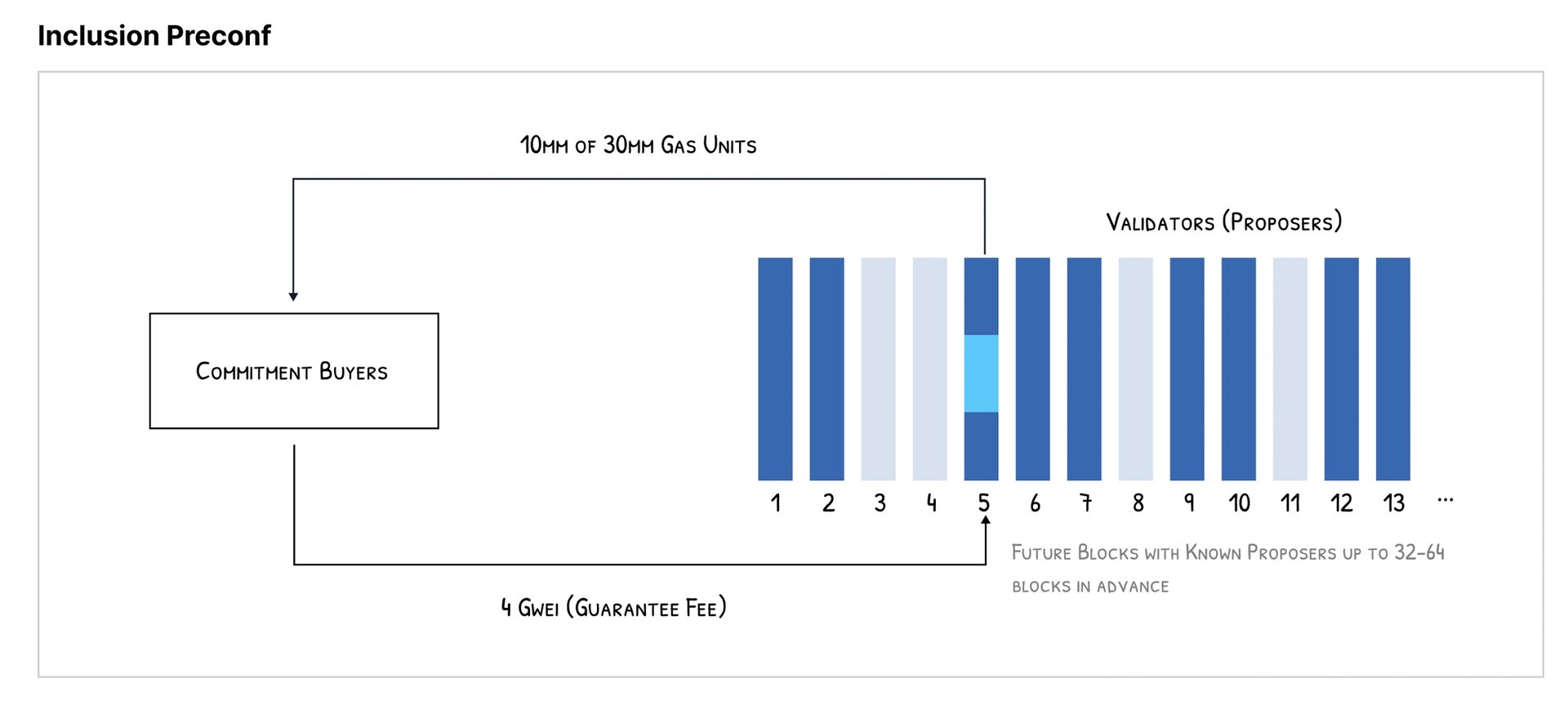
Inclusion Preconfirmations are commitments within the ETHGas system that guarantee a transaction will be included in a specific Ethereum block. Each preconfirmation covers a fixed amount of blockspace, such as 200,000 gas units, and may be placed anywhere within the block, but it does not guarantee the transaction’s execution outcome. Markets for Inclusion Preconfirmations are created when a validator or block proposer sells the preconfirmations in a primary market. Once issued, these instruments can be traded in secondary markets, allowing participants to buy or sell rights to block inclusion in advance. Inclusion Preconfirmation markets typically open up to 32 blocks in advance, providing a structured mechanism for securing predictable transaction placement. [13]
Execution Preconfirmations
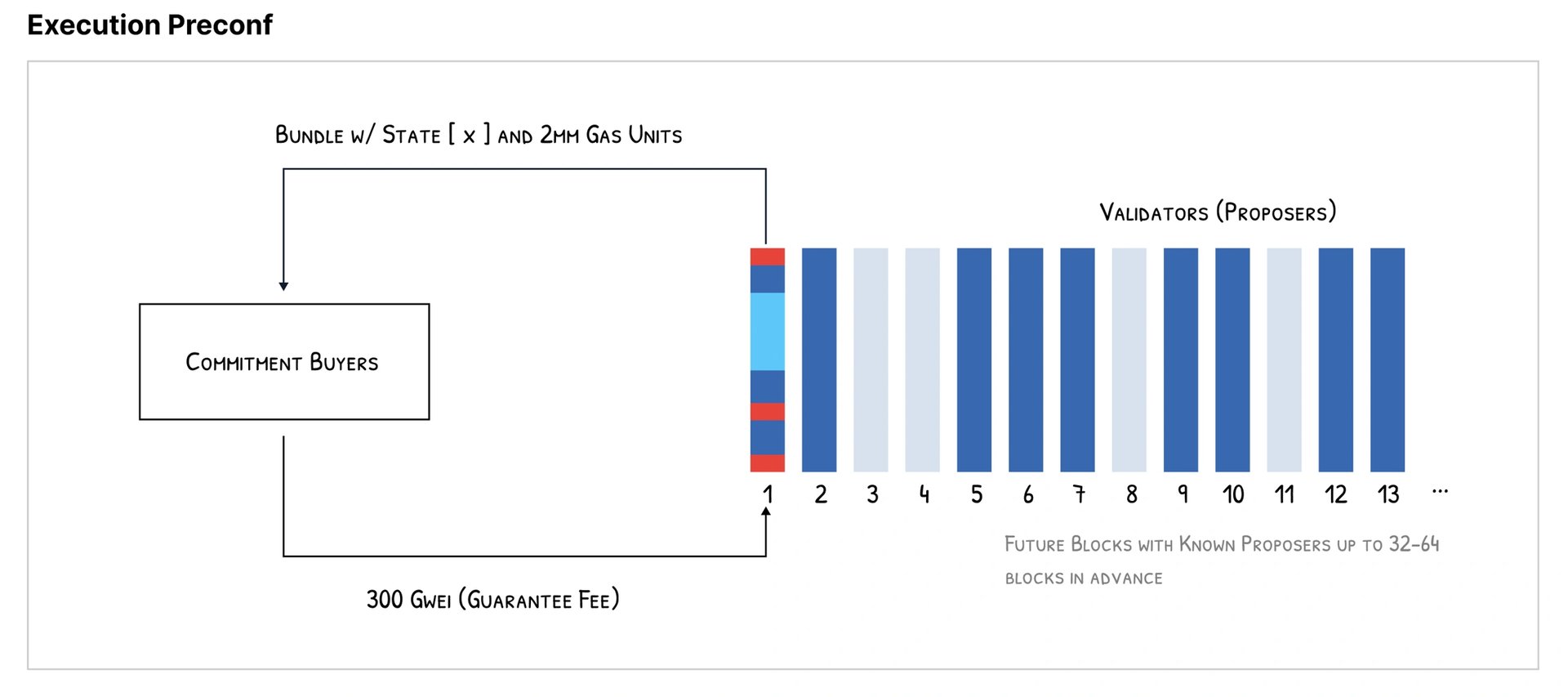
Execution Preconfirmations are an upcoming type of commitment in the ETHGas system that extends Inclusion Preconfirmations by guaranteeing a specific transaction outcome or state. These preconfirmations apply to particular trades or bundles and require a defined amount of blockspace to ensure that the proposed result is achieved. Markets for Execution Preconfirmations are structured as progressive auctions, allowing participants to secure both transaction inclusion and the associated execution guarantee. The auction mechanics are still being refined to optimize outcomes for buyers and proposers, with research ongoing to determine the most effective approach. [14]
GWEI
GWEI is the governance token for the ETHGas Foundation, designed to give the community control over protocol parameters and the development of the Realtime Ethereum system. It allows holders to participate in decision-making, propose changes, and vote on key aspects of the protocol, including fee structures, incentives, contract upgrades, and treasury allocations. Staked GWEI tokens generate voting power through a system called veGWEI, which grants influence proportional to the amount and duration of the stake. The governance framework supports delegation, enabling holders to assign voting rights to trusted representatives while retaining token ownership. This structure aligns long-term incentives with the health of the ecosystem, and the veGWEI community also oversees resource allocation and holds authority over emergency actions or protocol upgrades. [6]
Tokenomics
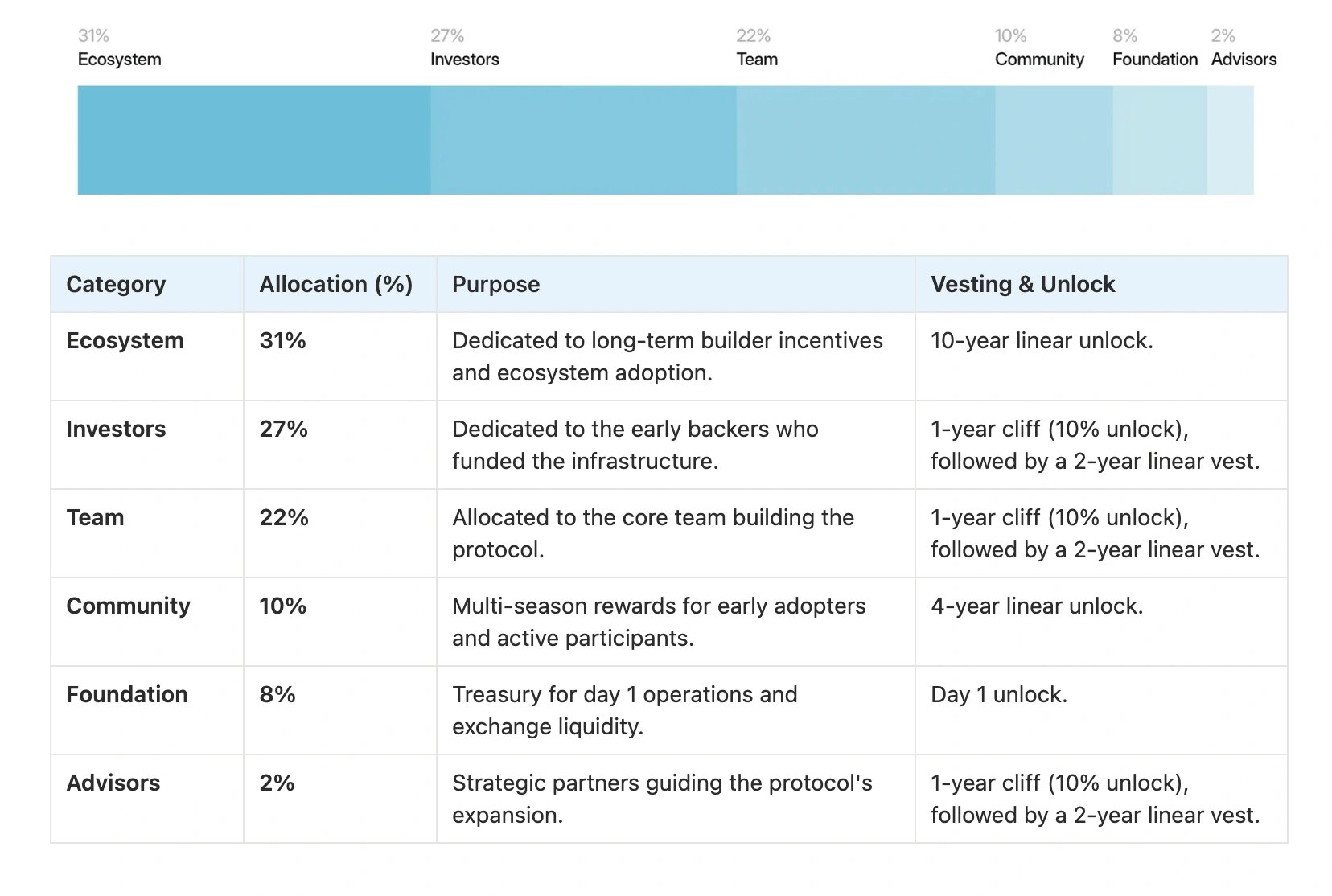
GWEI has a total supply of 10B tokens and has the following distribution: [6]
- Ecosystem: 31%
- Investors: 27%
- Team: 22%
- Community: 10%
- Foundation: 8%
- Advisors: 2%
Partnerships
- Kraken
- BlockDaemon
- Coinbase
- ClickHouse
- Blocknative
- GasHawk
- Quasar
- Titan
- RocketPool
- HashKey Global
- INFStones
- Figment
- Obol
- A41
- P2P
- Allnodes
- Kiln
- Stakely
- DSRV
- Finoa
- PierTwo
- Node Monster
- Validation Cloud
- Stake Fish
- Velvet Capital
- Pendle
- EigenLayer
- Ether.fi
See something wrong?
Official Website:
Social Profiles:
Founders:
Blockchains: