0% read
Last updated:
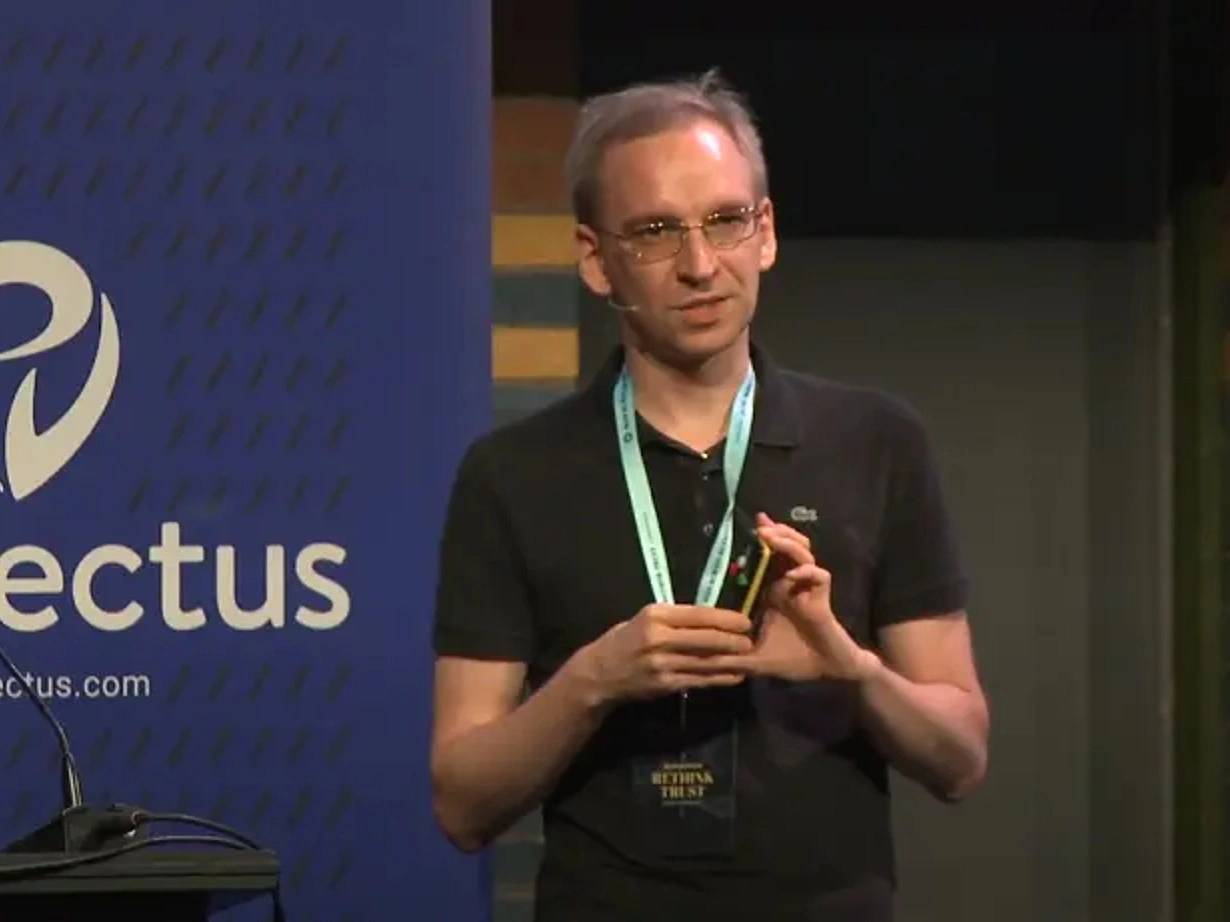
Michael Egorov
Michael Egorov is a software developer and entrepreneur who co-founded Curve, a decentralized exchange platform, in 2020. Before founding Curve, Egorov worked as a software developer for various companies and also served as a technical advisor for blockchain and cryptocurrency projects.[1][2]

Early Life & Education
Michael Egorov has a Bachelor's degree in Applied Mathematics and Physics from the Moscow Institute of Physics and Technology. He received a "Red" diploma with excellence for outstanding academic performance. Additionally, during his time at MIPT, he completed an Honours thesis in the area of ultracold atoms at the Lebev Institute.[3]
Continuing their academic pursuits, Egorov obtained a Doctor of Philosophy (Ph.D.) in Physics from Swinburne University of Technology from 2008-2011. His Ph.D. thesis focused on the Coherence and collective oscillations of a two-component Bose-Einstein condensate, showcasing their expertise in the field.[3]
Career
Michael Egorov is the current Chief Executive Officer of Curve Finance (curve.fi), a Swiss-based company that he founded in June 2020. Prior to this, he was the CTO of NuCypher, an encryption layer for Big Data that uses proxy re-encryption to enhance data security. Michael founded NuCypher in March 2015 and served as its CTO until June 2020. He also worked as a Postdoc Physicist at Monash University from 2011 to 2014, where he built a new Rb-K BEC machine. Michael has worked as a software engineer for various companies such as LinkedIn, WorkLifeGroup, Netagi, and VGTRK. He has experience in programming with Python and has worked on projects such as Django web development and configuration tools for hundreds of products deployed across tens of thousands of servers. Additionally, Michael was a Y Combinator founder of NuCypher in 2016.[3]
Curve
Egorov’s journey in the crypto industry began in late 2013 with the purchase of a small amount of Bitcoin. At the time, he was working as a post-doctoral researcher in physics, having recently obtained a Ph.D. in that subject. Later, they moved to the United States to work in the technology industry and gained extensive knowledge about cryptocurrency during this time.[5]
While working at NuCypher, Egorov recognized an opportunity with stablecoins, so he started working on Curve. He was the only person working on the project for the first months after launch. [[https://aexglobal.medium.com/talk-to-michael-egorov-know-more-about-curve-fi-bfcdab8213dd .][Medium]]
“The first challenge [while developing Curve] was to find a balance between decentralization, safety and speed of development. It took some time to build a good testing infrastructure, as well as it took a couple of vulnerabilities discovered to make sure we have good incident response practices. “
Curve Finance is a decentralized exchange liquidity pool launched in January 2020. It is built on Ethereum and designed for the efficient trading of stablecoins and Bitcoin.[2] The protocol's governance token, CRV, had an unusual launch on August 13, 2020. An anonymous developer using the Twitter handle @0xc4ad deployed the token and its associated DAO contracts before the official team could, announcing that they did so to "MAXIMIZE MY ALPHA!" After verifying the contracts were correct, the Curve team adopted the deployment as the official launch. The identity of @0xc4ad remains a mystery, with Egorov commenting in August 2025, "Good question! I still don’t really know today. Looks as hard to know as Satoshi’s identity." Since its launch, Curve has become a foundational component of DeFi's liquidity infrastructure.[7]
Egorov has focused on tackling what he calls "the last major barrier to true on-chain liquidity provision": impermanent loss (IL). He stated that IL is the primary reason liquidity for volatile trading pairs remains on centralized exchanges. To address this, he developed Yield Basis, a mechanism designed to make it viable for liquidity providers to support BTC pairs on decentralized exchanges. While the concept was not originally for Bitcoin, he said its market demand made it the "obvious first choice." He believes the same mechanism could later be applied to other assets like Ethereum or tokenized real-world assets.[6]
On October 10, 2025, a market crash left Curve’s CRV-long LlamaLend market around $700,000 underbacked. On April 26, 2026, Egorov proposed a permissionless recovery pool using Curve Stableswap, where impaired vault tokens could be traded around an estimated 71% solvency level. The proposal included fees and incentives and allowed for DAO participation, but did not require a DAO bailout; it described a proposed recovery mechanism, not a completed recovery.[10][11]
Swiss Stake AG’s original request for 17.45 million CRV in annual funding did not receive sufficient support in December 2025. An amended arrangement set an 8.725 million CRV first tranche for H1 2026, with later funding subject to review. In its March 2026 mid-term report, Swiss Stake described five functional team leads and proposed reducing projected security audit spending to CHF 900,000–1,000,000 from CHF 1.4 million, increasing Curve DAO’s protocol-fee share from 10% to 30%, and requesting a second funding phase for the remainder of 2026. Egorov’s April 12, 2026 summary also requested 8.725 million CRV for that phase, along with other funding. The second phase was requested, not established as approved by those proposals.[12][13][14]
Yield Basis
In early 2025, Egorov announced he was developing a new project called Yield Basis to mitigate impermanent loss for liquidity providers. In February 2025, it was reported that the project had raised $5 million at a $50 million fully diluted valuation. The fundraising sold 10% of the total 1 billion "YB" token supply.[8]
Yield Basis aims to make liquidity provision more profitable by modifying automated market makers (AMMs). The system uses 2x leverage, where liquidity providers borrow Curve's stablecoin, crvUSD, to double their position in a trading pool like BTC/USD. This leverage is intended to modify liquidity ratios in a way that could eliminate impermanent loss while doubling the trading fees earned by providers. To manage the costs of borrowing and rebalancing, Yield Basis uses Curve's CryptoSwap AMM to concentrate liquidity in active trading zones. Interest paid by those borrowing crvUSD, along with half of the AMM's trading fees, is used to cover rebalancing costs.[8]
The project initially targets tokenized bitcoin and ether holders. Backtesting of the model suggested an average APR of 20.5% between January 2019 and November 2024. As of February 2025, Egorov stated the project was in a "test-in-production" phase, with testing and audits underway. He noted that the system appears to be most profitable with less volatile "bluechip" assets rather than highly volatile ones like memecoins.[8]
Mainnet Launch and Development
Yield Basis launched on mainnet on September 26, 2025, with three initial Bitcoin-wrapper liquidity pools, each capped at $1 million in deposits.[15]
Following volatility after launch, Yield Basis introduced v2 pools and then developed v3 pools with shorter temporary redemption discount (TRD) recovery ranges. The project’s April 28, 2026 report described TRD as a temporary reduction in an LP position’s redemption value caused by pool imbalance after rapid Bitcoin price movements, distinct from impermanent loss. The report said Bitcoin’s fall from about $90,000 to $60,000 over several days produced TRD of up to about 17%, which recovered over about 11 weeks as Bitcoin reached about $76,000. Yield Basis reported BTC APY of 5.4–9.9%, $3.84 million in fees distributed to YB lockers, approximately 99% TVL retention, and no security incidents across the protocol or its dependencies. These performance and security figures were reported by Yield Basis, not independently verified here.[16]
In a November 10, 2025 post, Yield Basis attributed an internal fee-calculation issue to its oracle design, which affected profit and fee allocation during extreme volatility. The project said admin fees had been overcharged by 48.76 BTC compared with a corrected amount of 4.81 BTC, temporarily reducing the value of staked LP positions while unstaked holders received excess fees. It stated that it would return 43.95 BTC from overcharged admin fees and distribute YB emissions, then estimated at about 26 BTC, to affected staked LPs; the post described planned correction and compensation steps.[17]
Yield Basis’s April 2026 report said v3 and Hybrid Vault development aimed to shorten TRD recovery times and support scaling. A May 25, 2026 report said new pools were live, with most capacity reserved for migrations from older vaults; Yield Basis later said LP migrations had started. The new pools were reported to be generating fees, with their distribution subject to a further vote.[16][18]
Views and Philosophy
In an August 2025 interview, Egorov shared his perspectives on various aspects of the cryptocurrency industry.[6]
On Layer-2s and Innovation
Egorov expressed a reserved view on the excitement surrounding Layer-2 (L2) scaling solutions in 2025. He stated that their development has been a continuous process and that the progress seen in 2025 is not a sudden breakthrough. He commented, "L2 development has been underway for years now and they will keep advancing — I don’t see anything particularly special about 2025 in that regard."[6]
On Bitcoin and Ethereum
Egorov sees Bitcoin's primary role as a form of "digital gold" rather than a medium for daily transactions, stating, "I have a hard time picturing it being widely used for casual everyday payments like buying coffee." In contrast, he envisions Ethereum becoming a foundational layer for the global financial system, similar to how Linux operates "under the hood" of critical infrastructure without most users being aware of it.[6]
On Decentralization and Development
According to Egorov, full decentralization is the most effective defense against regulatory pressure. "If you truly don’t control the platform, then by definition, neither can anyone else," he said. He also highlighted the challenges of this model, particularly the need for extreme diligence when building immutable smart contracts, as there is no "luxury of patching up security holes later." From his experience running Curve, he learned to be cautious with external integrations, noting that while composability is a strength of DeFi, it also increases the risk surface. On the community side, he believes that "Good community management and fast technical support make for very effective marketing."[6]
Legal Matters
In January 2025, a lawsuit filed against Michael Egorov by venture capital firms ParaFi, Framework Ventures, and 1kx was dismissed in California. The lawsuit, filed in the Superior Court of California, County of Alameda, alleged fraud and misappropriation of trade secrets. The plaintiffs claimed they were owed CRV tokens and an equity stake in Curve's Swiss entity. On January 15, 2025, the California Court of Appeal affirmed the dismissal because California lacked personal jurisdiction over Egorov; it did not decide the merits of the investors’ claims. The ruling also left in place the discharge of a US$60 million writ of attachment against Egorov's assets. An attorney for the plaintiffs said in January 2025 that a separate Swiss case remained ongoing.[19][20]

See something wrong?