0% read
Last updated:
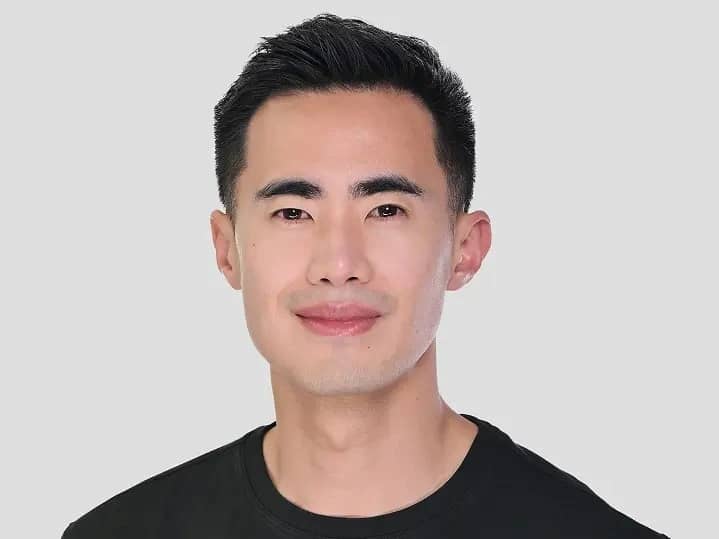
Min Lin
Min Lin is a cryptocurrency and blockchain industry executive who has held positions at Binance, Bitget, and Ondo Finance. His professional background includes work in global markets, business development, and digital assets. At Ondo Finance, he is involved in the company's activities related to blockchain-based financial products and services. [1] [2] [3] [7]
Education
Min Lin attended César Ritz Colleges Switzerland, where he completed a Bachelor of Business Administration (BBA) between 2005 and 2008. [7]
Career
Goldman Sachs
Min Lin worked at Goldman Sachs from 2016 to 2021 in Hong Kong. During this period, he held the positions of Vice President and Executive Director within the Client Coverage Group of the Global Markets Division, as well as the Corporate Services and Real Estate Division. His work at the firm included activities related to financial markets and regulatory compliance, which served as the basis for later work with blockchain.
Binance
Lin joined Binance in 2021 as Executive Director and Global Head of Business Development. His responsibilities included business development and the company's global partnerships.
From February 2023 to July 2024, he served as Regional Vice President and Head of Latin America. In this position, his work focused on the company's operations and business development in Latin American markets, including efforts related to user experience and regional expansion.
Bitget
In July 2024, Lin became Chief Business Officer at Bitget. He held the position until January 2026. His responsibilities included business development and the expansion of the company's activities in selected markets.
Ondo Finance
In January 2026, Lin joined Ondo Finance as Managing Director and Head of Global Business Development. His responsibilities include global business development and activities related to the use of blockchain technology in financial markets.
His work at Ondo Finance has included discussions surrounding tokenized financial assets, such as tokenized stocks and exchange-traded funds (ETFs), and their use within financial markets. He has also discussed the application of blockchain technology to financial transactions and the relationship between traditional finance (TradFi) and decentralized finance (DeFi).
Lin's professional experience spans traditional financial services and the cryptocurrency and blockchain sectors. His roles at Goldman Sachs, Binance, Bitget, and Ondo Finance have covered financial markets, business development, regional operations, partnerships, and blockchain-based financial products. [2] [1] [3] [4] [5] [6] [7]
Interviews
Tokenization and the Future of Finance #01
On August 7, 2026, Min Lin, Managing Director of Global Business Development at Ondo Finance, appeared on Gatecast EP4, a program published by the Gate Group YouTube channel. The interview covered tokenized real-world assets (RWAs), institutional participation in blockchain-based financial products, and the relationship between traditional finance (TradFi) and decentralized finance (DeFi).

Lin described blockchain-based settlement as an alternative to processes used in traditional financial markets, citing ledger-based recordkeeping and shorter settlement times. He also discussed the adoption of blockchain by financial institutions and attributed the slower adoption of new technologies in TradFi to established practices involving compliance, risk management, and operational infrastructure.
The discussion included Ondo Finance's tokenized yield products. Lin described OUSG as a product intended for accredited investors and USDY as a tokenized yield product available to non-U.S. investors subject to applicable compliance requirements. According to Lin, USDY is backed by U.S. Treasury-related assets and distributes the resulting yield to its holders.
Tokenized stocks and exchange-traded funds (ETFs) were another subject of the interview. Lin referred to the U.S. equity market as having a value of approximately 1 billion in total value locked at the time of the interview. He described Ondo's use of a just-in-time mint-and-redeem mechanism, through which transactions can access liquidity from traditional financial markets without requiring equivalent inventories to be maintained on-chain.
Lin also discussed regulatory developments affecting tokenized assets. He referred to changes in the regulatory environment in the United States and mentioned frameworks and initiatives in jurisdictions including Switzerland and Europe. He stated that regulatory treatment varies between jurisdictions and that definitions and classifications for tokenized financial instruments remain under development.
Another topic was the use of tokenized assets beyond their representation on blockchain networks. Lin discussed interoperability, composability, and the use of tokenized securities within other financial applications. As an example, he referred to the use of tokenized stocks and ETFs as collateral for perpetual trading, which would allow users to retain the tokenized assets rather than converting them into stablecoins before using them as collateral.
The interview also covered the geographic expansion of tokenized financial products. Lin identified developing and underserved markets as areas where access to traditional brokerage services can be more limited. He described tokenization as a mechanism for providing access to U.S. stocks and ETFs through blockchain-based representations. He also discussed liquidity as a factor in the execution of larger transactions and explained that Ondo's model connects token issuance and redemption with liquidity from traditional financial markets.
Regarding the future of decentralized finance, Lin stated that permissionless financial infrastructure could become more prevalent within three to five years as traditional financial institutions continue adopting blockchain technology. He also stated that banks were likely to adapt their business models to blockchain and digital assets rather than become obsolete. In the interview's closing discussion, he identified tokenized stocks and ETFs as an area with further room for development and described 24-hour trading and settlement as an ongoing direction for financial markets. [8]
Min Lin on the Future of Tokenized Markets #01
On August 12, 2026, Min Lin, Head of Global Business Development at Ondo Finance, participated in an interview published by the Korean YouTube channel Exilist. The discussion covered tokenized financial assets, Ondo Finance’s product development, decentralized finance (DeFi), institutional participation, and the adoption of blockchain-based financial infrastructure.

Lin described Ondo Finance’s tokenization model as permissionless and designed to interact with DeFi applications. He explained that tokenized assets can be used in financial applications such as lending, borrowing, collateralization, and margin trading. According to Lin, this structure differs from tokenization models operated through permissioned systems.
The interview also addressed the development of products combining tokenized securities with perpetual contracts. Lin described this product structure as part of Ondo Finance’s plans for an on-chain prime brokerage platform, in which spot positions and derivative positions can be managed through connected infrastructure. He cited hedging and basis trading as examples of strategies that could be conducted using the same platform.
Lin discussed the introduction of 24/7 minting and redemption for tokenized assets. He stated that continuous availability could allow users to respond to market developments outside conventional equity trading hours and could contribute to price discovery during periods when traditional markets are closed. The system was described as using fully collateralized assets and an order-based trading structure rather than relying solely on automated market maker pools.
Regarding tokenized equities, Lin distinguished between representing a conventional security on a blockchain and adding functions that are not generally available through traditional brokerage accounts. He cited peer-to-peer transfers, DeFi lending and borrowing, and artificial intelligence applications as examples. He also referred to potential applications involving portfolio construction and automated rebalancing.
The interview covered the relationship between traditional financial institutions and DeFi. Lin stated that he did not expect decentralized finance to completely replace traditional financial institutions, describing the two systems as likely to continue interacting. He also discussed institutional experiments with tokenized financial products and identified voting rights as one area in which tokenized securities can differ from conventional securities.
Lin referred to Ondo Finance’s work with Broadridge in connection with proxy voting for tokenized securities. He explained that some tokenized products track the economic characteristics of underlying securities, such as prices, dividends, and corporate actions, without providing the same voting rights associated with direct ownership. The initiative was presented as an effort to address this difference for investors holding larger positions.
The discussion also covered adoption in Asian markets, including Japan, South Korea, and Taiwan. Lin cited demand for access to equities that may not be readily available to investors outside their domestic markets. He described tokenization as a mechanism that could facilitate access to such securities across jurisdictions, subject to the regulatory requirements applicable in each market.
In discussing the longer-term development of tokenized securities, Lin stated that he expects the distinction between tokenized and traditional assets to become less relevant if financial markets increasingly adopt blockchain-based infrastructure. In this scenario, both forms would operate on common on-chain systems, with the distinction between traditional and tokenized securities becoming less pronounced. [9]
See something wrong?
Official Website:
Social Profiles: