0% read
Last updated:
Red Sheehan
Bradley "Red" Sheehan is a protocol research analyst, software engineer, and researcher specializing in base-layer blockchain protocols, decentralized systems, and Web3 infrastructure. As a protocol research analyst at Messari, his work focuses on cryptography, crypto network design, and the integration of real-world assets (RWAs) into decentralized finance. [1]
Education
Sheehan graduated from the University of Miami with a BE in Computer Software Engineering in 2019. [2]
Career
Sheehan began his professional career in 2019 as an information technology engineer at Bacardi, a role he held until early 2022. He worked on marketing technology systems and related IT infrastructure, supporting internal corporate technology operations. In 2021, while still at Bacardi, Sheehan began working as a self-employed software developer, focusing on Web3 technologies and systems programming with languages including Rust. His entry into the crypto space was driven by freelance Web3 development work, which led him to engage with smart contracts and decentralized systems. His interest gradually shifted from application-level development toward protocol research and education.
In 2022, he co-founded MoonLab, a Web3-focused agency, where he served as chief technology officer until 2023, overseeing all technical development. Concurrently from 2022 to 2023, he worked as a contract educator with BeMyApp, where he designed and delivered training sessions, tutorials, and workshops to help traditional software developers transition to Web3 development concepts and tools. He has stated that he has organized, hosted, and lectured at dozens of educational crypto events and stewarded several in-person communities. Since September 2022, Sheehan has been a protocol research analyst at Messari. In this capacity, he conducts research and analysis of blockchain protocols, crypto networks, and system design, with a particular focus on base-layer infrastructure. In addition to his role at Messari, his professional profile also lists an on-chain affiliation with Taproot Wizards and a data affiliation with Bitcoin Layers. [2] [4]
Interviews
Red’s Background
In a March 2024 interview on the GRTiQ Podcast, Sheehan discussed his background in electrical and software engineering and his early interest in programming, which began during his secondary education. He described his entry into the crypto space in late 2021 through freelance Web3 development work, which led him to engage with smart contracts and decentralized systems. Sheehan explained that his interest gradually shifted from application development toward research and education, influencing his decision to focus on protocol-level analysis.
During the interview, Sheehan outlined his work as a protocol research analyst at Messari, where he focuses on base-layer blockchain networks rather than applications built on top of them. He discussed broader themes, including decentralization, privacy, censorship resistance, and the likelihood of a multi-chain future shaped by social coordination and experimentation. The conversation concluded with reflections on the importance of sustained engagement with ideas and ongoing evaluation of emerging crypto systems. [5]

Presentations
Institutional DeFi and RWA
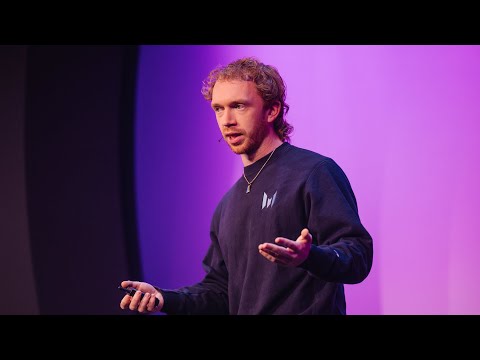
At XRP Ledger APEX 2024 in July, Sheehan delivered a presentation examining transparency challenges in decentralized finance and the growing role of real-world assets within on-chain systems. He outlined the concentration of DeFi activity on Ethereum and EVM-compatible networks and defined real-world assets as off-chain instruments tokenized on-chain, highlighting their continuous market access and expanded participation. The presentation addressed regulatory and compliance constraints affecting RWAs and stablecoins, including issuer controls and jurisdictional differences in stablecoin adoption, and discussed how stablecoins contribute to liquidity and total value locked across DeFi ecosystems.
Sheehan also examined the requirements for integrating RWAs at scale, including on-chain issuance models, identity and compliance mechanisms, and the factors influencing institutional participation, particularly in tokenized government securities. Additional discussion covered decentralized physical infrastructure networks as a related area of development and assessed the XRP Ledger’s technical capacity to support RWA-focused applications amid regulatory and demand-related challenges. [7]
Panels
Beyond the Base Layer
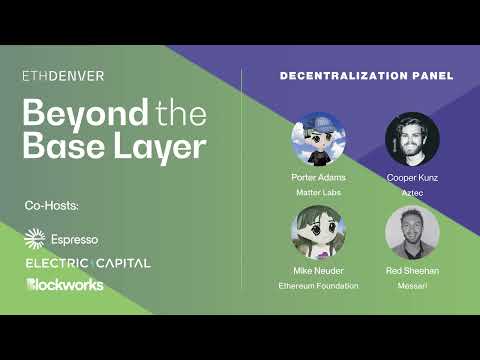
At ETHDenver in March 2024, Sheehan participated in a panel discussion alongside Porter Adams of Matter Labs, Cooper Kunz of Aztec, and Mike Neuder of the Ethereum Foundation, which focused on decentralization and censorship resistance across Ethereum and Layer 2 networks. The panel examined Ethereum’s position as a credibly neutral base layer while addressing ongoing limitations in Layer 2 decentralization, particularly in sequencer and validator design, governance, and upgradeability. Discussion topics included the effects of staking centralization, the risks posed by centralized sequencers, and the need to evaluate decentralization using broader measures such as geographic distribution and user participation rather than node counts alone. The session also covered forthcoming Ethereum upgrades related to data availability, evolving approaches to MEV, and prospective strategies for improving censorship resistance, privacy, and long-term protocol resilience. [6]
See something wrong?
Official Website:
Social Profiles: