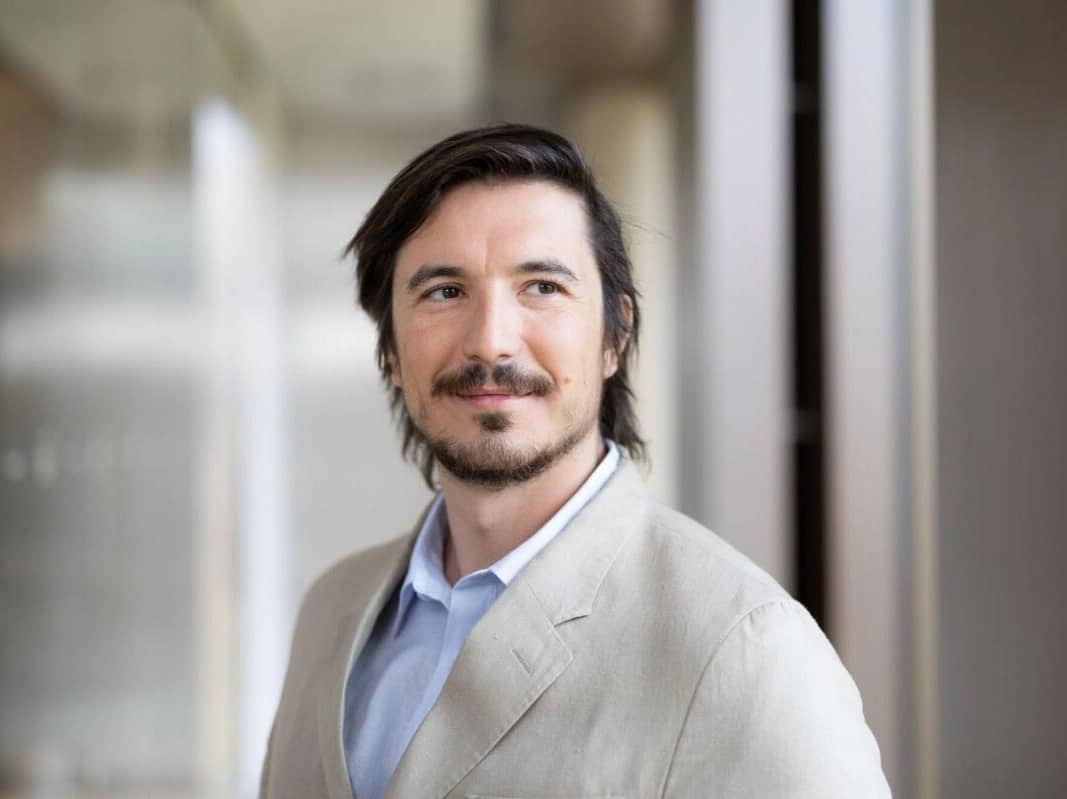
Tenev and Bhatt founded Robinhood in 2013, assembling a team of mostly engineers who had worked with them at their earlier ventures.[2] The company raised a $3 million seed round led by Index Ventures with Andreessen Horowitz participating, and in 2014 raised a $13 million Series A that included Ribbit Capital along with individual backers Howard Lindzon, Dave Morin, Aaron Levie, Jared Leto, Nas, and Snoop Dogg.[6] The company also participated in the Y Combinator accelerator.[4] After roughly a year of regulatory scrutiny, Robinhood was approved by the U.S. Securities and Exchange Commission (SEC) and became a member of the Financial Industry Regulatory Authority (FINRA), clearing it to operate.[2]
For more than a year the Robinhood website served as a waiting list, and by the time the app launched it already had 500,000 people waiting.[2][6] The company launched on the App Store—in December 2014 according to some early reporting, and in March 2015 as the first mobile-first brokerage in the United States.[6][2] The app used a social-media-like design of effects and gestures to encourage continuous interaction, initially targeted millennials, and required no minimum deposit at registration.[2] Robinhood's iPhone and Apple Watch apps won an Apple Design Award in 2015.[6]
Robinhood offered commission-free trading, financing itself through payment for order flow (PFOF), the practice of routing customer orders to market makers who pay for that order flow and profit by shaving fractions off spreads.[2][3] The company expanded its product set steadily, adding options trading in 2017, cryptocurrency trading in 2018, and fractional-share trading in 2019.[2]
The company's early funding rounds tracked rapid growth in valuation: a $110 million Series C led by DST Global in 2017 at a $1.3 billion valuation, followed by a $363 million Series D in 2018 at a $5.6 billion valuation as the platform passed four million users.[6] Its broader investor base came to include Index Ventures, Andreessen Horowitz, Ribbit Capital, NEA, DST Global, Thrive Capital, Greenoaks, Iconiq, CapitalG, Sequoia, and Kleiner Perkins.[6] Robinhood had 9.8 million users in 2020, and its leadership structure changed that year when Bhatt stepped down as co-CEO to become Chief Creative Officer, making Tenev the sole CEO.[2] Bhatt stepped away from day-to-day management in March 2024 while remaining on the board, later focusing on Aetherflux, a space-based solar-energy company.[6] Robinhood completed its initial public offering on the Nasdaq exchange in July 2021 at a $32 billion valuation, at which point it had over 22 million users; it trades under the ticker HOOD.[5][2][3]
Tenev holds significant voting control of the company. As of an April 7, 2025 disclosure basis, he held 24.2% of Robinhood's voting power; the company's dual-class structure gives Class A shares one vote and Class B shares ten votes each, and Tenev and Bhatt were linked by a Founders' Voting Agreement and irrevocable proxy arrangements.[6] Forbes reports he owns more than 6% of Robinhood Markets.[5] Robinhood joined the S&P 500 in September 2025.[6] The company reported $4.5 billion in full-year revenue and $1.9 billion in net income for fiscal 2025, and by May 2026 it had 27.7 million funded customers and $377 billion in total platform assets.[6] The company serves roughly 28 million customers across 38 countries.[3]
In 2026 Robinhood launched Ventures Fund I, a closed-end fund listed on the New York Stock Exchange that offers retail investors exposure to large private technology companies such as OpenAI, Databricks, Oura, Mercor, Ramp, Airwallex, and Boom.[12][10] Tenev has described the vehicle as a kind of publicly traded venture-capital fund with daily liquidity, no accreditation requirement, and no carried interest, and has said that more than 150,000 retail investors participated in its IPO.[12] He presents Ventures Fund I as the next step in Robinhood’s effort to let retail investors capture value creation that increasingly occurs while companies remain private, rather than only after they list on public markets.[12][10]
Robinhood's 2024 annual report placed total net revenue at $2.951 billion, made up of $1.647 billion of transaction-based revenue (56%), $1.109 billion of net interest revenue (38%), and $195 million of other revenue (7%); of the transaction-based revenue, $1.563 billion came from routing user orders to market makers.[6] In February 2026 Shiv Verma formally became Robinhood's Chief Financial Officer, and in June 2026 the company announced a roughly 10% workforce reduction—about 290 people—even as Tenev told employees the business had never been stronger.[6][3]
In January 2021, Robinhood became central to the "meme-stock" era when retail trading, largely on its platform, drove a short squeeze in GameStop and other heavily shorted stocks.[3] On January 28, 2021, Robinhood restricted buying in the affected names, a decision the company attributed to the National Securities Clearing Corporation (NSCC) raising deposit requirements during extreme market volatility.[6][3] The restrictions triggered accusations that the platform had sided with institutions against its own users, placed Tenev under intense scrutiny, and led to congressional hearings and fines.[3][2] The events forced the company to strengthen its risk-management practices. During the second quarter of 2021, 62% of Robinhood's crypto revenue came from Dogecoin.[3]
Under Tenev, Robinhood broadened well beyond stock trading. Its Gold subscription, priced at $5 per month or $50 per year, offers a 3.35% annual percentage yield on eligible brokerage cash along with an IRA match, research tools, and margin features; Gold generated $109 million in 2024 and reached $50 million for the first quarter of 2026, when subscribers numbered 4.3 million.[6] Robinhood Banking, rolled out to Gold subscribers, had over 20,000 customers depositing roughly $300 million by January 31, 2026, and crossed $2 billion in deposits with 125,000 funded customers by the first quarter of 2026.[6] Robinhood Strategies, an advisory product, grew from over 200,000 funded customers and $1.3 billion in assets under management at the end of 2025 to over 285,000 customers and $1.6 billion by the first quarter of 2026, when retirement assets under custody reached $27.4 billion, its Cortex Digests tool had been used by nearly one million customers, and a Robinhood Social beta launched.[6] The company's prediction-markets platform processed more than 12 billion contracts in 2025, including a record 8.5 billion in the fourth quarter; on an earnings call Tenev noted that NBA contracts overtook NFL contracts and cited the Winter Olympics, the FIFA World Cup, and March Madness as catalysts for expected activity.[3]
On an April 2026 earnings call and in a subsequent interview, Tenev characterized these crypto and wallet offerings as part of the early stages of a broader "tokenization supercycle," in which financial institutions adopt blockchain infrastructure and tokenization of assets, including stocks, reshapes trading and settlement.[11] He argued that Robinhood’s crypto wallet, its build-out of Robinhood Chain, and its tokenized-stock products position the firm to benefit from this shift, and has suggested that tokenization could expand the overall pie of U.S. equity trading even if much of the activity remains overseas in the near term.[11]
On July 1, 2026, Tenev unveiled Robinhood Chain at a livestreamed event billed as "The World is Flat" from the Old Royal Naval College in London, which the company described as its most ambitious global expansion and product vision to date.[3] Robinhood Chain is an Ethereum layer-2 network built on Arbitrum's Orbit stack; it uses ether for gas, runs roughly 100-millisecond block times, and settles to the Ethereum mainnet.[3] Its flagship product, Stock Tokens, are on-chain instruments tracking equities such as Nvidia, Apple, and Alphabet that trade around the clock and can be used in decentralized finance (DeFi); the launch stack incorporated Chainlink for oracle pricing, BitGo for custody, Uniswap for liquidity, Morpho for lending, and Lighter for perpetual futures inside Robinhood Wallet.[13] Stock Tokens are structured as tokenized debt securities, conferring no shareholder rights or legal ownership of the underlying shares, and are unavailable to U.S. persons.[3]
Robinhood markets the chain as AI-native and is rolling out Agentic Accounts, which let eligible users connect AI models to Robinhood's data and tools through a Trading MCP so that agents can analyze markets and construct strategies while humans retain control of capital; unlike Stock Tokens and wallet perpetuals, Agentic Accounts are being rolled out in the United States.[3] The emergence of these agentic trading features has prompted discussion among market participants and policymakers about appropriate guardrails, supervision, and disclosure standards for AI-assisted investing tools. The agent platform Bankr integrated Robinhood Chain so users can trade tokenized stocks and memecoins by text command on X or Telegram.[3] Days after the launch, Tenev posted on X that while the chain is being built to be the best platform for real-world assets, "it works great for memes too," and he followed the account of CASHCAT, a community memecoin launched on the chain that was unaffiliated with the company.[3]
Robinhood's crypto business contracted in early 2026: crypto transaction revenue fell 47% year over year to $134 million in the first quarter, and native-app crypto trading volume dropped 48% to $24 billion, while total quarterly revenue was $1.07 billion and platform assets rose 39% to $307 billion.[3] In filings covering early July 2026, Tenev sold 375,000 HOOD shares at weighted-average prices ranging from roughly $112.22 to $118.14, for a total in the region of $43.6 million, after which he continued to hold more than 48.2 million Class B shares; chief legal officer Daniel Gallagher sold shares on July 6, 2026 for approximately $1.1 million, and Robinhood Ventures Fund I also sold in the same window.[3]