0% read
Last updated:
Justin Thaler
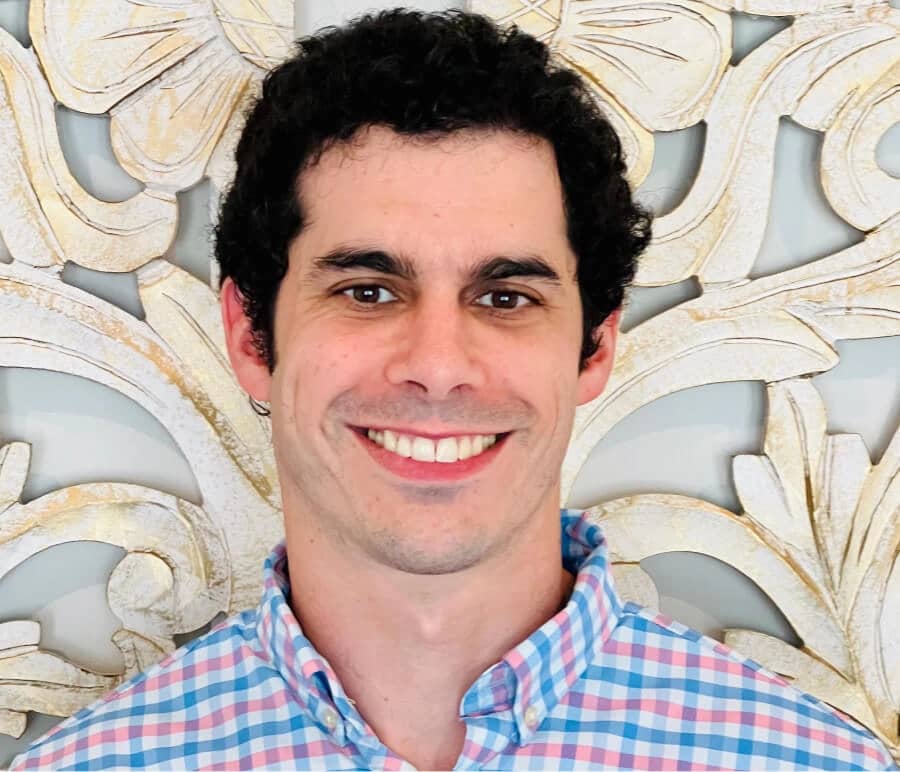
Justin Thaler is an American computer scientist, academic, and researcher specializing in algorithms, complexity theory, and cryptography. He is recognized for his contributions to verifiable computation, particularly in the field of Succinct Non-Interactive Arguments of Knowledge (SNARKs) and Zero-Knowledge Proofs (ZKPs). Thaler holds dual roles as an Associate Professor of Computer Science at Georgetown University and as a Research Partner at the venture capital firm Andreessen Horowitz's crypto division (a16z crypto). [1] [2]

Education
Thaler earned a Bachelor of Science in Computer Science with a second major in Mathematics from Yale University in 2009. He later received his Ph.D. in Computer Science from Harvard University, where his research in the Theory of Computation Group was advised by Professor Michael Mitzenmacher. Following his doctorate, Thaler was a Research Fellow at the Simons Institute for the Theory of Computing at the University of California, Berkeley. [2] [3]
Career
Academic Career
Thaler began his industry research career as a Research Scientist at Yahoo Labs in New York. In 2016, he transitioned to academia, joining the Department of Computer Science at Georgetown University. He is now a tenured Associate Professor at Georgetown, though he is currently on leave from his teaching duties. [2] [3]
At Georgetown, Thaler has taught graduate-level courses such as Probabilistic Proof Systems, Analytic Techniques in Computer Science, and Streaming Algorithms. He has also advised several Ph.D. students and postdocs, and has served on program committees for numerous computer science conferences, including STOC, TCC, and SODA. [2]
a16z Crypto
In the summer of 2022, Thaler was a faculty fellow in-residence at a16z crypto. On November 17, 2022, it was announced that he would be joining the firm's research team as a full-time Research Partner, a role he holds while maintaining his tenured position at Georgetown. At a16z crypto, his work involves providing expertise to portfolio companies, evaluating new projects in the zero-knowledge space, and continuing his research leadership in proof systems. He is also involved in creating educational content to explain complex research topics to a broader audience. [3] [1]

Research and Contributions
Thaler's research focuses on theoretical computer science and its practical applications. His main objectives include designing efficient protocols for verifiable computation and ZKPs, understanding the approximation of Boolean functions by low-degree polynomials, and developing streaming algorithms for massive datasets. [2]
Zero-Knowledge Proofs and Verifiable Computation
Thaler is a prominent figure in the development of faster and more practical SNARKs, with a focus on systems that do not require a trusted setup and are potentially resistant to quantum computers.
Lasso and Jolt
Lasso and Jolt are interconnected research projects introduced by Thaler and his collaborators on August 10, 2023, designed to improve the performance of SNARKs, particularly for Zero-Knowledge Virtual Machines (zkVMs). [1]
- Lasso: Introduced in 2023, Lasso is a lookup argument designed for efficiency. Its main innovation is the ability to handle lookups into large, structured tables (e.g., of size 2¹²⁸) where the prover's cost scales only with the number of table entries accessed, not the total table size. [2]
- Jolt: Jolt is a zkVM that uses Lasso to achieve what its creators call the "lookup singularity." This design compiles the computational steps of a program, such as a RISC-V CPU, into circuits composed almost entirely of lookups into a massive, instruction-specific table. This method is designed to create highly efficient provers for general-purpose computation. Jolt utilizes the sum-check protocol, a concept from complexity theory, as a core component. Thaler published a survey titled "Sum-check is all you need" on November 6, 2025, explaining the design principles behind the system. [2] [1]
The Jolt project announced several performance milestones:
- April 9, 2024: The initial open-source release of Jolt was announced, with early benchmarks showing it was faster than competing systems like RISC Zero and SP1 at the time.
- January 23, 2025: Thaler introduced "Twist and Shout," two memory-checking arguments intended to further accelerate the Jolt prover.
- August 14, 2025: A significant speedup was announced, with performance reaching over 1,000,000 RISC-V cycles per second on a 32-core CPU and over 500,000 cycles per second on a MacBook, with proof sizes around 50 KB.
- October 15, 2025: Jolt's capabilities were extended to support 64-bit RISC-V programs (RV64IMAC), and its performance increased to 1.5 million cycles per second on a 32-core CPU.
All development information and performance metrics were publicly shared by Thaler. [1]
Public Commentary on SNARKs
Thaler is an active public commentator on the state of ZK technology, advocating for a realistic understanding of its capabilities and limitations.
- On July 12, 2023, he published an article titled "17 misconceptions about SNARKs (and why they hold us back)" to clarify common misunderstandings in the field.
- He has consistently expressed caution regarding the maturity and security of existing ZK systems. On November 20, 2024, he stated, "Today’s zkVMs are likely riddled with bugs. We should stop pretending otherwise," while presenting a roadmap toward a "bug-free Jolt."
- In a post on March 11, 2025, he warned against over-hyping the technology, noting that SNARKs were not yet ready for complex, high-stakes deployments due to prevalent bugs, nascent formal verification, and performance overhead compared to native execution. [1]
Other SNARK Systems
Before his work on Lasso and Jolt, Thaler contributed to several other important proof systems:
- Customizable Constraint Systems (CCS) and SuperSpartan (2023): Thaler co-introduced CCS, a framework that unifies and generalizes popular constraint systems like R1CS and Plonkish without adding overhead. Building on this, he co-developed SuperSpartan, a SNARK for CCS that features a linear-time prover and supports high-degree constraints without requiring Fast Fourier Transforms (FFTs). [2]
- Brakedown and Shockwave (2021): Thaler co-authored Brakedown, one of the first SNARK systems for R1CS to feature a linear-time prover () without a trusted setup. It is considered plausibly secure against quantum computers. He also contributed to Shockwave, a variant that offers shorter proofs and faster verification in exchange for a super-linear-time prover. [2]
- Hyrax (2018): Thaler co-developed Hyrax, a "doubly-efficient" zkSNARK that is efficient for both the prover and verifier. It is based on the Decisional Diffie-Hellman (DDH) assumption, does not require a trusted setup, and is made non-interactive using the Fiat-Shamir heuristic, making it suitable for data-parallel computation. [2]
Foundational Security Research
In 2023, Thaler co-authored the first formal security analysis of applying the Fiat-Shamir transformation to the FRI protocol. The FRI protocol is a core component in many STARK-based systems, including ethSTARK and RISC Zero. [2]
Approximate Degree and Computational Complexity
A central focus of Thaler's academic work is the approximate degree of Boolean functions, which is the lowest degree of a real polynomial needed to approximate a given function. This measure provides a lower bound on the quantum query complexity of a function. In 2017, Thaler and Mark Bun established a nearly optimal lower bound of Ω(n¹⁻ᵟ) on the approximate degree of functions in the complexity class AC⁰. Thaler has extensively used the "dual polynomials" method to prove strong lower bounds on approximate degree for problems such as k-distinctness and collision. [2]
Streaming Algorithms and Verifiable Computation
Thaler has also contributed to the field of algorithms for processing massive data streams using limited memory. He is a co-creator and core contributor to Apache DataSketches, an open-source library of streaming algorithms for tasks like cardinality estimation and quantile calculation. His research also explores the "annotated data streaming" model, where a computationally weak verifier can check the work of an untrusted cloud service. This work provides protocols for verifiable outsourcing of complex graph problems like triangle counting with sublinear space and proof size. [2]
Publications
Thaler has authored numerous papers in computer science conferences and has written books and monographs to make complex topics more accessible.
Books and Monographs
- Proofs, Arguments, and Zero-Knowledge (2021): A comprehensive book that serves as an introduction to the theoretical foundations of ZKPs and related cryptographic protocols. It unifies five distinct designs for general-purpose zero-knowledge proof systems. [2] [3]
- Approximate Degree in Quantum and Classical Computing (2022): Co-authored with Mark Bun, this monograph surveys the field of a function's approximate degree, its applications in quantum and classical computing, and techniques for proving lower bounds, with a focus on the dual polynomials method. [2]

Quotes
Regarding Thaler's move to a16z crypto, Tim Roughgarden, head of the firm's research lab, stated:
"Over the past few years, it’s been exciting to see Justin segue from the theoretical foundations of proof systems to their applications in blockchains and web3, including succinct proofs (SNARKs), SNARK-based rollups, and all things 'zk' (for 'zero-knowledge'). This technology is rooted in some of the deepest mathematical results in all of computer science, and Justin’s understanding of it is second-to-none." [3]
Roughgarden also highlighted Thaler's role as an educator:
"At a16z crypto research, we believe the exposition and teaching of cutting-edge research to the broader web3 community is as important as conducting it. Justin fits the bill perfectly." [3]
Awards and Recognition
Thaler has received several awards for his research contributions throughout his career:
- NSF CAREER Award: A prestigious award from the National Science Foundation for early-career faculty. [1]
- Google Faculty Research Award: An award supporting faculty pursuing research in areas of mutual interest to Google. [1]
- PODS 2021 Best Paper Award: For the paper "Relative Error Streaming Quantiles." [2]
- FOCS 2017: His paper "A Nearly Optimal Lower Bound on the Approximate Degree of AC⁰" was recognized for its contribution to complexity theory. [2]
- ICDT 2016 Best Newcomer Paper Award: For the paper "A Framework for Estimating Stream Expression Cardinalities." [2]
- SPAA 2014 Best Paper Award: For the paper "Parallel Peeling Algorithms." [2]
- ICALP 2013 Best Paper Award: For the paper "Dual Lower Bounds for Approximate Degree and Markov-Bernstein Inequalities." [2]
See something wrong?