0% read
Last updated:
Max Resnick
Max Resnick is a researcher and economist who works at the intersection of finance and blockchain technology, with a professional focus on market design and risk management. He is the lead economist at Anza, a software development firm contributing to the Solana blockchain. [1] [2]
Education
Resnick graduated from the University of Michigan in 2022 with a Bachelor of Science in Honors Mathematics. In August of the same year, he earned a Master of Science in Economics from the Massachusetts Institute of Technology (MIT). [2]
Career
Resnick began his career in academic and policy research. In 2018, he served as a research assistant at the University of Michigan Medical School, where he focused on data analysis and automation with statistical programming tools. He continued this work from 2019 to 2021 as a research assistant at the University of Michigan's Stephen M. Ross School of Business, conducting data analysis to support academic research across multiple domains. In 2020, he gained public sector experience during an internship at the Council of Economic Advisers, where he contributed to policy and data analysis concerning public health and economic initiatives.
He transitioned to the blockchain industry in 2021, joining the decentralized finance (DeFi) protocol Risk Harbor as a research engineer. By 2022, Resnick was promoted to head of research, a role in which he led work on automated market maker (AMM) design and risk management within DeFi systems. In 2023, he became the head of research at Special Mechanisms Group, a position he held until 2024.
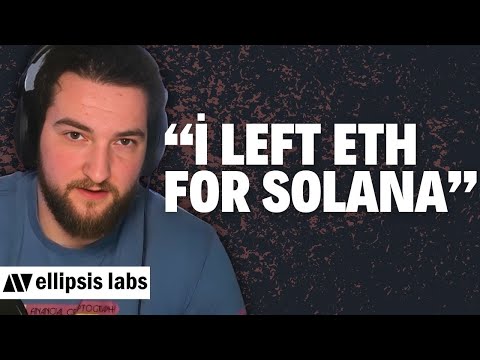
In 2024, Resnick joined Anza as its lead economist, focusing on research and development for blockchain infrastructure. This role marked his professional shift from the Ethereum ecosystem to the Solana ecosystem in late 2024. He has cited an attraction to Solana's "intense yet productive" development culture as a reason for the move. [3] [4]

Interviews
Leaving Ethereum
On The Gwart Show in January 2026, Resnik reflected on his past year working at Anza after transitioning from Ethereum to Solana, expressing a newfound respect for protocol developers and the complexities involved in steering a blockchain. He recognized the challenges of balancing various interests within a blockchain ecosystem, which often lead to difficult decisions that upset different stakeholder groups. Throughout the year, Resnick focused on improving the Solana transaction processing pipeline and enhancing user experience by engaging with traders and developers to understand priorities. He was heavily involved in the MCP initiative, which aimed to address issues such as miner extractable value and censorship resistance. Resnick also noted the evolving landscape of trading on Solana, with the emergence of competitive trading platforms like Prop AMMs that, despite challenges, are driving innovation in the space. Overall, his experiences highlighted the intricacies of blockchain development and the ongoing evolution in decentralized finance. [9]
99% To Go
On the SolanaFloor podcast in March 2025, Resnick shared his insights on the Solana ecosystem and its future. He recounted his transition from the Ethereum community to Solana, citing his interest in the intense yet productive development culture within the Solana network. Resnick highlighted the impressive technical capabilities of Solana, including its potential to process 1 million transactions per second (TPS), enough to handle the entire traffic of major financial networks. He discussed the challenges and controversies surrounding the recent SIMD 228 proposal to reduce inflation, expressing satisfaction with his involvement despite criticism. Resnick also emphasized the importance of institutional adoption to Solana's growth and noted that the network's progress towards a more decentralized and efficient architecture continues, with multiple initiatives aimed at improving its infrastructure. Overall, he conveyed optimism about Solana's capabilities and the ongoing efforts to enhance its position in the crypto landscape. [5]

Solana’s Path
On the Lightspeed podcast in June 2025, host Jack Cuban interviewed Resnick, the lead economist at Anza, discussing the ongoing development and future potential of the Solana blockchain. Resnick, who transitioned from Ethereum to Solana in late 2024, shared insights about market structures and the upgrades being implemented, including Alpenlow, aimed at enhancing the efficiency of the Solana protocol. He highlighted the importance of achieving a decentralized market with multiple concurrent leaders to improve liquidity and competition, as well as a shift in staking rewards from nominal to real yields. Resnick emphasized the need for practical solutions to counteract market manipulation, such as sandwich trading, and advocated reevaluating the US government's inflation model to reduce unnecessary taxation. The conversation reflected growing optimism about Solana's trajectory and its potential to innovate in decentralized markets, with hopes of making strides in areas such as perpetual trading. [8]

Presentations
Disrupting Markets
In an October presentation at TOKEN2049 Singapore in 2025, Resnick discussed Solana's ambitious goal to disrupt the $500 trillion global securities market, particularly focusing on equities, which are largely concentrated in the U.S. He outlined that the first step towards this disruption involved issuing actual securities natively on-chain, a milestone already achieved with Galaxy Digital's Class A shares being tokenized on Solana's blockchain. Resnick emphasized the need to establish clear regulations for on-chain trading, a process that the Solana Policy Institute was actively engaging with regulators to address. He explained advancements in Solana's technical infrastructure, including proprietary automated market makers (AMMs) that enabled higher on-chain trading volumes than on traditional exchanges like Binance. However, he also acknowledged challenges, such as delays in transaction processing during leader handoffs, which could hinder competitiveness in the securities trading arena. To address these issues, Resnick and his team proposed solutions, such as multiple concurrent leaders, to alleviate monopolistic control over transaction ordering, demonstrating their commitment to enhancing Solana's capacity to handle trades in the securities market. [7]

Decentralized Nasdaq
At the Accelerate 2025 conference in May, Resnick spoke about the ambitious goal of creating a decentralized NASDAQ, detailing the technical advancements needed to achieve it. He emphasized that the objective was not to compete with Ethereum but to rival centralized platforms like the New York Stock Exchange and NASDAQ by increasing transaction speed and volume. Resnick highlighted efforts to increase processing capacity to 1 million transactions per second (TPS) and to reduce block times to as low as 20 milliseconds. He discussed the importance of offering competitive prices and of addressing the challenges faced by market makers, including managing price volatility and improving transaction processing efficiency. By proposing a system with multiple leaders for transaction processing, he believed Solana could enhance performance and limit market-maker losses, thereby paving the way for a successful decentralized NASDAQ. The talk concluded with a promise of a forthcoming paper that would further explore these ideas. [6]

See something wrong?