0% read
Last updated:
Lewis Gudgeon
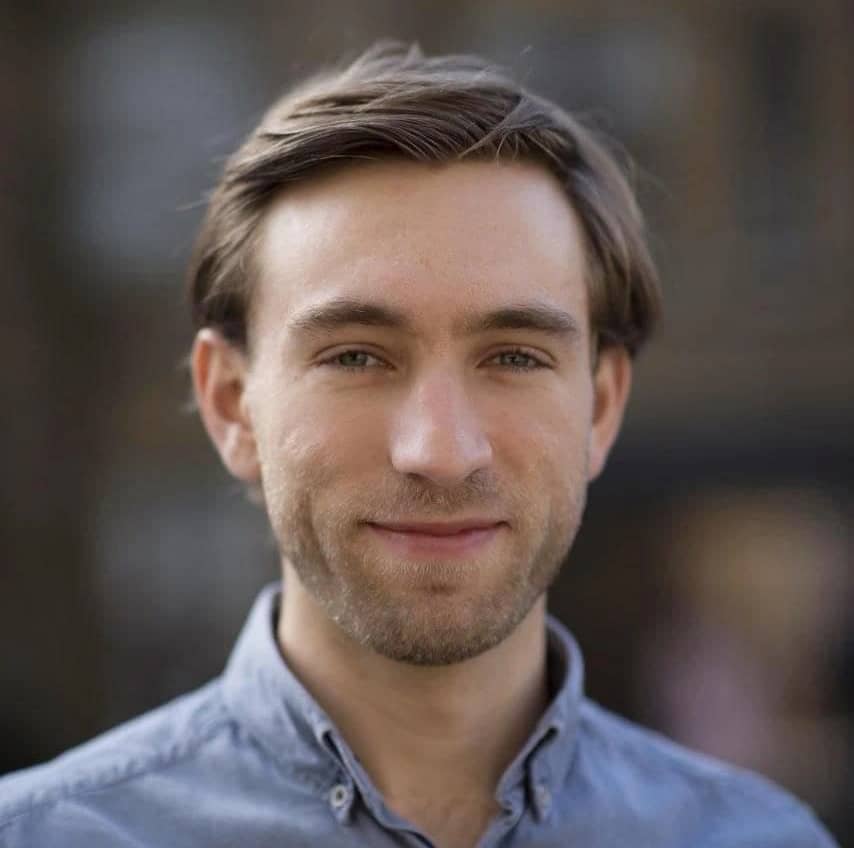
Lewis Gudgeon is a researcher and developer working at the intersection of distributed systems and decentralized finance (DeFi). He is known for co-founding the Gyroscope protocol, a project focused on an asset-backed stablecoin, and for his academic work as a guest lecturer at Imperial College London. [2]
Education
Gudgeon has a multidisciplinary academic background in economics, political science, and computer science. He graduated from the University of Warwick in 2014 with a Bachelor of Arts in Philosophy, Politics, and Economics (Tripartite). Following this, he attended the University of Cambridge, where he completed an Advanced Diploma in Economics in 2015 and a Master of Philosophy in Economics in 2017. He later earned a PhD in Computer Science from Imperial College London in 2023. [4]
Career
Gudgeon's early career included internships in politics and economic consulting. From October to December 2010, he interned at the constituency office for Members of Parliament Andrea Leadsom and Chris Heaton-Harris. In mid-2013, he was an intern at the Centre for Economics and Business Research, where he analyzed datasets and contributed to reports on the global economic outlook. While at the University of Warwick, he served as Head of Talks for the PPE Society from April 2013 to March 2014. He later joined Oxera Consulting LLP, an economics and finance consultancy. He completed internships there during the summers of 2014 and 2015, working on financial services regulation and transport-sector projects. This led to a full-time Analyst position at Oxera from September 2017 to August 2018. In July 2020, Gudgeon transitioned into the decentralized finance industry by co-founding the Gyroscope. Since January 2023, he has also held an academic position as a guest lecturer at Imperial College London, where he co-teaches the "Principles of Distributed Ledgers" course. [1]
Gyroscope
In July 2020, Gudgeon co-founded Gyroscope with Ariah Klages-Mundt and Daniel Perez. The project originated from a research paper they co-authored earlier that year, combining their academic backgrounds in economics and computer science. Gyroscope is a decentralized finance (DeFi) protocol designed to create a stablecoin, GYD, with a focus on risk management and capital efficiency. The entity behind the protocol is FTL Labs. Gudgeon and his co-founder have described Gyroscope's goal as creating an "all-weather" stablecoin. This design philosophy aims to build resilience against a wide range of financial risks inherent to DeFi, including extreme price volatility, collateral failures, and potential regulatory shocks. The core of this strategy is a diversified reserve backing the GYD stablecoin. The protocol is designed to hold a portfolio of de-correlated assets, meaning the assets are chosen to have low correlation with one another. The intention is that if one asset class or type experiences a downturn or failure, the other assets in the reserve will provide stability in its place. This approach contrasts with stablecoins backed by a single asset or a small number of highly correlated assets. [2]
Interviews
Gyroscope AMA
In a March 2022 AMA hosted by Gudgeon, the Gyroscope team introduced their concentrated liquidity pools (CLPs) on Polygon, outlining the testing-phase launch of two pool types: a two-asset quadratic-curve CLP and a three-asset cubic-curve CLP. They compared this design to Uniswap V3, noting that Gyroscope’s approach concentrates liquidity on a single price tick to improve capital efficiency, and emphasized that pooled reserve assets would play a direct role in stabilizing the project’s stablecoin. The discussion also covered fee structures, integration with Balancer’s routing system, and a liquidity strategy focused on efficiency rather than heavy incentives, alongside updates on audits and testing. The session closed with plans for additional AMAs as the pools advanced toward full deployment. [6]

All-Weather Stablecoin
In an October 2021 episode of the Epicenter Podcast, Sunny Agarwal interviewed Gudgeon and Klages-Mundt about the origins and structure of Gyroscope. They discussed their academic paths in economics and mathematics, the 2020 research paper that led to the project, and Gyroscope’s design as an autonomous stablecoin backed by a diversified reserve intended to manage risks such as price volatility and regulatory shocks. The conversation outlined the protocol’s primary and secondary market structure, its approach to minimizing correlation risk through varied collateral, and mechanisms for handling under-collateralization by adjusting redemption terms while preserving access to net asset value. They also explained Gyroscope’s governance model, the purpose of its gamified testnet, and the role of community participation across communication channels. [5]

See something wrong?