0% read
Last updated:
Securitize Tokenized AAA CLO Fund
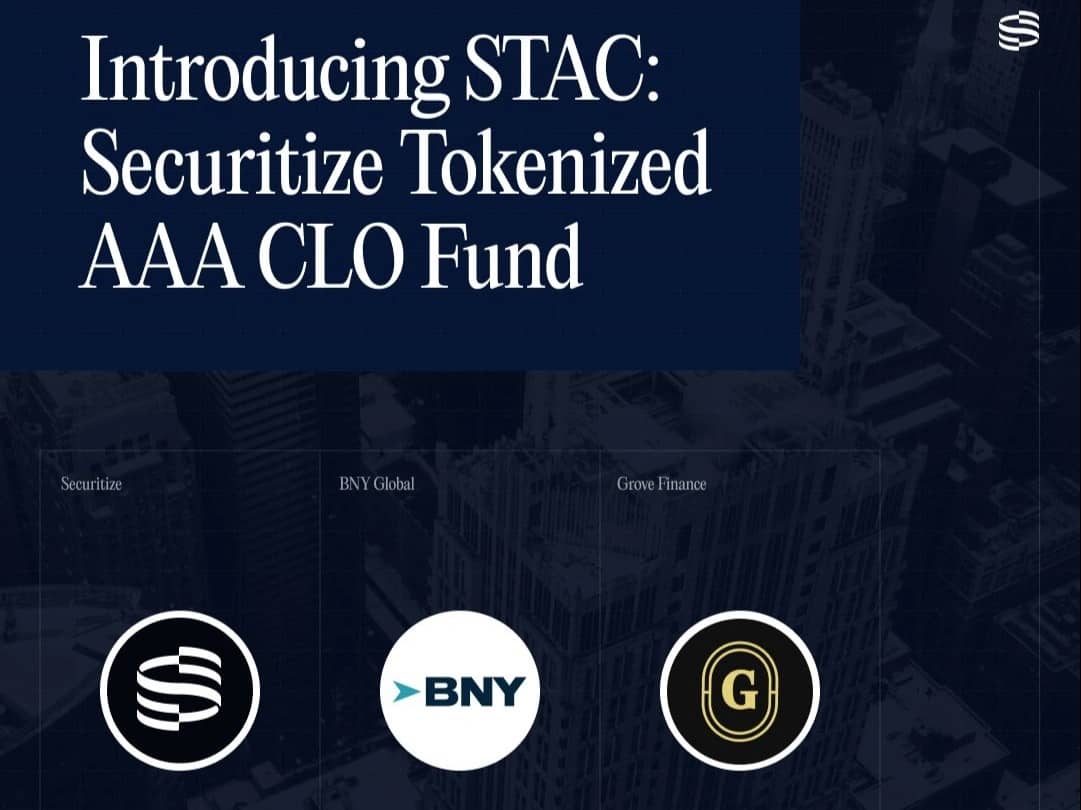
The Securitize Tokenized AAA CLO Fund (STAC) is an investment fund that provides exposure to a portfolio of AAA-rated collateralized loan obligations (CLOs) by issuing its shares as digital tokens on the Ethereum blockchain. The fund integrates traditional structured credit investment strategies with blockchain-based infrastructure for managing ownership, facilitating settlements, and providing investor access. It was developed by Securitize, Inc. in collaboration with BNY, which serves as custodian and sub-advisor for the fund's assets. [4]
Overview
The Securitize Tokenized AAA CLO Fund (STAC) is an investment fund that provides exposure to AAA-rated collateralized loan obligations (CLOs), a type of structured credit backed by pools of corporate loans. The fund is structured so that shares are issued as digital tokens on a blockchain, allowing investors to hold fractional ownership and enabling digital recordkeeping and settlement processes. The fund invests primarily in highly rated U.S.-dollar-denominated CLO tranches, using a traditional asset management approach without leverage. Its underlying assets are held in custody by a regulated financial institution, and an affiliated investment team manages the portfolio. Investors access the fund through a platform that incorporates compliance procedures, including identity verification and eligibility requirements. By issuing tokenized shares, the structure is intended to streamline aspects of traditional fund operations, such as settlement and ownership tracking, while maintaining exposure to institutional credit markets. The model integrates conventional structured finance products with blockchain-based infrastructure. [1]
Fund Structure
The Tokenized AAA CLO Fund operates through a structure involving multiple financial and technology entities, each responsible for different aspects of its management and implementation. Securitize, Inc. developed the fund and provides the tokenization platform, managing the issuance of digital tokens and operating the investor interface. This platform supports the full investor process, including onboarding, compliance checks, subscriptions, and account management, with integrated systems for identity verification and regulatory requirements such as KYC and AML. BNY serves as the custodian for the fund’s underlying assets, holding the CLO securities in which the fund invests. Its role is to safeguard these assets within a regulated financial framework. Portfolio management is handled by BNY Investments, a subsidiary of BNY, which acts as the fund’s sub-advisor. Its structured credit team is responsible for selecting assets, executing the investment strategy, and managing risk, primarily by investing in AAA-rated CLO tranches across both primary and secondary markets. [1] [4]
Technology and Tokenization
The Tokenized AAA CLO Fund is structured around the tokenization of real-world financial assets, using blockchain technology to represent ownership in a traditional investment fund. Its shares, known as STAC tokens, are issued on the Ethereum blockchain, which serves as a distributed ledger for recording transactions and ownership. Each token corresponds to a fractional interest in the fund, providing a digital representation of underlying off-chain assets, specifically AAA-rated collateralized loan obligations. This tokenized structure is intended to streamline aspects of fund operations, including settlement processes and recordkeeping, by using blockchain-based systems rather than traditional infrastructure. As a result, STAC tokens fall within the category of real-world asset (RWA) tokens, which link conventional financial instruments to digital networks. The design also allows for potential interaction with decentralized finance (DeFi) systems, where tokenized shares could be used in additional financial applications such as collateralization. Any such use would remain subject to applicable regulatory and compliance requirements. [4]
Investment Strategy
The fund follows a conservative investment strategy focused on U.S. dollar–denominated, AAA-rated tranches of collateralized loan obligations (CLOs). These instruments represent the most senior portion of a CLO’s capital structure, giving them priority in receiving principal and interest payments and positioning them as lower-risk relative to other tranches. The portfolio is actively managed using a fundamentals-based approach, with investments sourced from both primary issuances and secondary markets. The strategy does not involve the use of leverage, meaning the fund does not borrow capital to increase exposure. Investors are charged a fixed expense ratio to cover operational and management costs, and no performance-based fees are applied.
Investor access and transactions are managed through a digital platform that integrates compliance and financial technology systems. Participants must complete identity verification, anti-money laundering checks, and eligibility requirements before investing. Subscriptions are conducted digitally, including through the use of stablecoins such as USDC, with fund shares issued as blockchain-based tokens to investor wallets. Redemptions are available periodically, although liquidity depends on market conditions and the time required to sell underlying assets. Token transfers are restricted, with a minimum holding period and limitations to approved participants who meet compliance standards. [3] [5]
See something wrong?
Official Website:
Social Profiles:
Blockchains: