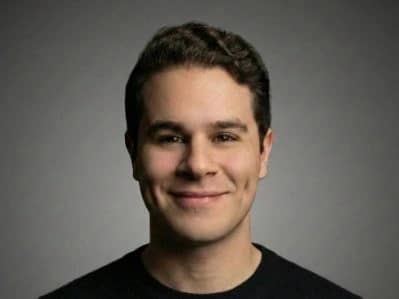
Raouf Ben-Har
Raouf Ben-Har is a co-founder of Andalusia Labs, creator of the Karak Network, a universal security layer. He is based in Palo Alto, CA, and is also building a project called OpenGDP. [1] [3]
Career
Ben-Har started out as a software engineer intern across various companies, including Google, TikTok, AWS, and Goldman Sachs. In 2021, he became an associate product manager at Coinbase, where he met Drew Patel. Together, they co-founded Andalusia Labs. [1]
Andalusia Labs
In 2021, Ben-Har and Patel co-founded Andalusia Labs, which is headquartered in Palo Alto, CA. The company, which specializes in blockchain security and artificial intelligence, began as a stealth startup named RiskHarbor, a risk management marketplace for DeFi platforms. After rebranding the company to Andalusia Labs, the Karak mainnet was released in April 2024. Andalusia Labs achieved a unicorn valuation of over 48 million in Series A funding. The round was supported by investors including Lightspeed Venture Partners, Mubadala, Coinbase, Bain Capital, Pantera Capital, Framework Ventures, Digital Currency Group, Proof Group, and Nima Capital, with participation from angel investors like Naval Ravikant and Arthur Hayes. [1][2][4]
Interviews
Building Karak
Blockworks interviewed Ben-Har and Patel about Karak and its purpose in the blockchain industry. He shared the main reason why they created Karak: [2]
“They were struggling to bootstrap their own economic security and suffered from highly dilutive reward mechanisms, which was unfortunate, especially for critical infrastructure like bridges, oracles and other infrastructure layers…We envisioned Karak as the key to unlocking this new era of innovation. Similar to how AWS made it easy and affordable for developers to access and build on the cloud, we wanted to make it easy and affordable for developers to access and build on any trust network.”
He also discussed how the restaking protocol can use other assets beyond ETH without risking economic security: [2]
“Many assets have lower opportunity costs versus ETH, meaning the [VaaS] has an easier and much more viable path to sustainable yields…There are billions of untapped assets, like stTIA, ARB, and many others, with very few yield opportunities to create sustainable flywheels for VaaS building in their ecosystem. Each ecosystem is different and has its own unique protocols that will create different VaaSs designed on top of their assets. There is no one-size-fits-all for every chain.”