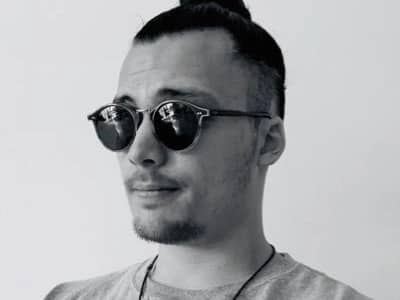
Loong Wang
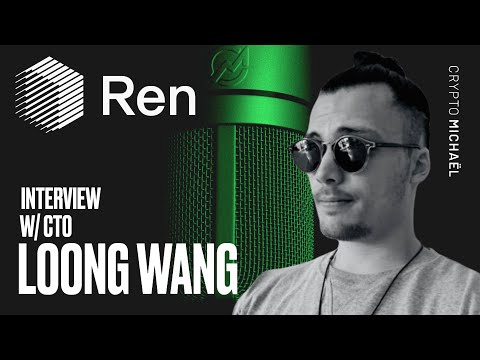
Loong Wang is a computer scientist and entrepreneur. He co-founded Ren Protocol and served as its Chief Technology Officer (CTO) until January 2021, alongside Taiyang Zhang as CEO.[1][5] He later co-founded biotechnology ventures including Talo Labs, QDX, and Automera, and is the co-founder and CEO of Metal, which rebranded as Alta in November 2026.[1][12][13]
Education
Loong Wang attended the Australian National University (ANU) where he graduated in 2016 with a Computer Science degree in Advanced Research and Development (Honours).[1]
Career
Wang began as an academic tutor at the Australian National University (ANU) in 2014 and later served as a researcher there from 2015 to 2016. He also worked as a software developer at Neucode, a software development agency, from 2015 to 2017.[1]
Metal (now Alta)
Wang introduced Metal on June 25, 2026, with co-founders Catherine Porter and Jack Zhang. The company is developing blockchain-based financial infrastructure for regulated institutions and tokenized finance, with planned privacy, programmable compliance, identity, and authorization features, including support for agent transactions. Airwallex became its design partner, connecting local payment networks across 200 countries and 90 currencies.[14][13]
On November 10, 2026, the company announced that it had rebranded as Alta and raised a $47.5 million Series A led by Index Ventures, bringing disclosed seed and Series A funding to $80 million. Wang is Alta’s co-founder and CEO. Alta described a planned liquidity-management product and infrastructure for institutional blockchain finance; Airwallex chose to build on the system.[13]
Ren Protocol
In 2017, he co-founded Ren (formerly known as Republic Protocol) alongside Taiyang Zhang and worked there as a CTO. Wang’s profile lists his Ren CTO tenure as ending in January 2021; his role was later described as advisory. Ren is an open protocol that facilitates the permissionless and private transfer of value between any blockchain.[5] Ren's core product, RenVM, brings interoperability to DeFi through a decentralized custody solution that allows the movement of assets between blockchains.[6][1][10]
Wang was introduced into the blockchain space when he was asked by Zhang to work together on Ren.[7]
"I did a lot of research at Australia National University around decentralized systems. I collaborated with Cray, a supercomputing company, and helped them with their supercomputing language Chapel and then I went on to do my honors thesis in the same area and built my own language which specialized in systems. I'd worked together with Tai. for several years and so when he came to me with the idea of working in blockchain and decentralized space there was no way I was gonna turn that down" - Wang recalls his journey into blockchain & Ren in an interview[7]
The Wrapped Tokens whitepaper, dated January 24, 2019, names Republic Protocol alongside Kyber Network and BitGo and proposes a framework for WBTC, a bitcoin-backed ERC-20 token. The paper names Kyber and Republic Protocol as initial WBTC merchants.[22] On January 31, 2019, Wang wrote that RenEx would serve as a WBTC merchant and offer direct BTC-to-WBTC swaps through SwapperD.[23]
“Using Ren, smart contracts on any blockchain can control tokens on other blockchains, allowing DEXs, DeFi, and dApps to leverage the liquidity available anywhere and everywhere.”[24]
In February 2021, the Ren development team joined Alameda Research. [9]
"Together, with our collective experience, expertise, and communities, our two teams will be able to contribute more value to the blockchain space than alone"
"As part of joining Alameda, the Ren development team will be prioritising support for Solana in our Multichain libraries, and in RenVM itself. This support is currently under audit, and we anticipate that we will be able to begin bridging assets to/from Solana in Q2. Doing so will have a profound impact on Serum, but also on the wider Solana ecosystem." - the press release stated.[9]
With the announcement, Loong Wang and Taiyang Zhang moved to advisory roles to guide the next phase of the Ren Protocol.[10]
After Alameda and FTX’s November 2022 bankruptcy proceedings cut off Ren development funding, the Ren team announced on November 18, 2022 that Ren 1.0 would be sunset. The plan initially disabled minting while keeping burns available during the transition. The team planned Ren 2.0, which required additional funding and development.[15]
A community-established Ren Foundation was incorporated on April 13, 2023 to support protocol research, development, and the ecosystem. Its immediate focus was Ren v2.[16]

Talo Labs
In 2021, Wang co-founded and served as the CEO of Talo Labs, which was initially known as Talo Systems, it underwent subsequent name changes to Lasker and eventually transitioned to Talo Labs.[2] Talo Labs researches and builds therapeutics companies, platforms, and in-silico technologies. It supports talented students, from computer science backgrounds, to solve biomedical problems.[3]
Automera raised $16 million in a Series A round in September 2023, co-led by Accelerator Life Science Partners and ClavystBio. Wang’s profile lists him as Automera’s founder and a board member.[4][1]
QDX
Wang co-founded QDX in 2023. His profile lists him as CEO and founder from January 2023 through May 2026. QDX is a computational drug discovery platform powered by quantum mechanics. The platform provides predictions and receptor-ligand insights for drug discovery.[17][1][11]
"From structural biology to the design of new chemical matter, our quantum-first drug discovery platform brings the cutting edge of computational chemistry to your team." - QDX website expands[11]
QDX’s Rush is an AI-operated virtual drug-design platform that turns research tasks into computational studies by coordinating simulation and machine-learning workflows. Walter is its conversational AI copilot for planning and launching runs and assembling reports.[25] Chemspace’s virtual compound library was integrated into Rush in June 2025 and became available in the platform’s computational drug-design workflow.[20]
QDX’s quantum simulations mapped structural differences between mutant and wild-type JAK2 proteins and contributed structural insights to Prelude Therapeutics’ mutant-selective JAK2 V617F inhibitor program. On November 4, 2025, Prelude announced an exclusive option agreement with Incyte for that program. Prelude was to receive $35 million upfront and a $25 million equity investment, with a $100 million option exercise payment, up to $775 million in additional clinical and regulatory milestones, and royalties. Prelude retained and advanced the program during the option period.[18][19]
QDX opened academic access to its EXESS GPU-accelerated quantum-chemistry engine in February 2026, following its exascale computing work. QDX reports that EXESS powered the first double-precision exascale calculation for a scientific application and the calculation that earned the Gordon Bell Prize.[21][17]
Automera
In 2022, he also co-founded and served as the CTO at Automera, a biotechnology research company focusing on the development of Autophagy-Targeting Chimera small molecules (AUTACs).[4][1] Wang’s current profile lists him as Automera’s founder and a board member.[1]