0% read
Last updated:
Jason Gottlieb
Jason P. Gottlieb is the Chair of the Digital Assets and White Collar and Regulatory Enforcement practice at Morrison Cohen LLP. Gottlieb's work primarily involves defending companies and individuals in the digital assets space during investigations and enforcement actions conducted by governmental or self-regulatory agencies. Additionally, he provides advisory services on blockchain and cryptocurrency law relating to litigation and regulatory risk issues. [1]
Early Life & Education
Jason Gottlieb studied at Fort Lee High School from 1986 to 1990 before pursuing higher education. He earned a Bachelor of Arts in Japanese and English from Rutgers University, where he studied between 1990 and 1994. He then attended Harvard University, completing an A.M. in Regional Studies – East Asia from 1994 to 1996. Gottlieb later received a Juris Doctor (J.D.) from Columbia University School of Law, where he studied from 1998 to 2001. [1]
Career
Early career
Before entering legal practice, Jason Gottlieb worked as an Internet Services Manager at Asahi Net, Inc., a Japanese internet services company, between 1996 and 1998. He later joined Cleary Gottlieb Steen & Hamilton LLP as an attorney, where he practiced from 2001 until 2009. In 2009, he became Counsel at Curtis, Mallet-Prevost, Colt & Mosle LLP, a position he held until joining Morrison Cohen LLP in 2016, which served as a basis for later work with digital assets.
Morrison Cohen LLP
Since joining Morrison Cohen LLP in March 2016, Gottlieb has served as Partner, Chair of the Digital Assets Department, and Chair of the White Collar and Regulatory Enforcement Group. His practice covers regulatory enforcement, litigation, and arbitration involving digital assets, securities, commodities, futures and derivatives, structured finance, pharmaceuticals, real estate, and intellectual property. He advises companies and individuals on regulatory and litigation matters involving blockchain and cryptocurrency, including investigations conducted by government agencies and self-regulatory organizations.
His work includes matters involving the Securities and Exchange Commission (SEC), the Commodity Futures Trading Commission (CFTC), the Department of Justice (DOJ), the New York Attorney General's Office, and other state regulatory authorities. Among these matters was the representation of defendants in an SEC case that was dismissed in federal district court, with the dismissal later upheld by the Supreme Court of the United States. His practice also includes class action litigation, commercial disputes, bankruptcy-related proceedings, amicus brief submissions, and regulatory advisory work for decentralized finance (DeFi) protocols, cryptocurrency exchanges, DAOs, blockchain foundations, wallet providers, institutional traders, and token issuers.
Publications and Professional Activities
Gottlieb is the principal author of the Morrison Cohen Cryptocurrency Litigation Tracker, a publication that compiles regulatory actions, litigation, and legal developments related to digital assets. He has also contributed commentary on cryptocurrency regulation and blockchain-related legal issues in media outlets including CNN, CNBC, Bloomberg, Forbes, Fortune, Law360, CoinDesk, and The National Law Journal.
He is a member of the Wall Street Blockchain Alliance and the Federal Bar Council. He has also served on the Securities Litigation Committee of the Association of the Bar of the City of New York, as well as the Securities and Exchanges Committee and the Futures and Derivatives Committee of the New York County Lawyers' Association.
Recognition
Gottlieb is ranked Band 1 in Crypto-Asset Disputes and Band 3 in FinTech Legal: Blockchain & Cryptocurrencies in the Chambers FinTech Guide 2024 (USA). In 2018, he was included in The National Law Journal's inaugural list of Cryptocurrency, Blockchain, and FinTech Trailblazers. [1] [2] [3] [4] [5] [6] [7] [8]
Interviews
Discussion on U.S. and Canadian Court Systems #01
In an interview published on July 22, 2022, on the YouTube channel The Yunusov Question, Jason Gottlieb discussed aspects of litigation in the United States and Canada, based on his legal practice in New York and his experience with cross-border matters.

During the interview, Gottlieb described the structure of the U.S. court system, explaining the distinction between federal and state courts and the jurisdictional rules that govern each. He stated that procedural requirements may vary depending on the court, jurisdiction, and local rules, influencing how civil litigation is conducted. He also outlined the function of motions to dismiss, explaining that, under U.S. procedural rules, these motions are used to determine whether a complaint satisfies the legal standards required to proceed before the discovery phase.
Gottlieb also addressed differences between U.S. and Canadian litigation procedures. According to his remarks, legal practice in both countries shares elements of the common law tradition while differing in procedural rules, court administration, and jurisdictional frameworks. He further discussed delays in court proceedings, stating that case backlogs increased following the COVID-19 pandemic and affected the pace of litigation in New York courts, including disputes involving digital assets and other commercial matters. [9]
Discussion on U.S. Digital Asset Regulation #02
In an interview published on August 22, 2023, Jason Gottlieb discussed legal and regulatory developments affecting the U.S. digital asset industry. The interview covered topics including SEC enforcement actions, the Ripple litigation, decentralized finance (DeFi), decentralized autonomous organizations (DAOs), and proposed cryptocurrency legislation.
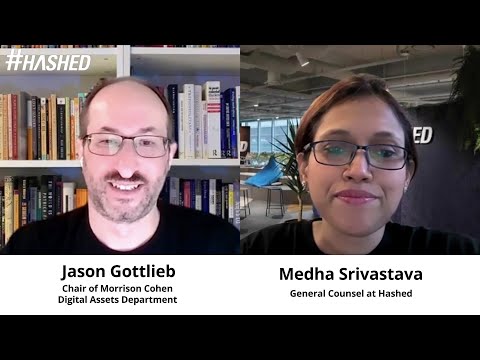
During the discussion, Gottlieb stated that the Ripple decision applied a transaction-based analysis, distinguishing between different categories of XRP transactions instead of treating the token itself as a security in every circumstance. He explained that this interpretation could affect how similar cases involving cryptocurrency exchanges and secondary market transactions are evaluated under U.S. securities law.
Gottlieb also addressed the SEC's proposed regulatory approach to DeFi, stating that registration requirements designed for traditional financial markets could present practical challenges for decentralized protocols. In addition, he discussed legal questions related to DAO governance, including the application of partnership law to governance participants, and reviewed legislative proposals intended to establish a federal regulatory framework for digital assets. The interview concluded with observations on the ongoing regulatory uncertainty surrounding the cryptocurrency sector in the United States. [10]
See something wrong?

Official Website:
Social Profiles: