0% read
Last updated:
Fantasy Top
Fantasy.top was a SocialFi platform and blockchain-based trading card game that combined cryptocurrency incentives, NFTs, and social media engagement. Launched on the Blast blockchain in 2024, the platform allowed users to trade digital cards linked to online personalities before ceasing operations in 2026. [1]
Overview
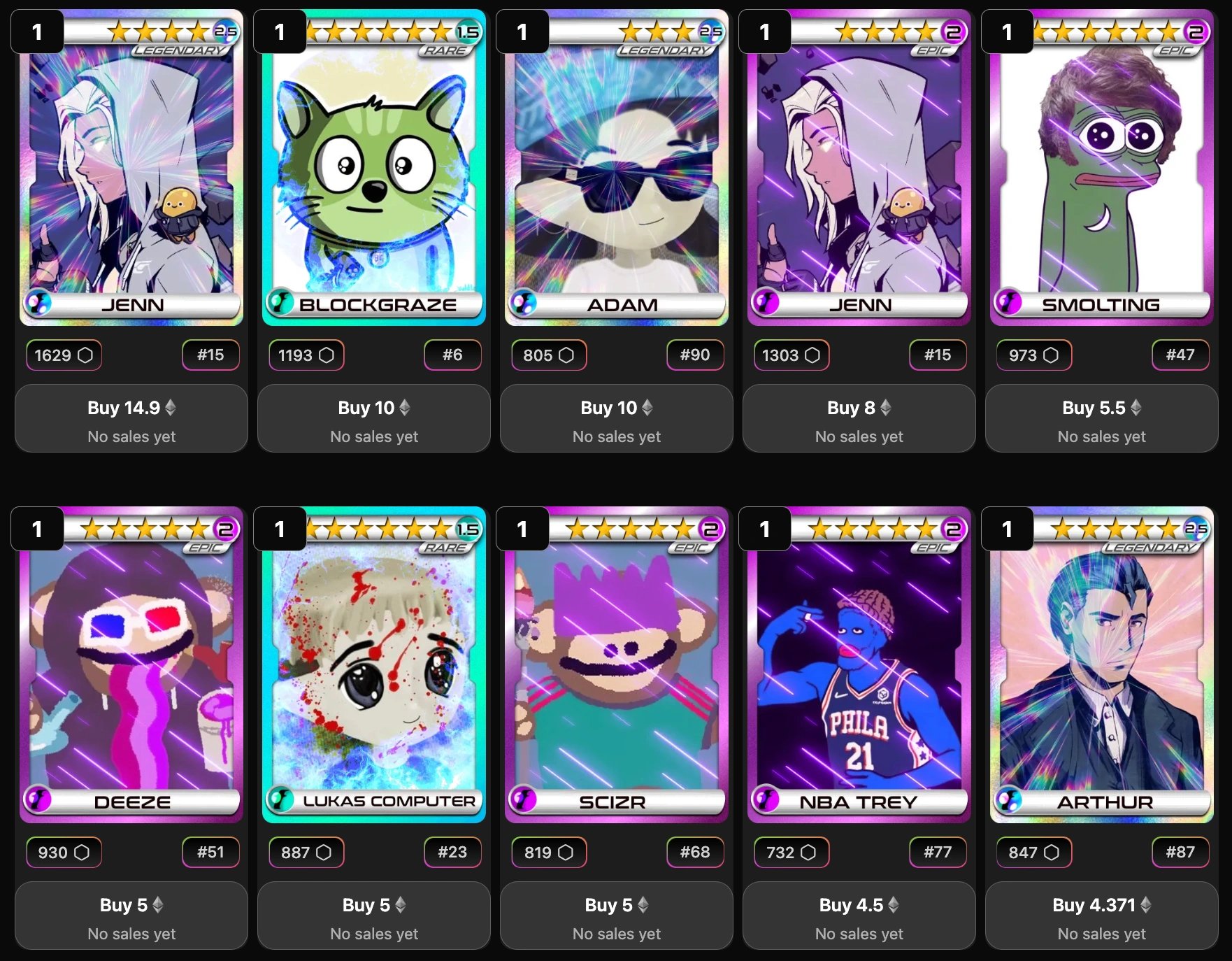
Fantasy.top is a blockchain-based SocialFi platform and digital trading card game launched in 2024 on the Ethereum layer-2 network Blast. The platform combines elements of fantasy sports, NFTs, decentralized finance, and social media by allowing users to collect and trade digital cards featuring cryptocurrency influencers and other online personalities. Card performance and in-game rewards were tied to engagement metrics on X (formerly Twitter), while featured individuals received portions of trading-related revenue associated with their cards.
The platform emerged during the growth of the SocialFi sector, following projects such as friend.tech, which explored blockchain-based monetization of online communities and creator engagement. Fantasy.top distributed rewards through Ethereum-based payouts and Blast ecosystem incentives, while also incorporating user participation systems such as FAN points. By 2025, the project experienced declining activity and revenue alongside a broader slowdown in the SocialFi market. In July 2025, Fantasy.top announced its migration from Blast to Base, the Ethereum layer-2 network associated with Coinbase. [2]
Closure
In May 2026, Fantasy.top announced that it would cease operations after approximately two and a half years. The project stated that it had operated primarily on platform-generated revenue despite having previously raised $5.6 million in seed funding led by Dragonfly. According to the team, all angel and seed investors would receive full reimbursement of their invested capital.
In a retrospective analysis, the team attributed the platform’s closure to structural challenges associated with combining financial speculation with social and gaming products. Fantasy.top argued that the financialization of digital collectibles shifted user incentives toward speculation rather than gameplay or community participation, making long-term user retention and product development more difficult. The team compared these challenges with those faced by other blockchain-based collectible and SocialFi projects, noting that financial incentives often became the primary driver of participation rather than the underlying product experience.
The company also reflected on broader trends within the cryptocurrency industry, including social tokens and early-stage token launches. It argued that projects introducing tokens before achieving sustainable product-market fit frequently encountered difficulties because attention shifted to token prices rather than product development. Fantasy.top noted that it chose not to launch a native token during its operation and cited concerns about the long-term sustainability of token-driven business models.
The closure followed several attempts to modify the platform’s structure, including introducing free-to-play features, alternative game modes, and reducing reliance on NFT-based assets. The team also identified the decline of the Blast ecosystem, on which Fantasy.top was originally built, as a contributing factor to reduced growth and user activity. The company concluded that future cryptocurrency-based social and gaming products would likely need to address the tension between financial incentives and user engagement in order to achieve broader adoption. [4] [5]
See something wrong?