0% read
Last updated:
Akshat Vaidya
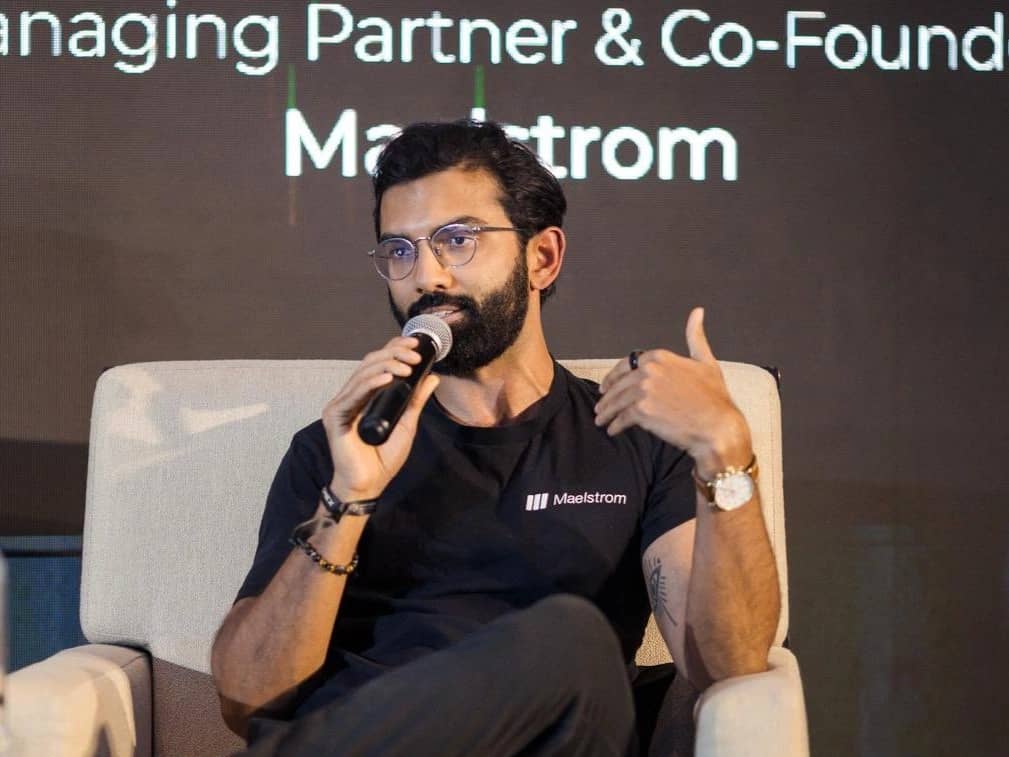
Akshat Vaidya is a business development professional and investor who is the Co-founder and Managing Partner of Maelstrom, the family office of BitMEX founder Arthur Hayes. He explores practical trade-offs between decentralization and scalability in emerging crypto systems. [1]
Career
Vaidya served as Music Director of Penn Masala from August 2009 to May 2013 in Philadelphia. During his tenure, he directed content strategy, operations, and creative production for the collegiate music group, overseeing studio recordings and live performances. He led musical direction and arrangement for the album Kaavish, which reached the iTunes World Music Top 10 in 2013, and managed performance logistics for tours across the United States, Canada, the United Kingdom, and India.
From January 2014 to May 2016, Vaidya worked as a Management Consultant at Galt & Company in the New York City metropolitan area. His work focused on mergers and acquisitions, commercial diligence, post-acquisition value creation, and market entry strategy for Fortune 100 clients across multiple regions.
He joined Granite Creek Capital Partners in June 2016 as a Private Equity Associate, based in Chicago. Until September 2019, he supported the screening, due diligence, and execution of buyouts and growth-stage investments in U.S. middle-market companies. Transactions included investments in a technology-enabled automotive services company, a logistics company, and a regenerative cellular technology producer.
From September 2019 to November 2022, Vaidya served as Vice President of Corporate Development and Strategic Finance at BitMEX in Hong Kong. He led mergers and acquisitions activity, venture and strategic investments, post-deal integration, and capital markets initiatives. During this period, he sourced and executed 11 strategic investments, including one acquisition, and coordinated portfolio management and integration efforts.
In December 2022, he co-founded Maelstrom and has served as Managing Partner. Based in the British Virgin Islands, he oversees global investment activities across venture, liquid markets, private equity, and public markets strategies for the family office of Arthur Hayes, founder of BitMEX. [2]
Interviews
Long Term Vision
In a February 2026 interview with Pursuit PR Academy, Vaidya described his journey from a retail crypto investor in 2013 to co-founding Maelstrom, a Hong Kong-based investment firm focused on off-chain crypto companies. He explained that after moving to Hong Kong in 2019 to join BitMEX Ventures, he gained experience in venture investing and corporate development, which later shaped Maelstrom’s strategy of investing in profitable off-chain crypto infrastructure and data businesses while also running venture and liquid crypto funds. Vaidya highlighted the distinction between on-chain tokenized businesses and off-chain companies, emphasizing Maelstrom’s approach of acquiring controlling stakes, improving operations, and providing cash-heavy exits for founders. He discussed the evolving regulatory landscape, noting the U.S. Genius Act’s formal recognition of stablecoins and their role as a more efficient digital dollar, and described crypto as a global equalizer that enables uncensorable trade while reinforcing U.S. financial influence. He also emphasized a long-term, multi-generational investment philosophy, framing Maelstrom’s work as part of a century-scale technological transition in blockchain and financial infrastructure. [3]

The Next Wave
In an August 2025 interview with Coinage, Vaidya discussed his experience investing in Bitcoin since 2013 and having lived through multiple market cycles and crashes. He said that each downturn had been marked by concerns about the absence of retail buyers, but that new categories of investors consistently emerged over time, including family offices and endowments allocating directly to tokenized projects. He described the expanding and diversifying buyer base as a structural shift for the industry. Vaidya also outlined the investment approach of Maelstrom, the family office of Arthur Hayes, noting its flexibility as an evergreen capital vehicle able to invest across venture and liquid strategies. He expressed a long-term preference for Bitcoin as a relative “flight to safety” within crypto, emphasized stablecoins as a major growth area with global dollar access implications, and predicted that revenue-generating AI agent projects—particularly those tied to trading infrastructure—would re-emerge as a significant theme beyond earlier speculative iterations. [4]

Learning From the Past
On the New Era Finance podcast in October 2025, Vaidya explained that he and his team at Maelstrom sold a large portion of their crypto positions at the end of December/early January, just before the market correction, because they felt the late-cycle hype — especially around anticipated regulatory clarity and rapid policy impacts — was disproportionate to what could realistically be delivered in the short term and that meaningful innovation would take a full cycle to materialize; after meeting with people in the new U.S. administration, they concluded that crypto was not an immediate priority, which reinforced their decision to reduce risk. He discussed new regulatory developments like the Genius and Clarity Acts as representing a move toward clearer rules and legitimacy, though still with outcomes to be seen, and highlighted that stablecoins and foundational blockchain infrastructure were among the first real product-market fits outside of speculation. Vaidya also reflected that the crypto industry still needed better user experiences to reach mainstream adoption, described why Maelstrom runs both venture and liquid investment strategies to capture different types of opportunities, and noted how venture funds often shift toward liquid markets as cycles mature while early-stage investing becomes more attractive during bear phases. [5]

Inside the Bear Market
In April 2025 on the Proof of Talk podcast, Vaidya discussed his journey from private equity in Chicago to joining BitMEX and eventually building at Maelstrom in Hong Kong. He explained how his firm positioned itself cautiously around macro uncertainty, including anticipated market disappointment tied to political developments, exiting liquid positions early and holding dry powder for future downturns. Vaidya described Maelstrom’s cycle-dependent strategy of deploying heavily during bear markets when valuations are attractive and focusing on opportunistic liquid trades later in the cycle. He shared his macro thesis that short-term economic disruption could lead to recessionary pressures and eventual monetary easing, while regulatory improvements would likely benefit the next bull cycle rather than the current one. Reflecting on this cycle’s lessons, he emphasized that total addressable market (TAM) was critical, as projects targeting massive markets outperformed niche but profitable ones. He also critiqued token launch dynamics, arguing that successful launches should reward early users rather than primarily benefiting VCs and exchanges, and noted how differing incentives shape listing timing. Finally, he recounted an unexpected experience in which a meme token he had casually created surged in value, prompting him to publicly lock his holdings and engage cautiously with the community. [6]

Crypto Empire
On The Rollup podcast in February 2025, Vaidya reflected on his journey through more than four crypto cycles, beginning with buying Bitcoin near the 2013 peak and later fully committing after the rise of smart contracts in 2016–17. He explained how each cycle had its own “meta,” from Bitcoin validation to DeFi, staking infrastructure, and later memecoins and AI narratives, though he believed the deeper long-term story centered on institutional adoption and real-world assets as regulation matured. While memecoins dominated attention, he advocated for a return to fundamentals, emphasizing tokens with real cash flows and sustainable fee structures. From an investment perspective, he maintained a disciplined portfolio approach—keeping roughly a third of his net worth in crypto, anchored by Bitcoin—while deploying capital aggressively during bear markets when others hesitated. On the venture side, he highlighted integrity, humility, and partnership-building as the most important founder traits, along with targeting large total addressable markets. He also discussed building businesses with recurring revenue and reduced founder dependency to make them more attractive for acquisition. The conversation closed with reflections on personal growth, including how therapy and microdosing had helped him challenge hierarchical thinking and take the risks that ultimately led him deeper into crypto. [7]

See something wrong?
Official Website:
Social Profiles: