0% read
Last updated:
Danny Lim
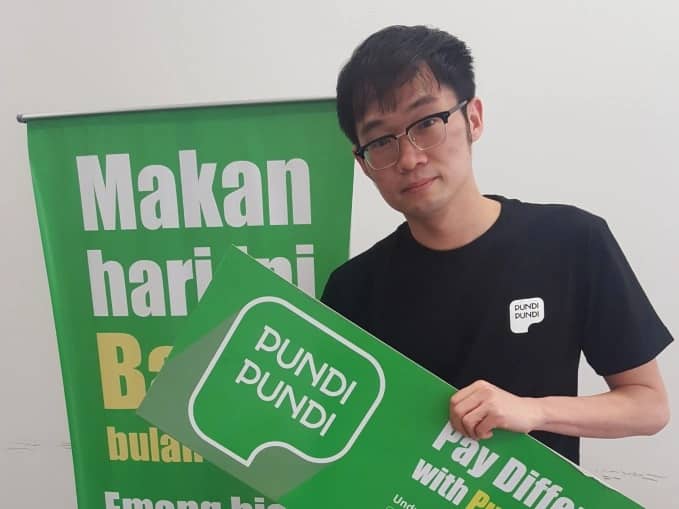
Wei Xiang "Danny" Lim is the co-founder of Pundi AI and a key executive within the Pundi X ecosystem. [1] [2]. Throughout his tenure, he has held multiple leadership roles, including President, Chief Financial Officer (CFO), and Head of Product, reflecting his diverse involvement in the projects' financial strategy, business development, and product innovation. [3] [4]. Lim is also a recognized writer and analyst on the mechanics of cryptocurrency trading and was a central public figure during Pundi AI's response to a major security breach in 2025. [5].
Education
Danny Lim is a PhD Law scholar from Tsinghua University. He also holds professional accounting qualifications, including ACMA and CGMA credentials.
Career
Pundi Ecosystem (Pundi X, Function X, Pundi AI)
Lim is the co-founder of Pundi AI and a key figure in its predecessors, Pundi X and Function X. [2] [5] [1] [7]. His roles have evolved over time, spanning finance, operations, business development, and product leadership.
His various titles across different stages of the Pundi ecosystem reflect a broad range of responsibilities:
- Co-founder & Chief Financial Officer (CFO), Pundi X: Starting in November 2017, this role focused on the financial architecture and management of the company. [3] [5].
- Co-founder & President, Pundi X / Function X: As President, Lim's responsibilities expanded to leading business development, global partnerships, and overall strategy for both Pundi X and its affiliated ecosystem project, the Function X Foundation. His mission was to make cryptocurrency accessible to mainstream users. [6] [1].
- Head of Business Development, Pundi X: From January 2018 to January 2021, Lim was directly involved in the global expansion of Pundi X's XPOS point-of-sale device, helping deploy over 200 units across 25 countries during that period. [4].
- Co-founder & Head of Product, Pundi AI: Following the project's rebranding and pivot to artificial intelligence, Lim took on the role of Head of Product in May 2023, co-founding the new entity with Zac Cheah and Pitt Huang to focus on AI-powered decentralized trading infrastructure. [4].
Pundi AI's "Data Pump" Product
As a leader in Pundi AI, Lim has promoted its flagship product, Data Pump, which was launched in July 2025. He described the product as a "launchpad for AI datasets." The platform aims to facilitate the tokenization of data, a concept known as DataFi. The process allows users to package datasets (such as tweets, audio files, or legal documents) into NFTs. These NFTs can then be staked to generate corresponding fungible tokens for trading on decentralized exchanges (DEXs). Lim has emphasized that Pundi AI focuses on high-quality, specialized data, utilizing professional annotators to create valuable datasets. The project claims to maintain one of the largest on-chain data stores in Web3, with over a petabyte of data. [5].
Pundi AI Hacking Incident (July 2025)
In July 2025, Pundi AI was subjected to a major security breach, and Lim became the public face of the company's response. The incident tested the project's crisis management and led to significant consequences in the South Korean market. [5] [1].
Attack and Response
The incident unfolded over several weeks:
- The Exploit: According to Lim, a vulnerability was introduced in the token's smart contract during the project's rebranding from Function X to Pundi AI on March 2, 2025. On July 12, an attacker exploited this flaw in the ERC1967Proxy contract to gain administrator privileges and illegitimately mint approximately 1 million PUNDI tokens, valued at over $6 million at the time. [5].
- Strategic Dilemma: Pundi AI's internal systems detected the abnormal minting within 20 minutes. At this point, Lim and the team faced a critical choice. They decided to prioritize the security of user assets by quietly tracking and freezing the stolen funds without alerting the hacker. This meant delaying a full public disclosure. They informed exchanges to suspend deposits and withdrawals and announced a "contract vulnerability" to the community. In an interview, Lim articulated the dilemma: "In the battle of wits and courage with hackers, should one prioritize user fund security without alerting the hackers? Or prioritize transparency and disclose information immediately...?" [5].
- Asset Recovery and Compensation: The strategy proved effective in recovering assets. The team successfully intercepted and froze between 87% and 95% of the stolen tokens across different chains. By July 31, Pundi AI announced it had completed full compensation for all affected users, advancing over $1 million of its own funds to cover the losses. [5] [1].
Delisting and Aftermath
Despite the high rate of asset recovery, the delayed disclosure had severe repercussions. On July 28, 2025, South Korea's Digital Asset eXchange Alliance (DAXA) announced the delisting of the PUNDI token from its member exchanges, effective August 28, 2025. The official reason cited was the "untimely disclosure of information." Lim acknowledged this outcome as a "painful lesson," stating, "in the Korean market, timely information and transparency are paramount." He noted that the primary damage was to the company's reputation rather than trading volume. Following the delisting, Lim announced plans to "unleash the lid" by increasing investment in DEXs, launching new AI data products, and initiating a token buyback and airdrop plan to reward community supporters. [5].
Writing and Analysis
Lim is a notable writer and analyst in the cryptocurrency community, recognized for his ability to explain complex financial mechanics in decentralized and centralized finance. He contributes to publications such as PANews and TechFlow and shares his analyses on his X (formerly Twitter) account, . [4].
He is the author of a well-regarded Chinese-language article series titled "合约算法镰刀" (Scythe of Contract Algorithms). This series provides in-depth examinations of the technical workings behind perpetual futures trading on major exchanges. His writing often covers:
- Perpetual Contracts: Detailed breakdowns of funding rates, mark price, index price, and their effects on trader profit and loss (PnL) and liquidations.
- Exchange Algorithms: Comparative analyses of the trading and liquidation engines on platforms like Binance and OKX.
- Market Making: Explanations of the logic behind algorithmic market making, including how market makers use tokens provided by project teams.
- Web3 Payments: Philosophical explorations of payment and circulation models in Web3, drawing parallels to real-world informal financial networks like those used by Chaoshan people.
Notable articles attributed to him include:
- Scythe of Contract Algorithms: The Perpetual Contract Financial Philosophy Battle Between Binance & OKX (Old Algorithm)
- Market Making Algorithm Revealed: "Protecting the Price" or "Dumping"? How Market Makers Use Tokens Borrowed from Projects?
- Learning from Chaoshan People: The Way of Web3 Payments Lies Not in Settlement, but in the Circulation of Underground Banking
- Scythe of Contract Algorithms (IV): The 0.01% Equilibrium — The Mechanism of Contract Funding Rates and Your Inexplicable Liquidation Regrets
Information on Lim's writing is based on a summary compiled from his public activities. [4].
Public Profile and Recognition
Lim maintains an active public profile through speaking engagements, social media, and industry recognition.
Public Speaking
Lim is a frequent speaker at cryptocurrency industry events. He was a featured speaker at the Consensus Hong Kong conference in 2025. [4]. He is also scheduled to speak at Consensus Hong Kong 2026 on February 11, 2026, where his session is titled "Verifiable AI: Building Trust in Autonomous Systems." [2]. He has also participated in online events, such as an "Ask Me Anything" (AMA) session for the Gate.io exchange, where the topic was "Making crypto easier!" [1].
Awards and Recognition
In 2018, Lim was named to the Forbes Asia 30 Under 30 list in the Finance & Venture Capital category for his work with Pundi X. [1].
Interviews
Fueling a Decentralized AI Data Economy #01
In a keynote delivered on November 4, 2025, at Taipei Blockchain Week and published on the event’s official YouTube channel, Danny Lim, co-founder of Pundi AI, outlined his perspective on the structural problems of the AI data economy and the role of Web3 in addressing them.

According to Lim, the development of artificial intelligence is constrained less by model design and more by access to high-quality, compliant data. He described his prior experience in regulated financial environments as formative, highlighting how KYC and AML compliance impose significant operational costs while simultaneously limiting access to sensitive transaction data needed for AI training. In his view, traditional data providers price such datasets at levels that effectively exclude most developers and restrict lawful reuse.
Lim presented Pundi AI as an attempt to resolve this imbalance by introducing a blockchain-based data layer where datasets are tokenized and made liquid. He explained that, within this model, datasets can be fractionalized and accessed through on-chain tokens, allowing developers to obtain partial usage rights while enabling data providers to retain control and receive incentives. This tokenization framework, as described by Lim, is intended to transform data from an illiquid, monopolized resource into a tradable digital asset.
He further emphasized the importance of aligning incentives among data contributors, developers, and capital providers within a single ecosystem. From his perspective, mechanisms such as crowdfunding for dataset creation and profit-sharing for contributors are necessary to sustain long-term participation and data quality. Lim cited platform metrics, including the number of datasets and contributors, as evidence that this approach can operate at scale.
Overall, Lim characterized decentralized data markets as a foundational step toward democratizing AI development. He argued that reducing financial and structural barriers to data access is essential for broader innovation, and that blockchain-based tokenization offers a practical path toward a more transparent and inclusive AI data economy, as he sees it. [8]
See something wrong?