0% read
Last updated:
Joachim Neu
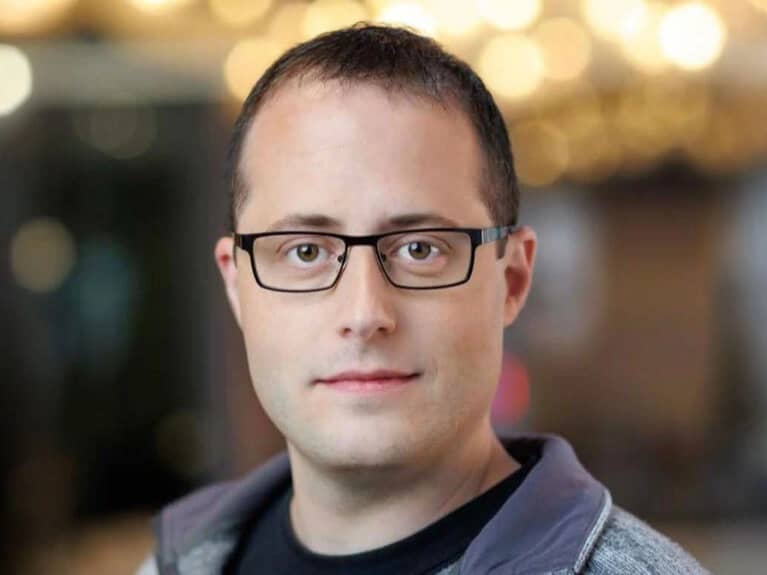
Joachim Neu is a postdoctoral research partner at a16z Crypto Research specializing in blockchain consensus mechanisms and the security of decentralized systems. He obtained his Ph.D. from Stanford University and is recognized for his research identifying vulnerabilities in existing proof-of-stake systems and designing more secure consensus protocols. His work spans distributed computing, applied cryptography, and networking, with a focus on the theoretical foundations of blockchain integrity and performance. [1] [2]

Education
Neu earned his Ph.D. from Stanford University, where he was advised by prominent researcher David Tse. His doctoral studies were supported by prestigious fellowships, including a Protocol Labs PhD Fellowship and a Stanford Graduate Fellowship. Prior to his Ph.D., he received a Master of Science degree from the Technical University of Munich (TUM), where his academic work centered on information and coding theory. Throughout his studies, Neu gained international research experience as a visiting student researcher at the Massachusetts Institute of Technology (MIT), École Polytechnique Fédérale de Lausanne (EPFL), and King Abdullah University of Science and Technology (KAUST). [2]
Career
Neu is a Postdoc Research Partner at a16z Crypto Research, which is the research arm of the venture capital firm Andreessen Horowitz's crypto fund. He works within the research group led by Tim Roughgarden. Before joining a16z crypto, Neu's research was primarily concentrated in information and coding theory, but his focus shifted to blockchain technology around 2020. [2]
In addition to his formal research papers, Neu contributes to broader industry discourse through articles and podcasts. In late 2024, he participated in an end-of-year podcast discussing major trends for 2025, such as stablecoins and user experience, and co-authored a roundup of exciting developments in the crypto space, including the convergence of AI and crypto. He also co-authored a report on the highlights from the Science of Blockchain Conference held in New York in August 2024. [1]

Research and Publications
Neu's research is demarcated by an earlier focus on classical information theory and a more recent, intensive focus on the security and design of blockchain consensus protocols. On his publications, his name is often marked with an asterisk to denote that authors are listed alphabetically. [2]
Blockchain Consensus and Security
Since shifting his focus to decentralized systems, Neu has co-authored numerous influential papers analyzing the security of major blockchain protocols and proposing novel designs to address identified weaknesses.
Analysis of Ethereum's Proof-of-Stake Consensus
A significant portion of Neu's research has involved a deep analysis of Ethereum's Gasper protocol, which combines the LMD GHOST fork-choice rule with the Casper-FFG finality gadget. His work identified critical vulnerabilities in the protocol. In the 2022 paper "Three Attacks on Proof-of-Stake Ethereum," Neu and his co-authors detailed exploits that could compromise the system's integrity. Further research, presented in "Two More Attacks On Proof-of-Stake GHOST/Ethereum," described a 'balancing attack' and an 'avalanche attack' against the LMD GHOST fork-choice rule, demonstrating how an adversary could stall the chain or cause honest validators to split their votes. [2]
To address these vulnerabilities, Neu, David Tse, and Ertem Nusret Tas proposed the Goldfish protocol in the paper "Goldfish: No More Attacks on Ethereum?!" (FC'24). Goldfish is designed to be provably secure against the class of "liveness" attacks that were shown to affect Gasper. [2]
Consensus Protocol Theory and Design
Neu has contributed to the fundamental theory of consensus protocol design, seeking to resolve long-standing dilemmas in distributed systems. His work on "Ebb-and-Flow Protocols" (S&P'21) introduced a family of protocols that navigate the "availability-finality dilemma." These protocols maintain high availability during network partitions (when parts of the network cannot communicate) but can provide transaction finality once the network returns to a stable, synchronous state. [2]
His research also extends to blockchains where validator participation is not continuous. A series of works on "Sleepy Consensus," including "Fully-Fluctuating Participation in Sleepy Consensus" (AFT'25), investigates models where participants can go offline and online, which is more representative of real-world decentralized networks. A 2025 preprint titled "Optimal Good-Case Latency for Sleepy Consensus" further explores the performance trade-offs in such systems. [2]
Accountability and Resilience
A key theme in Neu's recent work is accountability—the ability to provably identify and penalize malicious actors. The paper "The Availability-Accountability Dilemma" (FC'22) explored the trade-offs between keeping a system online and being able to punish misbehavior. Building on this, the May 2025 paper "Accountable liveness" (CCS'25), co-authored with Andrew Lewis-Pye, Tim Roughgarden, and Luca Zanolini, addresses how adversarial nodes can be punished if they deliberately stall a blockchain by preventing transactions from being confirmed. [2] [1]
In February 2025, Neu co-authored "Beyond 51% attacks: Precisely characterizing blockchain achievable resilience," which aimed to formally determine the exact threshold of malicious validators a blockchain can tolerate while maintaining both liveness (the ability to process new transactions) and safety (the immutability of past transactions). This work provides a more precise framework for understanding blockchain security beyond the commonly cited 51% attack threshold. [1]
Data Availability Sampling
Neu has also worked on scaling solutions for blockchains, particularly on Data Availability Sampling (DAS). In a 2025 preprint co-authored with Dan Boneh and others titled "Data Availability Sampling with Repair," he explored efficient methods for light clients to verify that all data for a rollup block has been published without having to download it entirely. He also wrote an explanatory blog post on the topic for the crypto research firm Paradigm. [2]
Information and Coding Theory
Before focusing on blockchain, Neu's research was concentrated in classical information theory. His Master's thesis at TUM was titled "Quantized Polar Code Decoders: Analysis and Design." He is the creator of Polar.jl, a software package written in the Julia programming language for simulating and analyzing polar codes, a type of error-correcting code. His work in this field also included applying Low-Density Parity-Check (LDPC) and convolutional codes to the challenge of DNA-based data storage, which is prone to high error rates. He also co-authored papers on the Degrees-of-Freedom (DoF) of wireless communication channels. [2]
Awards and Recognition
Throughout his academic career, Joachim Neu's research has been supported by several foundations and prestigious fellowships. These include the Protocol Labs PhD Fellowship, the Stanford Graduate Fellowship, and the German Academic Scholarship Foundation (Studienstiftung). He has also received research support from the Ethereum Foundation for his work analyzing and improving proof-of-stake consensus. [2]
Software Projects
In addition to his theoretical research, Neu has contributed to practical software implementations and tools for the blockchain space and academia.
- Polar.jl: A Julia implementation for the simulation and analysis of polar codes, stemming from his master's thesis work.
- Just In Time Ethereum Virtual Machine (JIT EVM): A technical report and open-source code for a JIT-compiled implementation of the Ethereum Virtual Machine, released under Paradigm to explore performance improvements.
- Research Prototypes: Neu frequently publishes the source code for the experiments and prototypes associated with his research papers. This includes code for the Goldfish protocol, simulations of the attacks on Gasper, and implementations of the Ebb-and-Flow protocols. [2]
See something wrong?