0% read
Last updated:
Justin Drake
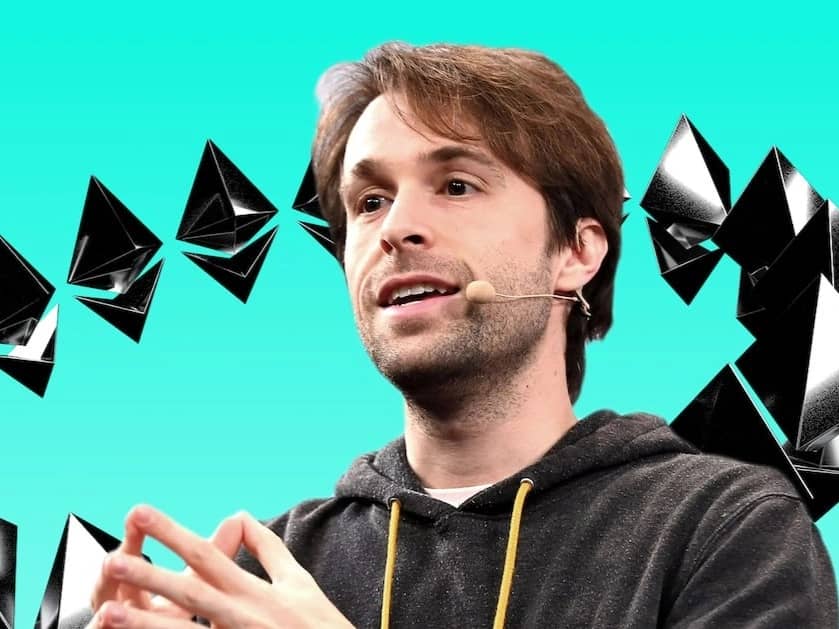
Justin Drake is a researcher at the Ethereum Foundation, recognized for his contributions to Ethereum's scalability, consensus mechanism, and economic design. He has been a central figure in the research and development of Ethereum's Proof-of-Stake transition, known as The Merge, as well as its sharding roadmap. Drake is also credited with popularizing the term "ultra sound money" to describe Ethereum's potential for deflationary economics and has proposed long-term strategic roadmaps for the protocol, including the "Lean Ethereum Vision."[1][2]
Education
Drake studied at the University of Cambridge, where he received a BA in Mathematics.[1]
Career
Engineering
Justin Drake began his career in Cambridge as an Engineer at Camvine (Sep 2011–Jan 2012). He then joined Argon Design Ltd as a Principal Engineer (Mar 2012–Mar 2015), working across consulting engagements that blended hardware and software—particularly FPGA development and web programming. His work included hardware testing for telecommunications infrastructure, FPGA/software design for medical devices, a visualization dashboard for deep packet inspection, dense PCB layout for ASIC testing, and an FPGA trading system optimized for extremely low network latency.[1]
Bitcoin and Fintech
Drake moved deeper into crypto and financial services as a Fellow at Anthemis Group (Sep 2014–Aug 2015) in the firm’s first fellowship cohort. During this period he focused full-time on Bitcoin, rotating through organizations across multiple hubs (including Brussels, Sydney, and Munich), and developing a broader perspective on Bitcoin’s role within financial systems.
Building on that experience, he founded and led Duo Money. The company focused on making OpenBazaar more accessible through products including Duo Search and Duo Money, centered on improving discovery and payments for open, Bitcoin-adjacent commerce.
Ethereum
Since December 2017, Drake has been a Researcher at Ethereum Foundation, where his work has been closely associated with sharding research and protocol scalability.[3]
Contributions and Views
As a researcher at the Ethereum Foundation, Drake has influenced several key areas of the network's development and long-term strategy. His research interests include zk-EVM, distributed sequencers, enshrined Proposer-Builder Separation (PBS), MEV burn, quantum resistance, statelessness, and formal verification.[4]
Proof-of-Stake and Sharding
Drake's early work at the Ethereum Foundation was centered on designing the network's Proof-of-Stake consensus and sharding-based scalability solutions.[1] He was a key researcher in the development of Casper, a PoS finality gadget, and contributed to the original sharding design that utilized a central beacon chain and validator committees. This architecture became the foundation for Ethereum’s consensus layer, which powered The Merge, and later evolved into the Danksharding roadmap for data availability.[1][4] He played a significant role in the execution of The Merge in September 2022, which transitioned Ethereum from Proof-of-Work to Proof-of-Stake.[3]
Data Availability
Drake's initial contribution to Ethereum was his proposed solution to the "Data Availability Problem," which ensures that all data for a new block is accessible to the network, a fundamental requirement for secure scaling.[3] His subsequent work has been pivotal in this area, and he is credited with developing the "Blob" concept. Blobs are a data format designed to address data availability efficiently and prevent malicious activities like block withholding attacks, forming a core component of the Proto-Danksharding upgrade (EIP-4844).[5]
"Ultra Sound Money"
Drake is widely credited with coining and popularizing the "ultra sound money" meme, a term describing the potential for Ethereum's native asset, ETH, to become a deflationary currency.[1] The concept is based on the interaction between ETH issuance to validators and the fee-burning mechanism introduced in EIP-1559. When the amount of ETH burned through transaction fees is greater than the amount issued as staking rewards, the total supply of ETH decreases, making it "ultra sound" in contrast to Bitcoin's "sound money" principle of a fixed supply cap. On February 5, 2025, Drake referenced the concept with his popular "bat signal" meme, noting that he would deploy it again when ETH's supply burn outpaced issuance.[1]
Lean Ethereum Vision
In 2024 and 2025, Drake began publicly outlining a ten‑year roadmap he calls the "lean Ethereum" vision, which he describes as a personal mission for the next decade of protocol development.[7][4] Presented at conferences such as ETHTaipei 2024 and ETHVietnam and formalized in a July 31, 2025 Ethereum Foundation blog post, the vision sets out how Ethereum could scale to tens of thousands of transactions per second on Layer 1 and millions of transactions per second across Layer 2s, while maintaining 100% uptime and strong decentralization.[7] Drake frames the roadmap around two strategic modes: "fort mode" for long‑term survivability against threats such as nation states and quantum computers, and "beast mode" for aggressive performance scaling.[7][4]
Drake argues that next‑generation, hash‑based cryptography is central to reconciling these goals, positioning it as a unified response to both the rise of SNARKs and the looming quantum threat.[7] In his description, lean Ethereum reimagines consensus, data, and execution layers from first principles to enable hash‑based signatures, commitments, and zk virtual machines, with complexity encapsulated off‑chain or in higher layers.[7][4] He presents this not only as a technical roadmap but as an "aesthetic" he calls "lean craft," emphasizing minimalism, modularity, formal verification, and provable security, while explicitly acknowledging that it is one "Drake take" among a diversity of views within the Ethereum community.[7]
Bunker Mode
In October 2026, Drake urged the crypto industry to begin planning for a precautionary "bunker mode" in case the Elliptic Curve Digital Signature Algorithm (ECDSA) were broken in a way that allows rapid private key recovery, stressing that this was a personal recommendation and not evidence of any existing break.[6] He argued that it is now reasonable to prepare for a worst‑case scenario in which such an attack could emerge "months not years" before large‑scale quantum computers, potentially using advances in artificial or super intelligence or new classical algorithms to target elliptic‑curve cryptography.[6]
Drake recommended that large and "sophisticated" holders take gradual, controlled steps to move most funds to fresh addresses whose public keys remain hidden behind a hash, and to move residual balances again after any signing event exposes a public key, while smaller holders follow later.[6] He warned against panic or rushed, large‑scale migrations, arguing that poorly coordinated moves could create more risk than they remove, and called on major custodial platforms to review the resilience of their cold‑storage setups.[6] Linking this warning back to his lean Ethereum roadmap, Drake framed bunker‑mode planning as consistent with a broader shift toward hash‑based, formally verified cryptography as a long‑term hedge against both quantum and AI‑enabled threats.[6]
Real-Time ZK Proving
Drake is a prominent advocate for using zero‑knowledge (ZK) proofs to verify Ethereum execution in real time, viewing this as key to making Ethereum more zk‑friendly and enabling fast, secure scaling. He has promoted an EF roadmap in which validators can opt into "ZK clients" that statelessly verify succinct proofs of execution instead of re‑executing blocks, and has supported defining clear performance and security targets for zkVM teams pursuing this goal.[8] In this context, Drake emphasizes home‑grade "real‑time proving" as a decentralization benchmark: proofs with at least 100–128‑bit security, under 300 KiB in size, and fast enough that most mainnet blocks can be proven within about 10 seconds on hardware constrained by residential power limits.[8]
Reflecting this focus, Drake has highlighted industry progress toward those benchmarks, such as updates in 2025 on zkVM teams proving the majority of Ethereum mainnet blocks within the 12‑second slot time.[8][1] He presents real‑time proving as both a security upgrade for Layer 1 and a foundation for stronger guarantees and composability on Layer 2s, aligning it with his broader lean Ethereum vision of a simple base layer backed by advanced, hash‑based ZK infrastructure.[8][7]
See something wrong?