0% read
Last updated:
Mohamed Ezeldin
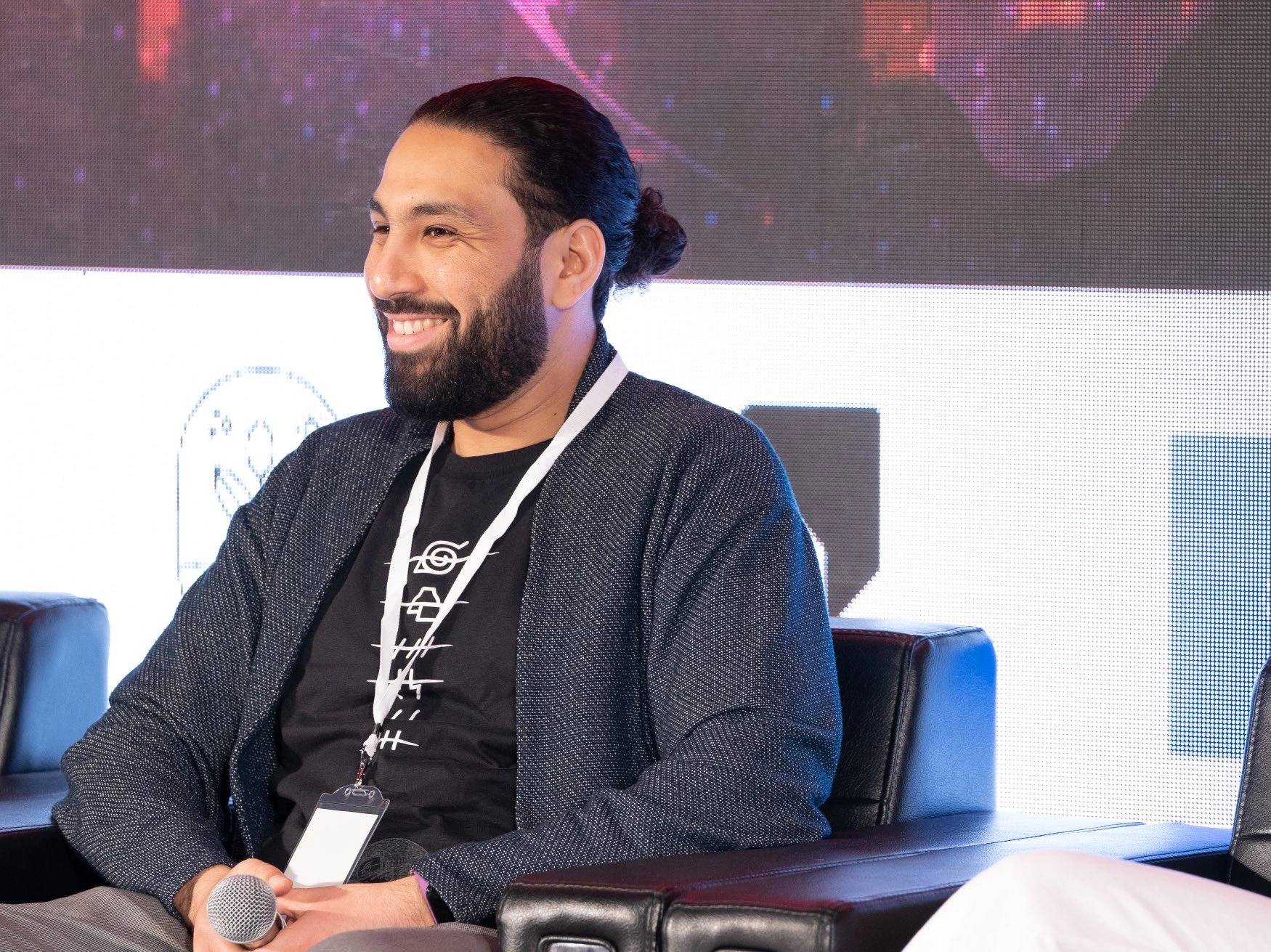
Mohamed Ezeldin, known professionally as "Mo," is a British-based tokenomics specialist and executive at Animoca Brands, the Hong Kong conglomerate with stakes in over 500 firms including Kraken, MetaMask, Ledger, as well as chairman of Open Campus. [1] A mathematician and former educator by background, he founded the tokenomics function at Animoca Brands in early 2021 and, as of February 2026, leads Animoca Labs, a unit created to build token economies inside the product development cycle.[2][3] He is based in London, England.[4]
His work centers on designing the incentive structures — supply, emissions, liquidity, and governance — that govern how a cryptocurrency token behaves and who benefits from it, a discipline he helps Animoca Brands' portfolio companies apply to their own token launches.[5]
Early Life and Education
Ezeldin studied at Queen Mary University of London, earning a Bachelor of Science in Mathematics between 2007 and 2010, followed by a Master's in Mathematics and Statistics between 2010 and 2011.[6] He is described across his professional profiles as a mathematician by training, and he has said his path from the classroom into digital economies has been "an unconventional journey."[2][3]
Before entering the blockchain industry, Ezeldin worked in finance and education. He interned at the professional services firm EY in 2008 and served as Director of Sales and Finance at El Makay between 2011 and 2014.[6] He then spent much of the 2010s teaching mathematics, holding the role of Head of House and Mathematics Teacher at ARK Academy from 2014 to 2016 and Head of Faculty for Mathematics at Beacon High from 2019 to 2021.[6]
Career
Early Career and Finance
Mohamed Ezeldin began his professional career as an intern in the Audit department at EY in Cairo, Egypt, where he worked from June to September 2008. His work was carried out under the team manager and included auditing British Petroleum, which served as the basis for later work with digital assets.
From August 2011 to July 2014, Ezeldin was Director of Sales & Finance at El Makay in London. He managed the company's sales and finance departments. During his first year, sales increased by 32%, while changes to the company's financial structure resulted in reported annual savings of at least 13%.
Mathematics and Education
From June 2014 to July 2016, Ezeldin worked at Ark Academy (Wembley Park) in London as Head of House and Mathematics Teacher. His responsibilities included mathematics teaching, curriculum planning, lesson development, monitoring pupil progress, student interventions, and behavior management. He also contributed to the development of resources and schemes of work for Key Stage 3 and Key Stage 4, taught Additional Mathematics, and received training related to the 1–9 GCSE grading system.
As Head of House, Ezeldin planned and coordinated events, delivered house assemblies, co-managed a team of 12, and oversaw activities involving more than 200 pupils. He also led the Mathematics Challenge Club and organized inter-school team challenges.
Blockchain and Tokenomics
In 2018, Ezeldin began working in the blockchain sector. From March to September 2018, he was a Tokenomics Expert at Auto Block in London. His work involved a platform incorporating automotive industry and blockchain technology.
From April 2018 to November 2019, Ezeldin worked as Community Admin at DFINITY.
He also worked as a Tokenomics Expert at KnowledgeBlock from September 2018 to December 2021. His work involved the development of token economies for startups in the blockchain sector.
Beacon High
From September 2019 to December 2021, Ezeldin served as Head of Faculty - Mathematics at Beacon High in London. He was responsible for the Mathematics faculty and introduced pedagogical frameworks addressing the organization of learning environments, student ownership of learning, growth mindset, and the classroom environment for students and teachers.
He also introduced a behavior system addressing attitudes toward learning, punctuality, and general conduct. During his tenure, the school's Mathematics results changed direction after a three-year decline and subsequently improved year on year. He was also a member of the broader school leadership team.
Animoca Brands
Ezeldin joined Animoca Brands in 2021 as the founding member of its tokenomics department. From July 2021 to December 2025, he served as Head of Tokenomics. In this position, he developed a multidisciplinary team working on token economies and incentive structures for projects and their stakeholders. His work included projects such as ApeCoin, Open Campus, Life Beyond, Grapes, and OMA3.
The tokenomics function expanded from an advisory role into work involving the design and stress-testing of economic systems across gaming, education, intellectual property, and digital ecosystems. Projects and organizations associated with this work included Yuga Labs, Pixels, Igloo Inc, Open Campus, and Mocaverse.
ApeCoin
From July 2024 to June 2025, Ezeldin served as a Special Council member at ApeCoin.
Open Campus
Ezeldin became President of Open Campus in July 2025. His responsibilities included work related to Edu OS, institutional partnerships, EduFi, and the Open Campus ecosystem. His role covered areas including education, finance, credentials, and digital assets.
Animoca Labs and Minds
In July 2026, Ezeldin became VP - Head of Animoca Labs at Animoca Brands. His LinkedIn profile describes the position as involving the development of Minds, an agentic AI product.
The role followed his leadership of Animoca Labs, a unit operating across economics, product, and execution. Its work includes token design, product design, go-to-market execution, incentive structures, product loops, distribution, and monetization.
Minds is an Animoca Brands product involving autonomous AI agents capable of acting, transacting, and communicating on behalf of people. Ezeldin has participated in initiatives related to Minds, including Creative Minds Jam #1 in Hong Kong, where he served as a judge, and VibeBlitz, organized with Yield Guild Games. [1] [2] [3] [4] [5] [7] [9] [10]
Interviews
Token Economics and Education #01
On January 5, 2026, Mohamed Ezeldin appeared on the World XP Podcast, hosted by Eric, in a discussion covering blockchain technology, token economics, education, financial literacy, and digital assets. Ezeldin discussed Bitcoin's peer-to-peer transaction model, describing its ability to facilitate transactions without relying on an intermediary to establish trust. He also compared Bitcoin with traditional stores of value, referring to scarcity and market consensus as factors associated with its valuation.

The discussion addressed tokenization and non-fungible tokens (NFTs) as methods of representing ownership of digital assets. Ezeldin described NFTs as containers for information or assets and discussed their use in areas including gaming, digital collectibles, and the representation of other forms of ownership. He also discussed the formation of communities around digital assets, including communities whose members are distributed across different geographic regions.
Ezeldin also discussed Central Bank Digital Currencies (CBDCs) in comparison with public blockchain networks. He stated that CBDCs could provide governments or central banks with greater control over transactions and digital funds than systems in which individuals directly control their assets. The discussion connected this distinction with questions concerning financial autonomy, access to funds, and the degree of control exercised by institutions over digital currencies.
Education financing was another subject of the interview. Ezeldin discussed student debt in the United States and the United Kingdom, attributing part of the problem to the structure of existing education financing systems. He described alternative models involving digital credentials, data, tokenization, and income-linked financing. In this context, he discussed Open Campus and its work with educational technology companies, including an accelerator intended to bring different education-related projects into the same ecosystem.
Ezeldin described his approach to education as influenced by his previous experience as a mathematics teacher and by his work in token economics. He explained that financial literacy is relevant to the use of digital assets and that educational material concerning financial and technological concepts needs to be accessible to users without specialized knowledge.
The interview also addressed the adoption of Web3 applications. Ezeldin stated that applications should prioritize usability rather than requiring users to understand the underlying blockchain infrastructure. He suggested that digital assets could be incorporated into products and services without being the primary focus of the user experience. As an example, he discussed applications in areas such as sports and entertainment in which users could receive digital assets or other forms of rewards as part of activities they already engage with.
Ezeldin further discussed approaches to evaluating crypto projects, including their development plans, execution, partnerships, financing, token structures, and participation within their respective ecosystems. He contrasted these factors with approaches centered primarily on short-term price movements. He also discussed the distinction between speculation and participation in systems in which tokens have defined functions or are connected to specific applications.
The conversation concluded with discussion of education, technology, and the role of collaboration among organizations. Ezeldin stated that changes within the education sector require participation from multiple organizations and described Open Campus as an environment in which different education-related projects can operate. He also argued that discussions surrounding cryptocurrency and blockchain extend beyond financial applications and can involve broader questions concerning education, ownership, and the organization of digital economies. [11]
Tokenomics and Digital Economies #02
On May 30, 2024, Mohamed Ezeldin was interviewed by Sasha Shagy for the Arcanum Ventures YouTube channel during the 13th Global Blockchain Congress in Dubai. The interview addressed memecoins, token listings, liquidity, exchange markets, tokenomics standardization, blockchain gaming, and decentralized governance.

Ezeldin described memecoins as part of the broader culture surrounding cryptocurrency, noting that meme-based projects can encompass different types of activity, including speculative trading and malicious schemes. He discussed the launch of meme coins associated with existing companies and technologies, citing an investigation into the Grok meme coin as an example of a process in which multiple similarly themed tokens were created and introduced to liquidity pools.
The interview also examined the process of listing newly launched tokens on centralized exchanges. Ezeldin discussed factors such as token ownership concentration, available liquidity, user activity, and exchange requirements as considerations in assessing potential risks. He also compared this approach with decentralized exchange launches, where liquidity pools can provide an initial market for a token before it is listed on centralized platforms.
Ezeldin discussed the relationship between centralized and decentralized exchanges in relation to liquidity and price formation. He described centralized exchanges as generally using order-book mechanisms and decentralized exchanges as commonly using automated market makers, resulting in different trading environments and user groups. He also identified arbitrage between the two markets as a mechanism through which trading activity and liquidity can move between them.
On the standardization of tokenomics practices, Ezeldin identified potential advantages in using predefined structures, particularly for companies seeking standardized approaches to incorporating digital assets into their products. At the same time, he stated that standardization could reduce differences between projects and exchanges while the industry continues to develop new token models and applications.
Ezeldin also discussed the distinction between Web2 and Web3 gaming models. He stated that traditional game users may expect in-game currencies to maintain relatively stable purchasing value, whereas participants in Web3 gaming may place greater attention on token prices and narratives associated with projects. Based on this distinction, he questioned the use of the term "Web2.5" for products intended to serve both groups through a single economic model.
The discussion addressed the role of reputation systems in decentralized governance. Ezeldin pointed to token-weighted voting as a system in which users holding larger amounts of tokens can have greater influence over decisions. He discussed reputation mechanisms as an alternative or complementary layer that could account for participants' knowledge, contributions, or experience when determining influence within a governance system. He further described a model in which decentralization could increase progressively as participants establish reputations within an ecosystem.
In discussing the role of tokenomics within projects, Ezeldin stated that token design extends beyond token allocation and distribution schedules. He associated tokenomics with areas including business strategy, growth, governance, decentralization, community development, market narratives, legal considerations, and decisions concerning token supply and structure. He characterized the discipline as involving multiple interconnected components that may change as a project develops. [12]
See something wrong?