0% read
Last updated:
MUSD
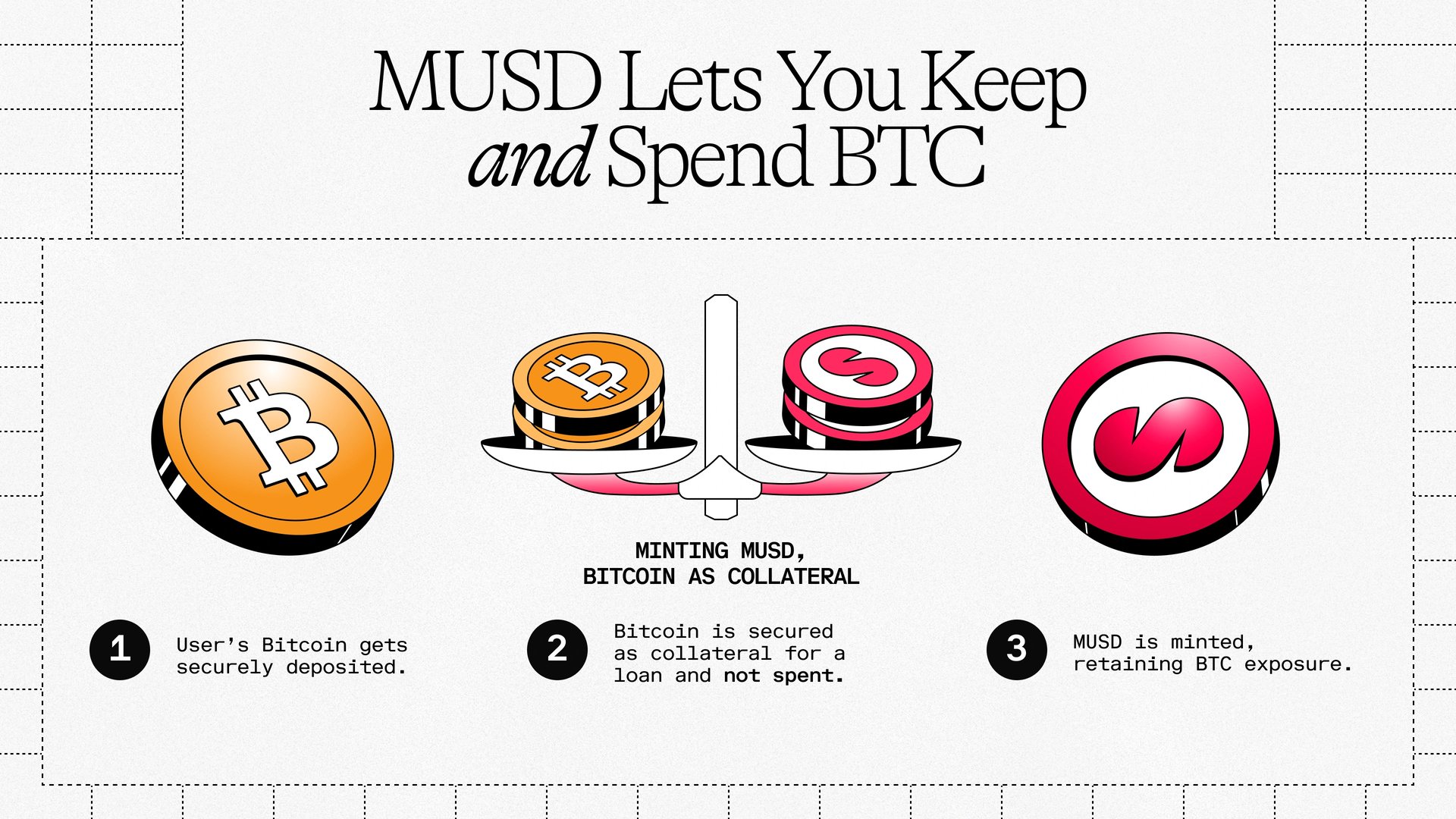
MUSD is a decentralized stablecoin designed to maintain a 1:1 peg with the U.S. dollar. It is fully collateralized by Bitcoin (BTC) through a system of overcollateralized loans, also known as collateralized debt positions (CDPs). Part of the Mezo ecosystem, MUSD allows users to deposit Bitcoin as collateral to mint, or borrow, dollar-denominated liquidity while retaining full ownership and price exposure to their underlying BTC. The system operates on-chain using smart contracts, ensuring transparency of all reserves and loan positions. [1]
Compare Cryptoassets
Select an asset to compare its price and other stats against MUSD.
Overview
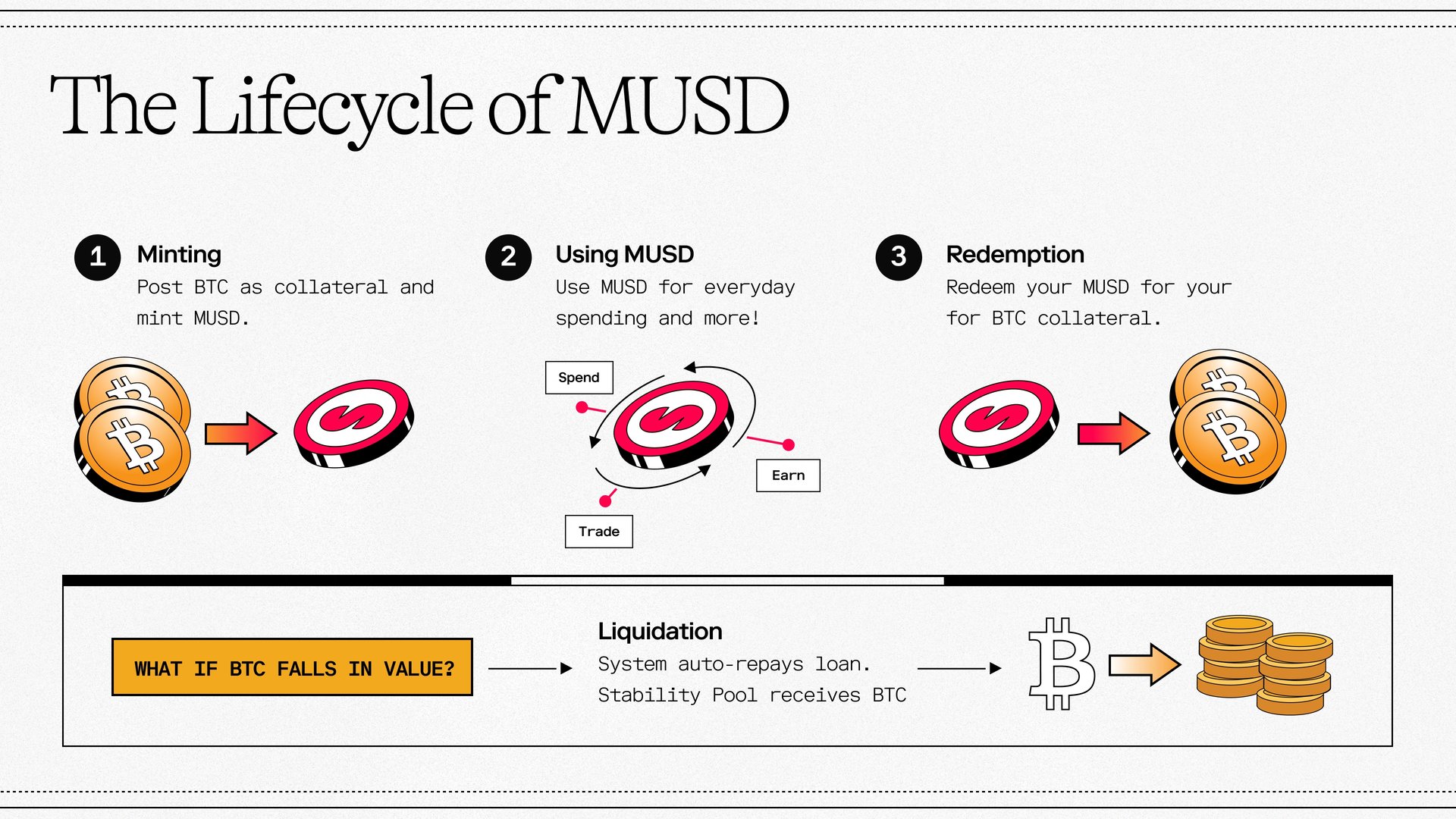
MUSD is a Bitcoin-backed, dollar-pegged stablecoin created through an overcollateralized lending system. Users deposit Bitcoin as collateral into a smart contract and mint MUSD against it, maintaining full exposure to their underlying BTC while accessing dollar-denominated liquidity. The stablecoin is designed to track a 1:1 value with the U.S. dollar. The system operates using collateralized debt positions, where each MUSD is backed by Bitcoin reserves and must remain above a minimum collateral threshold. Stability is maintained through arbitrage mechanisms: if MUSD trades below its peg, it can be redeemed for underlying Bitcoin; if it trades above its peg, new MUSD can be minted and sold into the market. These incentives help keep the price near $1.
Interest rates on borrowed MUSD are fixed and determined at the time of minting. The system allows users to borrow a significant portion of their Bitcoin value while requiring overcollateralization to manage risk. Liquidation and redemption mechanisms ensure system solvency during periods of volatility. Unlike fiat-backed or algorithmic stablecoins, MUSD is fully collateralized by Bitcoin within on-chain smart contracts, with transparency into reserves and positions. [2] [3]
Architecture
The MUSD system comprises multiple smart contract layers that manage issuance, collateral, liquidity, and system stability. At its core, MUSD is a Bitcoin-backed stablecoin governed by contracts that handle borrowing positions, collateral storage, and liquidation mechanisms, while maintaining a USD peg through overcollateralization and redemption incentives. User positions are created when Bitcoin is deposited into a borrowing contract, which issues MUSD and routes collateral into dedicated pools. These pools segregate collateral by state (active, surplus, default, or gas-related reserves). Collateral is managed through a decentralized custody system built on tBTC infrastructure, which provides transparent, verifiable Bitcoin backing.
Borrowing operates with fixed interest rates set at loan creation, which remain unchanged unless a user chooses to refinance under a new global rate. Interest and fee payments are collected by the protocol and allocated among system maintenance functions, debt-repayment mechanisms, and governance-directed liquidity programs. System stability is maintained through collateralization requirements, liquidation processes, and redemption mechanisms that allow MUSD holders to exchange tokens for underlying Bitcoin value. If collateral ratios fall below defined thresholds, positions may be liquidated and redistributed to protect overall system solvency.
Key system metrics define how debt and collateral are measured at both individual and protocol-wide levels, including ratios that determine risk, liquidation thresholds, and recovery conditions. Overall, the architecture is designed to maintain solvency, enforce overcollateralization, and ensure transparent, rule-based handling of collateral and debt across all positions. [5]
See something wrong?