0% read
Last updated:
Robert Mitchnick
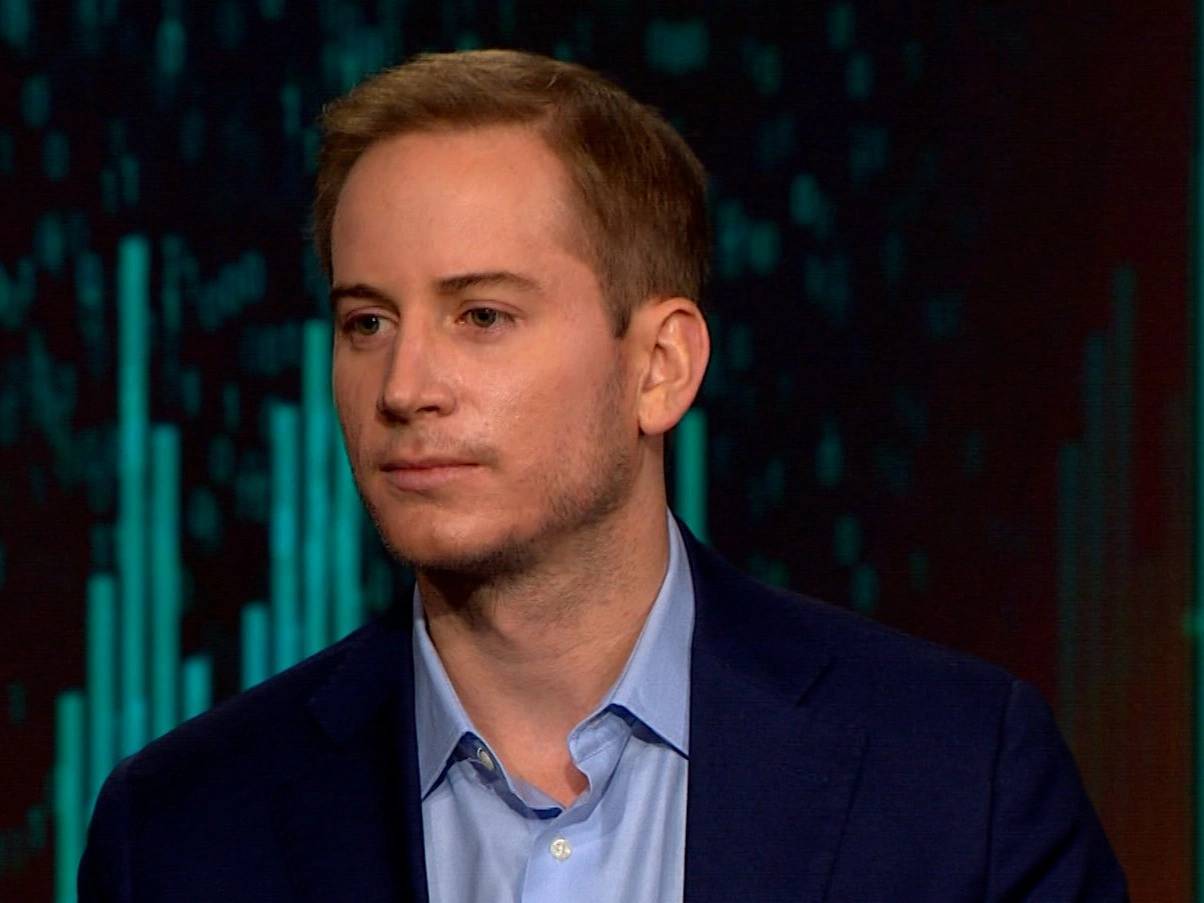
Robert Mitchnick, also known as Robbie Mitchnick, is the Managing Director and Head of Digital Assets at BlackRock, the world's largest asset manager [1] [2]. He is a key figure in the institutional adoption of cryptocurrencies, leading the firm's global strategy, product development, and business operations for its digital asset offerings, most notably the iShares Bitcoin Trust (IBIT). A prominent spokesperson for BlackRock's approach to the asset class, Mitchnick frequently comments on market structure, institutional demand, and the long-term role of digital assets in traditional finance [3].
Education
Mitchnick earned a Master of Business Administration (MBA) with a specialization in Finance from The Wharton School at the University of Pennsylvania between 2013 and 2015. Prior to his graduate studies, he attended the University of California, Berkeley, where he received a Bachelor of Arts degree in the Political Economy of Industrial Societies, graduating in 2009. Some sources also indicate he holds a Blockchain Technologies Certification from the MIT Sloan School of Management and is a CFA Charterholder [2] [4].
Career
Early Career and Ripple
Mitchnick began his career in management consulting at Monitor Deloitte (formerly Monitor Group), where he worked from August 2009 to November 2012. Following this, he had a brief but notable tenure at Ripple, a real-time gross settlement system and currency exchange network, serving as a Senior Manager from May to July 2013. This early exposure to the digital asset industry has been a point of interest for market observers, particularly in relation to speculation about potential future BlackRock products. During his time at Ripple, he co-authored a research paper titled 'A Fundamental Valuation Framework for Cryptoassets' with Susan Athey, a distinguished economist and winner of the John Bates Clark medal [2] [5].
BlackRock
Mitchnick joined BlackRock in August 2015 as an Associate. He progressed through several roles of increasing responsibility within the firm, including Vice President (March 2017 - February 2020) and Director (March 2020 - October 2021), where he was involved in corporate strategy and the iShares ETF business. In November 2021, he was appointed Managing Director and Head of Digital Assets, a role he co-founded within the firm. In this position, he leads the team responsible for driving BlackRock's overall digital assets strategy, developing new products, and managing strategic initiatives involving distributed ledger technology (DLT). He played an instrumental role in the development, launch, and management of the iShares Bitcoin ETF (IBIT), which became one of the most successful ETF launches in history [2] [1].
Views on Digital Assets
As a key spokesperson for BlackRock, Mitchnick's public commentary provides insight into the institutional perspective on the evolving digital asset landscape. His views often focus on balancing the potential of assets like Bitcoin with the practical realities of risk management for institutional clients.
Bitcoin's Institutional Narrative
Mitchnick consistently frames Bitcoin as a digital commodity and a potential portfolio diversifier, similar to gold, rather than as a transactional currency [3]. He has stated that for institutions, the "portfolio construction case is very compelling" due to Bitcoin's historically low correlation with traditional asset classes like stocks and bonds [6].
He has described BlackRock's role as being a "bridge between traditional finance and the digital asset world," with products like the Bitcoin ETF designed to provide clients with familiar, regulated, and convenient access to the asset class [7]. Mitchnick has confirmed BlackRock’s long-term commitment to the space, stating, "Over time, there’s certainly going to continue to be a greater role for digital assets and this technology theme in general for many of our clients" [2].
iShares Bitcoin Trust (IBIT)
Mitchnick frequently discusses the success of the iShares Bitcoin Trust (IBIT). He has commented on the strong and sustained inflows into the fund since its launch, noting that after the U.S. approval of spot Bitcoin ETFs, "the flows are back in a big way" [7]. He has characterized the significant capital moving into IBIT as a "flight to quality," with investors choosing trusted and established providers for their Bitcoin exposure [6].
He has detailed the evolution of investor interest in IBIT, which began with strong demand from retail and self-directed investors before progressing to "steady" adoption from wealth advisors and, more slowly, larger institutional investors such as pensions and endowments. He noted that while the approval process for new products on major wealth platforms can take years, some firms were "fast-tracking" Bitcoin ETFs over quarters rather than months, signaling growing acceptance [6].
Market Risks: Leverage and Volatility
A recurring theme in Mitchnick's public statements is a warning against the risks posed by excessive leverage in the cryptocurrency market. In February 2026, during a conversation at Bitcoin Investor Week, he argued that "leverage-driven volatility risks undermine Bitcoin's institutional narrative" [2]. He elaborated that rampant speculation on crypto derivatives platforms, particularly those offering perpetual futures, can create cascading liquidations and price dislocations that are at odds with the perception of Bitcoin as a stable store of value or a portfolio hedge [1].
Mitchnick has expressed concern that such volatility makes it harder for risk-averse institutions to adopt the asset, as it causes its trading behavior to resemble a "levered NASDAQ" rather than a decentralized monetary asset. He has defended spot Bitcoin ETFs like IBIT, stating that they are not the source of this instability. He provided data from a volatile market week showing that while billions were liquidated on leveraged platforms, BlackRock's IBIT saw redemptions of only 0.2%, pushing back against perceptions that ETF investors were contributing to the volatility [2]. He has advised new investors to adopt a long-term perspective, asserting that "long-term investors gain more and are more secure than short-term traders who focus on leverage bets" [1].
Stance on Altcoins
Mitchnick has articulated a cautious and client-driven approach to digital assets beyond Bitcoin. He has stated that from BlackRock's perspective, "most coins are considered worthless," a view that explains the firm's initial focus on a Bitcoin-only product [1]. He has clarified that client demand is the primary driver of product development, noting that BlackRock's clients are "overwhelmingly focused on Bitcoin and a little bit of Ethereum," with "very, very little" demand for other crypto assets [7].
In response to market speculation about a potential BlackRock XRP ETF, partly fueled by his prior role at Ripple, Mitchnick has tempered expectations. He reiterated that institutional crypto adoption is "still early" and that BlackRock had no confirmed plans for such a product, grounding the firm's strategy in existing client interest rather than market rumors [1].
Publications and Media
Mitchnick is the co-author of the academic paper "A Fundamental Valuation Framework for Cryptoassets," written with economist Susan Athey during his time at Ripple [5]. He is a frequent speaker at industry conferences and a commentator in financial media. His public appearances include:
- Bitcoin Investor Week (February 2026)
- Token2049 Dubai (November 2025)
- Benzinga's Future of Digital Assets conference
- The MoneyShow, where he has presented sessions such as "Investing in Crypto: A Beginner’s Guide to Building Balanced Portfolios."
- Multiple interviews on platforms like Bloomberg to discuss the iShares Bitcoin Trust and the broader digital asset market.
The sources used for the list of public appearances are from various speaker biographies and news reports [2] [1] [4] [6].
Notable Events
Token2049 Dubai Remarks
During a speech at the Token2049 conference in Dubai in November 2025, Mitchnick's remarks on BlackRock's cautious strategy toward digital assets and his description of the firm's Bitcoin ETF investor profiles gained significant market attention. His comments were reportedly followed by shifts in Bitcoin ETF flows and a notable reduction in selling pressure from large holders of XRP [1].
AI-Generated Video Rumor
In November 2025, a clip from an interview with Mitchnick was falsely claimed to be an AI-generated deepfake on the social media platform X (formerly Twitter). The rumor was quickly debunked by Bloomberg ETF analyst Eric Balchunas, who confirmed the video's authenticity [1].
Interviews
The Bridge Conference 2024 Discussion #01
On December 3, 2024, Robert Mitchnick, Head of Digital Assets at BlackRock, took part in a fireside chat at The Bridge Conference 2024. The event was published on the YouTube channel of The Tie and moderated by Joshua Rivera, Partner and General Counsel at Blockchain Capital.
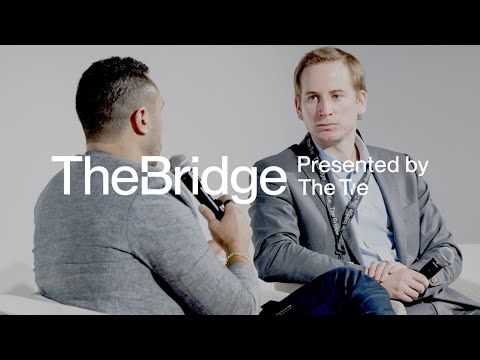
During the discussion, Mitchnick described the development of BlackRock’s activities in digital assets since 2018. He stated that the firm initially examined enterprise blockchain applications before expanding its focus to public blockchain networks and crypto-related products. He presented the firm’s current digital asset framework as organized around three areas: crypto assets, stablecoins, and tokenization.
In relation to crypto assets, Mitchnick referenced exchange-traded products, including the iShares Bitcoin Trust (IBIT), as well as infrastructure initiatives. These include integration between Coinbase Prime and BlackRock’s Aladdin platform to facilitate institutional access. He attributed increased institutional participation in recent years to changes in market infrastructure, capital allocation trends between 2020 and 2022, and shifts in regulatory discussions in the United States.
Addressing stablecoins, Mitchnick stated that their primary use case remains within crypto markets, particularly for trading and liquidity management. He also indicated that their functionality could extend to cross-border payments and capital markets processes, such as settlement and collateral transfers, depending on regulatory and operational developments.
On tokenization, Mitchnick described the process as the issuance of traditional financial instruments on blockchain networks. He noted that potential applications include investment funds and other asset classes, while emphasizing that regulatory requirements and market structure considerations influence the pace of adoption.
The conversation also covered decentralized finance (DeFi). Mitchnick referred to DeFi protocols as systems that operate without traditional intermediaries, while identifying compliance with anti-money laundering (AML) and know-your-customer (KYC) standards as ongoing challenges for institutional engagement. He indicated that digital identity mechanisms may be relevant in addressing these requirements.
In discussing the United States policy environment following the 2024 election cycle, Mitchnick observed that legislative proposals related to stablecoins and digital asset market structure remain under consideration. He stated that regulatory developments are expected to depend on legislative processes and institutional coordination.
The session concluded with remarks on institutional adoption trends. Mitchnick indicated that, based on BlackRock’s interactions with clients, many traditional investors are still evaluating the role of digital assets in portfolio construction. He referenced investor education as a component of the firm’s engagement strategy.
The recording was released for informational purposes and does not constitute investment advice or a solicitation to buy or sell financial instruments. [8]
Bitcoin as an Alternative Monetary Network #02
On May 29, 2025, Robert Mitchnick, Head of Digital Assets at BlackRock, appeared in a recorded conversation on the Bitcoin Magazine YouTube channel with Pete Rizzo.

During the interview, Mitchnick discussed the development of BlackRock’s iShares Bitcoin Trust (IBIT), which reached $50 billion in assets faster than any prior exchange-traded fund. He stated that, despite this growth, Bitcoin exchange-traded funds remain at an early stage of adoption. He noted that integration into institutional platforms typically involves extended review procedures, internal approvals, and portfolio evaluation processes conducted over multiple years.
Mitchnick referred to the expansion of Bitcoin investment products outside the United States, including the launch of a European-listed vehicle. He stated that interest in Bitcoin exposure has been observed in regions such as Latin America and Asia, with access mechanisms differing by jurisdiction due to local regulatory structures and listing requirements.
He also addressed the inclusion of a 1–2% Bitcoin allocation in a BlackRock model portfolio in February 2024. According to Mitchnick, the allocation followed internal research conducted by portfolio teams. He described the progression of adoption within advisory channels, beginning with execution-only access, where clients independently request exposure, and extending to discretionary adviser allocations and incorporation into standardized model portfolios used across wealth management platforms.
Regarding market behavior, Mitchnick commented on periods of correlation between Bitcoin and equity markets. He stated that short-term price movements may reflect trading activity from leveraged or retail participants, while longer-term holders may evaluate Bitcoin differently. He characterized Bitcoin as a scarce, decentralized asset not issued by a sovereign authority and indicated that some institutional investors assess it as a portfolio diversifier.
In comparison with gold, Mitchnick described both assets as limited in supply and independent of central bank issuance. He noted differences in volatility, historical track record, and transferability, and stated that some investors allocate to both assets within diversified portfolios.
Mitchnick further distinguished Bitcoin from other digital assets, stating that alternative cryptoassets may be evaluated under different frameworks, including those associated with technology or venture-style investments. He indicated that market relationships between Bitcoin and other tokens may vary over time.
The interview also included remarks on regulatory developments in the United States. Mitchnick referenced ongoing discussions related to stablecoins and market structure and stated that regulatory frameworks may influence institutional participation in digital asset markets. [10]
See something wrong?