0% read
Last updated:
Kendall Cole
Kendall Cole is a product leader, software engineer, and entrepreneur known for his work as the Head of Product at NEAR Protocol and a co-founder of Proximity Labs. He is a prominent figure in the development of core Web3 infrastructure, focusing on concepts such as chain abstraction, AI agents on the blockchain, and cross-chain functionality powered by multiparty computation. [2]
Education
Cole attended the University of Virginia, where he graduated in 2013 with a Bachelor of Arts in Economics. [2]
Career
Cole began his career in 2013 as a Consultant at KCIC, LLC in the Washington D.C. area. He transitioned to software engineering in 2014, first working at Veenome in Virginia, where he used technologies such as Python, Django, and PostgreSQL. Later that year, he moved to Lisbon, Portugal, to join Unbabel as a Software Engineer, a role he held until 2015. In 2015, Cole entered the entrepreneurial field by co-founding EntryWire in Santiago, Chile, and participating in the Generation 13 cohort of the Startup Chile accelerator. He continued this path in 2016 as an Entrepreneur in Residence at Entrepreneur First in London. This experience led to him co-founding OilFront, where he served as Chief Technology Officer, developing a web-based platform for managing international bunker fuel procurement. Cole entered the blockchain industry in 2017, working as a Product Manager at ConsenSys and its associated project, Kauri, in London until 2019. In September 2019, he became the Head of Product at NEAR Protocol, operating from the San Francisco Bay Area. In addition to his role at NEAR, he serves as a co-founder of Proximity Labs, a research and development firm focused on the NEAR ecosystem. [1] [3]
Interviews
AI Agents on Blockchain
In a May 2025 discussion with Illia Polosukhin, Cole examined NEAR’s ambition to position itself as a foundational blockchain for AI, emphasizing user-controlled systems that allow artificial intelligence to act directly on behalf of individuals. The conversation addressed structural inefficiencies in decentralized organizations and introduced “shade agents,” which combine smart contracts with off-chain worker agents to enable autonomous execution supported by greater computational capacity and data access. They outlined practical applications, including autonomous trading agents and yield-optimizing systems that manage assets such as USDC, as well as governance-focused agents that represent community interests within DAOs through privacy-preserving mechanisms. The discussion also considered broader implications for decentralized finance, compliance, and long-term business models in which autonomous agents could manage operations with reduced human coordination. [7]

Web3 Mass Adoption
In a June 2024 episode of the DeFi Decoded podcast, Cole discussed his background in crypto, beginning with Bitcoin in 2013, followed by roles at ConsenSys and later involvement with the NEAR ecosystem through Proximity Labs. He outlined Proximity Labs’ focus on research and development to improve usability in decentralized applications and described chain abstraction as a method to simplify blockchain interactions for both crypto-native and mainstream users. The discussion covered examples of user-facing applications built on NEAR, the network's evolving decentralized finance landscape, and a strategic emphasis on developing original DeFi products rather than replicating existing models. Cole also explained NEAR’s horizontal scaling approach through sharding, contrasted with Layer 2 strategies, and highlighted broader considerations for Web3 growth, including infrastructure maturity and regulatory clarity for digital asset issuance. [5]

Chain Abstraction
In a June 2024 episode of The Edge podcast, Cole discussed the concept of chain abstraction and its role in simplifying user interaction across multiple blockchain networks. He described how managing accounts and assets across different chains creates friction, and outlined an approach that enables users to engage with decentralized applications without needing to understand the underlying infrastructure. The discussion also covered the development of Chain Signatures, which allow accounts to sign transactions on other blockchains, facilitating cross-chain functionality and reducing account management complexity. Cole highlighted NEAR’s scalability and sharding architecture as factors supporting multi-chain coordination, and addressed broader ecosystem considerations such as collaborative infrastructure, wallet development timelines, and alternative metrics for measuring network growth beyond total value locked. He emphasized user engagement and secure transaction management as central indicators of adoption in a multi-chain environment. [4]

Restaking
In a May 2024 episode of Kiln’s Restaking Rendez-Vous podcast, Cole discussed his background in crypto since 2017 and the firm’s focus on building within the NEAR ecosystem. He described the development of Chain Signatures, a system based on multiparty computation (MPC), which enables distributed key management by splitting private keys among multiple operators to improve security and user experience. He explained how MPC can extend beyond custody to allow smart contracts to sign transactions and manage assets, supporting cross-chain functionality and decentralized exchange use cases. Cole also addressed the need for decentralized MPC operator networks to reduce collusion risk and emphasized the role of economic security in maintaining user trust, including leveraging both NEAR and Ethereum. The discussion covered validator and user incentives, potential fee structures for signature requests, product testing timelines, and broader considerations around shared staking and actively validated services, highlighting scalability and competition as factors shaping future development. [6]

Presentations
Shade Agents
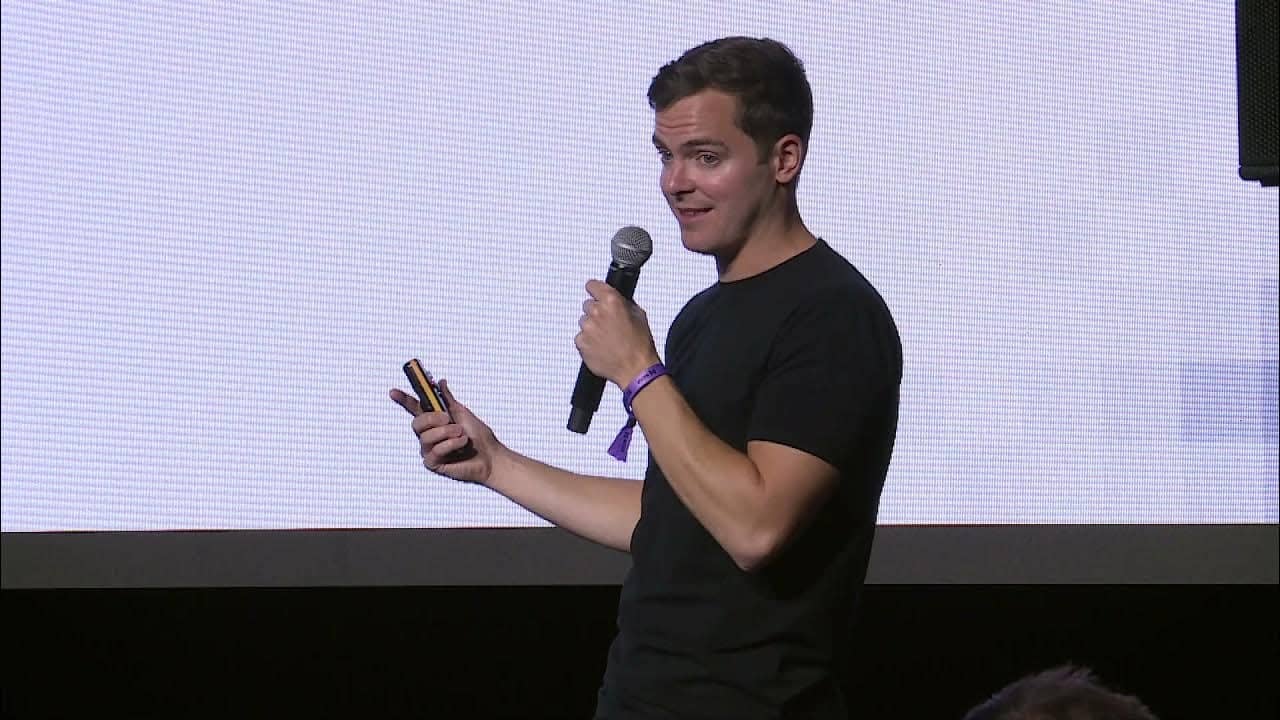
At NEAR’s AI New Frontier conference in February 2025, Cole presented Shade Agents, describing them as autonomous, non-custodial, multichain agents designed for crypto applications. He outlined the limitations of many existing agents, particularly their difficulty executing authenticated or confidential actions, and detailed the requirements for true autonomy, including decentralized key management, verifiable code, uptime guarantees, privacy protections, and smart contract-based guardrails. Cole explained that Shade Agents operate through worker agents running in trusted execution environments alongside smart contracts for registration and transaction signing, and highlighted advancements such as shared key management across agent instances to reduce single points of failure. He also demonstrated deployment using Docker, showcased use cases including DeFi automation and off-chain data integration, presented a live example of an agent responding to social media activity with token rewards, and discussed interoperability with external protocols such as UMA’s optimistic oracle. [8]

See something wrong?
Social Profiles:
Blockchains: