0% read
Last updated:
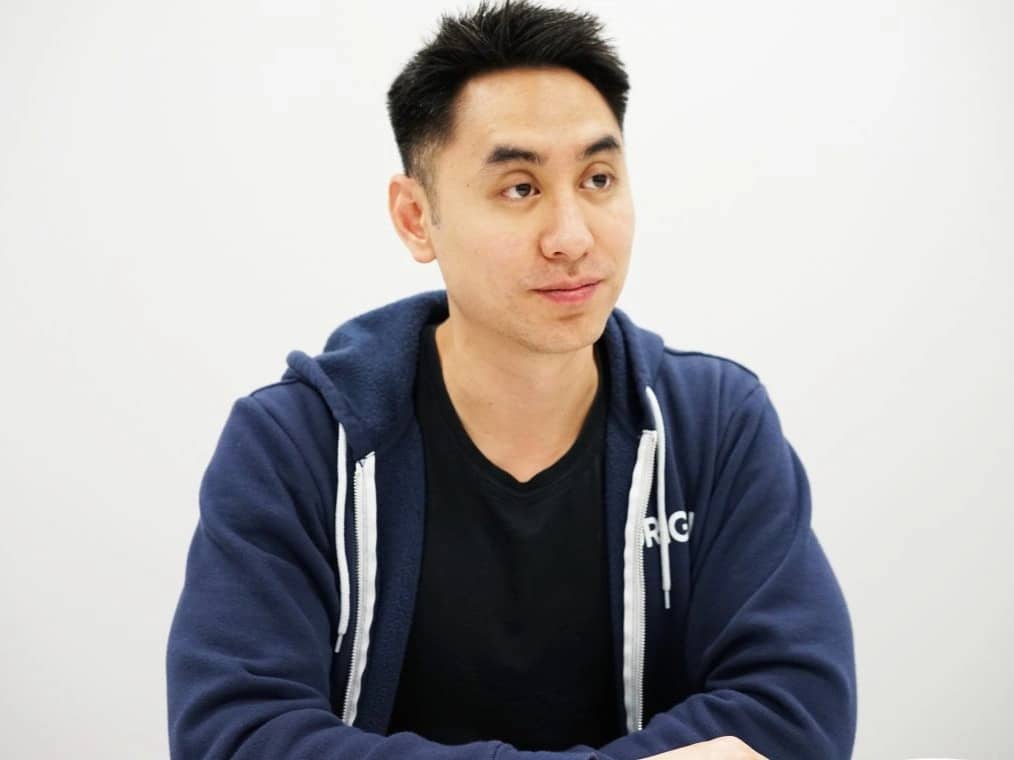
Matthew Liu
Matthew Liu is a technology entrepreneur and product executive with experience in online media, e-commerce, blockchain infrastructure, and decentralized finance. He is the co-founder of Origin Protocol, where he works on blockchain-based products for digital assets, NFTs, and decentralized finance. [1]
Education
Lou graduated from Stanford University with a BS in Electrical Engineering and an MS in Management Science and Engineering in 2005. [2]
Career
Liu began his career in product management at YouTube in 2006, shortly before the company’s acquisition by Google. As one of the early product managers at YouTube, he worked on products related to user engagement, video distribution, and partnerships with music, television, and film companies. Following the acquisition, he continued working across YouTube and Google through 2010, focusing on monetization products and international product launches. In 2011, Liu joined Qwiki as vice president of product management, overseeing product development for multimedia and interactive content creation tools before the company’s acquisition by Yahoo. From 2012 to 2013, he served as vice president of product management at Bonobos in Palo Alto, helping develop the company’s internal e-commerce platform before the retailer was later acquired by Walmart.
In 2013, Liu co-founded Unicycle Labs in San Francisco, where he worked on multiple startup products across e-commerce, transportation, travel, and local services. The company developed applications for the Shopify ecosystem and also experimented with ride-sharing comparison tools and other consumer technology products. In late 2016, he co-founded PriceSlash, a consumer-focused platform that aims to reduce recurring household service expenses, such as telecommunications and security bills. The company was later acquired by BillShark in 2018. Since 2017, Liu has served as a co-founder of Origin Protocol, a blockchain and decentralized finance company developing products for digital assets, decentralized finance infrastructure, stablecoins, and tokenized internet applications. During the same period, he also worked as an angel investor and advisor at Unfair Advantage, participating in early-stage investments and providing advisory services in blockchain, artificial intelligence, robotics, digital assets, and technology startups. [3]
Interviews
Changing NFT with AI
In a May 2023 interview on The Crypto Mavericks podcast, Liu discussed the development of blockchain infrastructure, NFTs, decentralized finance, and the growing relationship between artificial intelligence and digital assets. He reflected on his transition from working at YouTube into the cryptocurrency industry and described the evolution of Origin Protocol since its founding in 2017. Liu explained that Origin Protocol initially focused on decentralized marketplace infrastructure before expanding into NFT platforms and decentralized finance products as the blockchain ecosystem evolved. He stated that NFTs were likely to expand beyond digital artwork into broader applications, including gaming, digital identity, tokenized assets, event access, and other forms of digital ownership and authentication.
The discussion also addressed the usability, interoperability, and security standards of blockchain, particularly in relation to decentralized finance protocols and consumer-facing blockchain applications. Liu noted the importance of creating products that reduced technical complexity while maintaining compatibility across different blockchain ecosystems and standards. A significant portion of the interview focused on artificial intelligence and its potential interaction with blockchain systems. Liu discussed how AI tools could influence creator workflows, automation systems, and digital economies, including the possibility of autonomous software agents using blockchain-based payment infrastructure. He also examined regulatory considerations, open-source development models, and community governance as factors affecting long-term blockchain adoption and ecosystem growth. [6]

Mass Adoption of NFTs & DeFi
In a March 2023 interview on the Frictionless Podcast, Liu discussed his transition from product management in the technology sector to blockchain and cryptocurrency development. He described becoming involved with Ethereum in the mid-2010s and noted the technical limitations and early-stage infrastructure challenges present within the ecosystem at that time. Liu explained that his work in the digital asset sector initially focused on cryptocurrency trading and NFT-related projects before co-founding Origin Protocol in 2017. He stated that the company originally focused on decentralized peer-to-peer commerce infrastructure before later expanding into NFTs, decentralized finance products, and tokenized real-world asset applications, including experiments involving digital ownership and real estate-related use cases.
The interview also covered market cycles within the cryptocurrency industry, with Liu discussing operational strategies used by blockchain startups during periods of reduced market activity. He described NFTs as a broader technological framework capable of representing a range of digital and physical assets, including gaming items and tokenized goods, rather than being limited to digital artwork. Additional topics included blockchain scalability, multi-chain ecosystems, community participation, and token-based incentive systems. Liu discussed projects such as Arbitrum and EigenLayer in the context of blockchain infrastructure and security coordination, while also criticizing projects that relied heavily on short-term token speculation or lacked sustained product development. The conversation concluded with a discussion around the continued expansion of NFTs, decentralized commerce infrastructure, and blockchain interoperability across multiple networks. [5]

Origin Protocol
In a Bitfinex interview in February 2023, Liu discussed the evolution and scope of the Origin Protocol since its 2017 inception, highlighting its focus on building infrastructure for diverse NFT ecosystems and decentralized commerce. He explained that Origin operates through two main units: Origin Story, which focuses on NFT marketplaces and has its native token OGN, and Origin Dollar (OUSD), a yield-bearing stablecoin backed by real collateral like USDT, USDC, and DAI, offering higher yields through DeFi strategies. Liu emphasized that their technology enables tailored NFT use cases, such as real estate transactions, celebrity access, and branded marketplaces, differentiating them from generic platforms like OpenSea by providing customizable, compliance-aware solutions. He highlighted success stories involving community-driven projects, celebrity collaborations, and innovative real-world asset tokenizations, including real estate, with a commitment to long-term value building. He addressed the safety of OUSD compared to algorithmic stablecoins, underscoring its backing by established assets and collateralization, thus reducing risk. Liu also shed light on tokenomics, noting the utility and governance functions of OGN and OGV tokens within the ecosystem. Looking ahead, he expressed optimism about a market recovery that will fuel NFT utility and real-world asset tokenization, and encouraged community participation through their channels and on social media. Overall, Liu conveyed a strong commitment to long-term development, community engagement, and technological innovation in Web3. [4]

Panels
Building Infrastructure for Web3
During the Sora Summit 2023, panelists discussed the current state of Web3 infrastructure and its future challenges. Panelists included Liu, Jun Liu, Sayan Ray, Anthony Wang, and moderator Timmy Shen. They acknowledged that Web3 infrastructure was still in its early stages, with ongoing developments across layers such as Layer 1 and Layer 2 chains, decentralized data storage, and secure wallets. The panelists emphasized the importance of enhancing security, interoperability, scalability, and user experience to drive mass adoption. They highlighted the need for decentralized, permissionless systems, improved privacy tools, and user education to help newcomers bridge the gap. Innovations like intent-centric architectures, RFQ protocols, and zero-knowledge proofs were seen as vital to advancing Web3 functionality. Looking ahead, they believed tokenization of real-world assets, security enhancements, interoperability solutions, and the integration of AI with blockchain would be the defining trends. Overall, the consensus was that although significant progress had been made, there was still much work to be done to create a more secure, accessible, and interconnected Web3 ecosystem. [7]

See something wrong?