Across
Across is an interoperability protocol that facilitates cross-chain transfers. It focuses on speed and low costs while maintaining security. It is the first protocol to be implemented for cross-chain intents. [1][2]
Overview
Across is an interoperability protocol designed around intents, enabling fast and cost-efficient cross-chain transfers without compromising security. The protocol introduces relayers and third parties competing to fulfill user orders by delivering assets or executing transactions. Users specify their desired outcomes, and the relayers quickly act to fulfill them, while a settlement layer ensures the relayers are compensated once the intent is verified. Across offers a dApp for bridging assets and a settlement layer for developers to integrate cross-chain functionality into their applications. [3][4]
Users who initiate a transfer with Across deposit funds into a Spoke Pool on chain A, specifying the destination and fee. Relayers then verify the deposit and provide the equivalent amount to the user on chain B. The relayer submits proof of the transaction to an optimistic oracle (OO), and upon verification, is reimbursed from a Hub Pool on Ethereum Mainnet. Liquidity providers in this pool earn fees from user deposits. [3][4]
ERC-7683
Uniswap Labs and Across propose a new standard for cross-chain intents, creating a unified framework for specifying cross-chain actions. This standard addresses challenges in cross-chain intents systems, such as liquidity access and active fillers, which can lead to higher costs, longer wait times, and increased failure rates. Cross-chain intents systems can interoperate and share infrastructure by standardizing and improving user experience through enhanced competition and efficiency. [5][6]
Features
Cross-Chain Intents
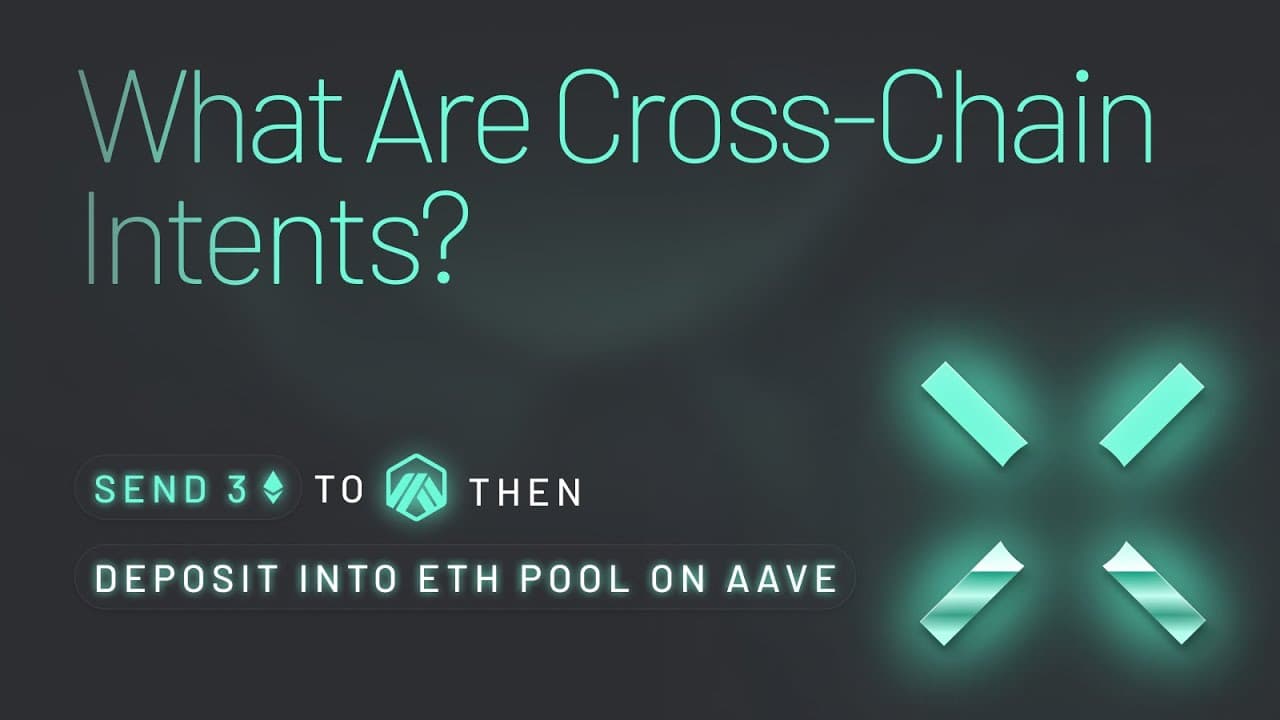
An intent is an order where a user specifies an outcome rather than a specific execution path. Intents can be single-chain or cross-chain, with Across focusing exclusively on cross-chain intents. Across' architecture for cross-chain intents consists of three layers: a request for quote mechanism to handle user intents, a network of relayers to bid on and fulfill these orders, and a settlement layer to verify fulfillment and compensate relayers. The evolution of cross-chain intents includes: [6]
- Phase 1: Moving the same asset from Chain A to Chain B, which Across has supported since 2021.
- Phase 2: Moving an asset from Chain A to Chain B and executing a transaction on Chain B, facilitated by embedding instructions with the origin deposit.
- Phase 3: Swapping asset X on Chain A for a minimum amount of asset Y on Chain B and executing a transaction on Chain B, currently supported by Across Settlement.
Canonical Asset Maximalism
Canonical assets represent the original form of a token on its home blockchain and are crucial for secure cross-chain value transfer. In interoperability, tokens can be canonical or representative, with the difference in trust assumptions for securing assets on secondary chains. Tokens are moved between chains by locking or burning the token on the native chain, sending a message to the destination chain, and minting a new token. The security of this process depends on the verification method used: canonical bridges rely on secure contracts for verification, while 3rd party message bridges use varied trust models and may introduce security risks. [7]
Across's intent-based bridge offers a solution that avoids the security trade-offs of 3rd party message bridges and is faster and cheaper than traditional canonical bridges. It uses a network of relayers to quickly fulfill bridging requests with canonical assets, while a settlement layer handles verification and repayment, combining the advantages of both canonical and representative assets. [7]
Products
Across Bridge
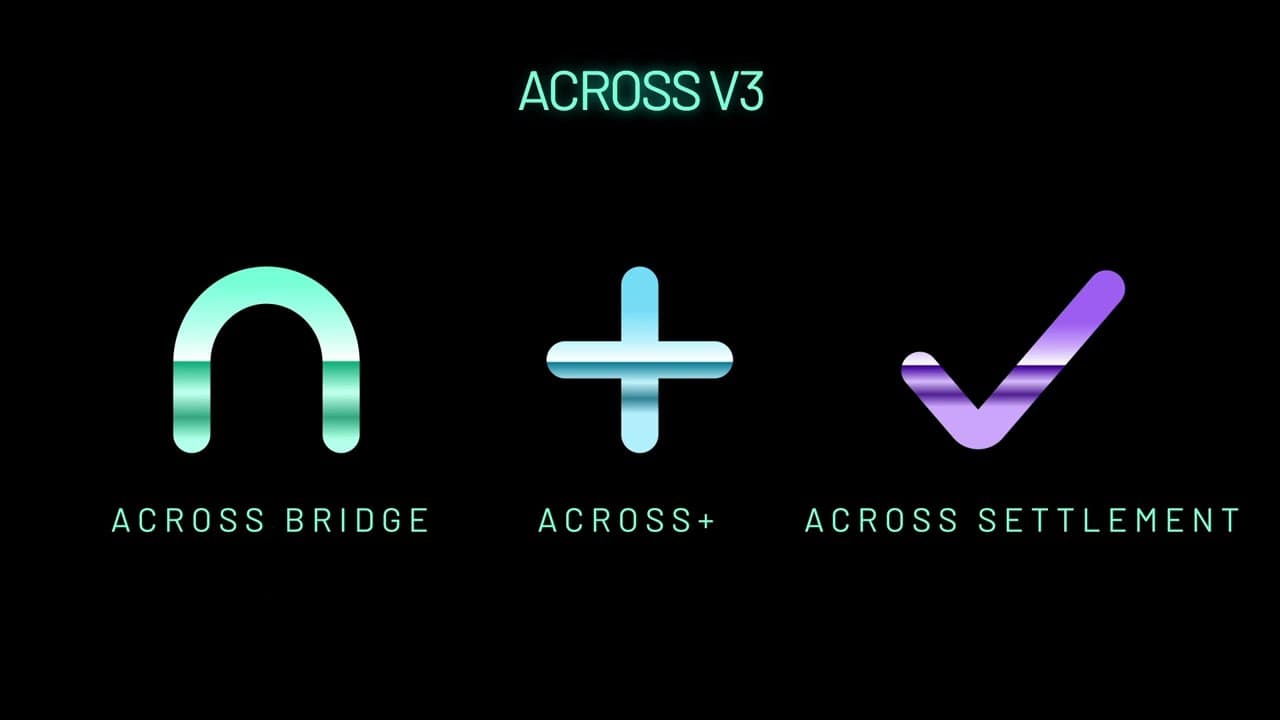
The Across Bridge dApp offers a low-cost, high-speed solution for cross-chain asset transfers. It provides end users with the fastest and most cost-efficient bridging between chains. For developers, the Across Bridge integrates instant and affordable liquidity into applications via a REST API. This enables users to onboard assets seamlessly within the app and interact with them from any chain, improving user experience and retention. [3][8]
Across+
Across+ offers a suite of cross-chain functionalities, including deposit, lend, swap, and mint. It streamlines user experience by integrating bridge transactions into app actions, enhancing UI. This solution broadens liquidity access across supported chains while maintaining app liquidity. It simplifies expansion to new chains without increasing maintenance efforts. Integration is straightforward, requiring no smart contract changes. Users can interact with any app across different chains quickly and cost-effectively. [9]
Across Settlement
Across Settlement is a settlement layer designed for cross-chain intent order flow. It emphasizes gas optimization and deferred verification to minimize settlement costs for protocols and end users. As a modular and production-ready solution, it supports the Across Bridge and Across+ products by offering a foundation for efficient bridging and bridge abstraction. [10]
Across Settlement allows other applications to utilize its capabilities for cross-chain intents, simplifying verification and fulfillment while addressing security, timing, and asynchrony challenges. Key benefits include aggregated and optimistic verification, which scales gas costs more efficiently, and relayer cross-chain management, which reduces overhead and complexity for relayers, leading to better pricing and execution. [10]
ACX
The Across Protocol token, ACX has facilitated decision-making through a structured process involving ideation, discussion, proposal, feedback, voting, and execution, using platforms such as Forum, Snapshot, and oSnap for on-chain transactions based on off-chain votes. [11]
Tokenomics
ACX has a total supply of 1B and has the following allocation: [12]
- 115M for Airdrops
- 250M for Partnerships and Fund-Raise
- 100M for Protocol Rewards
- 535M for Across DAO Treasury Reserve
Governance
The Across governance process is designed to adapt as the DAO evolves and is an ongoing document. Participation is open to anyone, and ACX tokenholders can vote on proposals. Currently, tokenholders oversee treasury spending and governance updates, with decisions following a pathway from ideation through draft, proposal, and implementation. [13]
Partnerships
Supported Chains
Investors
On November 24th, 2022, Across closed a $10M private token sale to Hack VC, Placeholder, and Blockchain Capital, who bought a combined total of 50M ACX. [14]
Klaster
On July 11, 2024, Klaster integrated Across to enhance the on-chain user experience. The protocol abstracted chains through a single intuitive interface, enabling seamless cross-chain interactions. With Across Bridge, Klaster users performed easy transfers via the fastest and most cost-effective bridge in the interoperability space. [15]
Nekodex
On August 12, 2024, Nekodex, the mobile trading platform powered by Perpetual Protocol, integrated Across to launch a cross-chain intents DEX. This new offering also introduced account abstraction to offer users a decentralized trading experience featuring top-tier UX and UI. [16]
Across Protocol Suffers $4.5 Million Relay Software Exploit
On July 17, 2026, the Across Protocol team disclosed that its cross-chain bridge infrastructure had been exploited, resulting in the loss of approximately $4.5 million from a relayer’s funds. The protocol confirmed that no user funds were affected, and that the exploit did not compromise Across’s core smart contracts or Solana bridge programs. [17] [18]
According to the team, the attack targeted a vulnerability in the relay software responsible for interpreting off-chain deposit events on the Solana network. The attacker was able to forge deposit events that had never occurred, causing the relay software to incorrectly recognize them as legitimate transactions. As a result, the affected relayer released its own funds to the attacker, leading to losses of approximately $4.5 million.
Across emphasized that the exploit was limited to the off-chain relay infrastructure rather than the protocol’s on-chain components. The underlying smart contracts, Solana programs, and user assets remained secure throughout the incident.
The vulnerability was identified and patched within approximately five hours of its discovery. The update addressed the flaw in the relay software to prevent similar attacks from occurring in the future. The team also confirmed that its planned ACX token buyback program would continue as scheduled and would not be affected by the losses incurred during the exploit. [17]
The incident highlighted the security challenges associated with cross-chain interoperability, particularly where off-chain infrastructure is used to interpret and relay blockchain events between networks. While many bridge security efforts focus on auditing smart contracts, the exploit demonstrated that auxiliary systems such as relayers and event-processing software can also present critical attack surfaces if not adequately secured.
Following the incident, Across reaffirmed that user funds remained fully protected, operations continued without interruption, and the protocol’s core infrastructure remained uncompromised. [18]