John Patrick Mullin
John Patrick Mullin is CEO and co-founder of MANTRA and Soma Finance, with a background in business and technological economics.
Updated · 13 min read
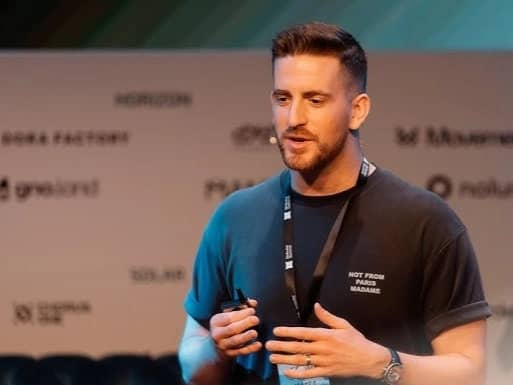
John Patrick Mullin is the CEO and co-founder of MANTRA, a Layer 1 blockchain designed to tokenize real-world assets (RWAs), and SOMA.finance, a fully compliant multi-asset DEX and issuance platform.[1]

Education
Mullin earned his Bachelor of Science in Business Administration and International Business from the John Cook School of Business at Saint Louis University in 2014. He later graduated from Tongji University and EBS Universitat fur Wirtschaft und Recht with a Master’s in Technology Economics and Management and a Master’s of Science in Management in 2016.[2]
Career
After earning his Master’s, Mullin started his career as a research associate at Guotai Junan, a financial services provider in China. He later became an associate and senior buy-side research analyst until January 2018. While at Guotai Junan, he also worked as a contributing writer for LinkedIn China and Cointelegraph, a mentor for Startupbootcamp, and an external collaborator for the Institute of Life (IOL).[3]
In January 2018, Mullin became regional director for FinTech Connector (FTC), an online community that connects FinTech entrepreneurs and start-ups with leaders and experts in financial services. He was also a community partner for FTC in Shanghai until June 2021. From May 2018, he served as a mentor for LONGHASH, Entrepreneur First, and she256. In September 2018, Mullin joined HKUST Business School as a guest lecturer and later held the same position at Tongji University.[3]
Mullin co-founded MANTRA in May 2020, where he currently serves as CEO. In May 2021, Mullin co-founded SOMA.finance, a U.S.-regulated decentralized finance application where U.S. retail and accredited investors can access 1:1-backed tokenized U.S. stocks and private securities.[3] He became a founding partner of CLUB DAO, a private members club founded in Hong Kong by crypto founders and enthusiasts, in August 2021, and a founding association member in May 2023. He also joined Outlier Ventures as a mentor for their DeFi Basecamp and became a strategic advisor for HeliSwap, a DEX and DAO in the Hedera ecosystem.[3]
Interviews
Finance Background
In March 2022, Globe Official interviewed Mullin about his finance background and time at Guotai Junan. At the start of the interview, Mullin shared how he got started in traditional finance:[4]
“I was kind of following a more traditional path, although I had been exposed to Bitcoin early. I bought my first Bitcoin in 2012 or 2011, back in college. At that time, I was still on a more traditional path, trying to work in investment banking. I ended up working at a Chinese securities house called Guotai Junan Securities, one of China’s largest state-owned investment banks. I was one of the first foreigners, or "laowai" as they say here in Hong Kong, to work at that company.”
“They decided to focus on creating a globally focused research department that covered various emerging technologies outlined in the five-year plan at that time. This included [blockchain] - (https://iq.wiki/wiki/[blockchain](https://iq.wiki/wiki/blockchain)) and [cryptocurrencies] - (https://iq.wiki/wiki/[cryptocurrency](https://iq.wiki/wiki/cryptocurrency)), machine learning, automation, and other emerging technologies. Because I had already been interested in these areas on a personal level for years, I quickly realized that my opportunity within the firm would not be as a relationship banker, M&A specialist, or quantitative analyst since I lacked the necessary skills, such as Chinese language proficiency. The one thing I could do was become a subject matter expert. I used this to my advantage and positioned myself as the the [blockchain] - (https://iq.wiki/wiki/[blockchain](https://iq.wiki/wiki/blockchain)) and crypto expert. I started doing research on these technologies for the firm, writing reports, and sharing them with senior management and upper levels of the firm to educate them about these emerging technologies.”
He then shared how he started working in crypto and how he met his co-founders, Rodrigo Quan Miranda and Will Corkin:[4]
“Part of the broader research focus involved organizing meetups for general fintech companies, inviting founders to share their experiences. I hosted events, often involving drinks and networking, and I was among the first to do this in English in Shanghai, where I was living. Around 2016 to 2018, during the first big public wave of crypto, I organized many crypto meetups. This led to my involvement with some companies, and I eventually quit my job to work full-time at a crypto company I was helping. I moved to Hong Kong, where we grew the business, marking my first venture into entrepreneurship.”
“That venture blew up spectacularly, but I learned a lot from the experience and met many of my current business partners through it. After that, we were figuring out what to do next. I worked with several of my current partners on obtaining a special license, which I'll discuss later when we talk about Soma. This effort faced its own challenges, as COVID-19 hit just as we were about to have a big breakthrough. As a struggling entrepreneur, I navigated this period until we launched, and a year and a half later, we've grown from three people to over 50 globally. It's been quite a whirlwind journey.”
When asked about what he learned from working in China, Mullin responded:[4]
“To be honest, one of the things that really sticks with me is the importance of relationships, known in Chinese as "guanxi," and how they significantly impact your business network and life. Many of the people we hire, the deals we secure, and the investments we make stem from the network I've built. It's a powerful tool, encapsulated by the phrase "your network is your net worth," which I definitely believe in. This was a major takeaway for me.”
“Another takeaway was developing self-belief during that time, which gave me the confidence to try new things. It's not about being cocky; it's about having the mindset to take risks and attempt things, even if success isn't guaranteed. Despite experiencing failures, this approach has enabled me to accomplish much in life. Many people might have the ability, and perhaps even better skills, but they lack the willingness to take risks.”
He later explained what MANTRA was:[4]
“When we started, it was essentially an interoperable DeFi protocol designed to support various financial applications, primarily focused on retail consumers. The goal was to allow individuals to feel at home and at ease with their personal wealth and finances. The key fundamental elements included cross-chain DeFi capabilities, which is still under development, and a non-custodial platform. Unlike custodial platforms like banks, everything is executed through in a non-custodial manner. Additionally, it was essential for users to have full control over how the platform operates. Whether that's all come to fruition is a different story. Developing and building startups is hard, and we've had changes to our business and how we operate. However, the core elements are still there. We've created a complex system with various components that have developed as we've grown the platform and the business. Now, we are focused on having a multi-chain DeFi ecosystem.”

About MANTRA
In November 2023, The Resilient Podcast interviewed Mullin to discuss his journey from international education to early immersion in cryptocurrency. As CEO, he focused on developing Web3 protocols and applications for global finance. Mullin reflected on the entrepreneurial challenges in blockchain, emphasizing regulatory navigation and the value of asset self-custody. He also shared personal insights into managing professional pressures alongside mental health priorities, highlighting strategies like coaching and fitness for resilience.[5]

RWA Tokenization
On The Crypto Conversation Podcast, Mullin discussed MANTRA's goal of creating an ecosystem for tokenization. At the start of the interview, he shared MANTRA’s vision statement:[6]
Mullin described MANTRA as a Cosmos SDK Layer 1 for asset tokenization and real-world assets, with protocol and application layers intended to make on-chain and off-chain financial activity accessible through a simple user experience.[6]
When asked about his views on tokenization and RWAs, he responded:[6]
“I often mention that we've been involved in RWAs long before they were termed RWAs. Personally, I prefer not to use the term RWA because in financial terms, it stands for risk-weighted asset. For us, tokenization is a broader thesis—it's about the potential to tokenize almost anything. However, not everything should be tokenized; it's crucial to navigate the real-world complexities involved. Today, creating tokens is technically straightforward, but integrating them with real-world systems, regulatory bodies, banks, and obtaining necessary licenses are the real challenges. In DeFi, you can [fork] - (https://iq.wiki/wiki/[fork](https://iq.wiki/wiki/fork)) code, but you can't replicate licenses—this process requires extensive time, resources, and ongoing engagement with regulators to address their concerns effectively.”
“I find these challenges both daunting and ultimately fulfilling. They keep the job dynamic and engaging—whether navigating regulatory landscapes, tackling technical intricacies, or devising business strategies. The fast-paced nature of the market ensures there's always something new to address. It's encouraging to see figures like Sir Larry advocating for asset tokenization, legitimizing our work in the eyes of the broader financial community. This endorsement is pivotal as we aim to pioneer the on-chain transformation of financial assets, driven by real-world expertise and collaboration within our industry.”
At the end of the interview, Mullin shared his views on tokenization in 10 years:[6]
“I recently publicly predicted at DAS London a few weeks ago, alongside representatives from Avalanche City and BNY Mellon on my panel, that within two years, we would develop a product enabling seamless transitions between bank accounts, brokerages, and wallets with a single click. I stand by this prediction. Looking ahead 10 years, I envision a future where everything seamlessly operates on-chain, akin to today's web 2.0 experiences, where users won't distinguish which [blockchain] - (https://iq.wiki/wiki/[blockchain](https://iq.wiki/wiki/blockchain)) they're using or that they're interacting with a wallet—it will all be integrated into everyday financial interactions.”

MANTRA Chain and Business
Mantra Launches $108M Fund
On April 7, 2025, Mantra blockchain network launched a $108,888,888 ecosystem fund aimed at accelerating the growth of startups focused on real-world asset (RWA) tokenization and decentralized finance (DeFi), amid rising demand for stable, asset-backed digital products.
CEO JP Mullin said the fund will operate an “open-arms policy, welcoming projects at any developmental stage globally with a particular focus on RWA’s and DeFi.” he told Cointelegraph:
“The MEF thesis is to invest in top-tier teams building RWA and DeFi applications, as well as complimentary infrastructure, that will both directly and indirectly support the broader ecosystem.”[7]
OM's Collapse
The price of Mantra's OM token suffered a sudden collapse on April 13, 2025.[8]
In an April 14 post on X, co-founder JP Mullin attributed the sharp drop in OM’s price to forced liquidations triggered by centralized exchanges. He said these actions were taken suddenly and during low-liquidity hours on Sunday evening UTC, which may have amplified the market impact.
"We have determined that the OM market movements were triggered by reckless forced closures initiated by centralized exchanges on OM account holders,” Mantra co-founder John Mullin wrote in an April 13 statement on X.
“The timing and depth of the crash suggest that a very sudden closure of account positions was initiated without sufficient warning or notice,” he added.
Mullin told an X user they believed one exchange “in particular” was to blame but said they were still “figuring out the details.” He told others that the centralized exchange in question wasn’t Binance.[8]
On April 15, 2025, Mullin said via his X page that he planned to burn his entire 772,000 OM token allocation in response to criticism over the project’s collapse and insider activity allegations.[9]
“I’m planning to burn all of my team tokens and when we turn it around the community and investors can decide if I have earned it back,” Mullin posted.[10]
Many community members welcomed Mullin’s pledge, while others said a token burn could reduce the team’s long-term incentive to build the real-world asset tokenization platform.[11]
“This would be a mistake. We want teams that are highly incentivized. Burning the incentive may seem like a good gesture but it will hurt the team motivation long term,” said Crypto Banter founder Ran Neuner.[11]
Mullin suggested a decentralized vote could determine whether to burn 300 million team tokens.[11]
On April 21, 2025, MANTRA specified that 150 million OM from Mullin’s allocation would be unstaked and sent to the burn address after unstaking was completed. The organization said a further 150 million OM from ecosystem partners was under discussion.[12]
MANTRA’s official token dashboard later recorded 150,000,008.89 OM at the burn address before the token split. On August 20, 2026, an exploit transferred 600,000,035.56 MANTRA from that address after the 1:4 redenomination, making the balance transferable and increasing circulating supply.[13][14]
OM-to-MANTRA Migration and Redenomination
Following passage of Proposal 17, known as OM Homecoming, MANTRA set January 15, 2026, as the deadline for ERC-20 OM holders to migrate to MANTRA Chain. After the migration window closed, MANTRA Chain-native OM became the canonical token, while unmigrated ERC-20 OM was subject to a managed sunset.[15]
Proposal 26, approved on November 6, 2025, authorized a 1:4 non-dilutive redenomination and ticker change from OM to MANTRA. On March 2, 2026, the chain completed the change: each old OM became four MANTRA, with the token count multiplied by four and the price divided by four, preserving holders’ proportional value.[16][17]
August 2026 Security Incident and Governance Response
On August 20, 2026, an attacker exploited an unsigned-integer underflow in the balance-accounting layer of the upstream cosmos/evm dependency, transferring 720,923,967.99 MANTRA without authorization from two addresses: 600,000,035.56 MANTRA from the burn address and 120,923,932.44 MANTRA from a legacy genesis-era multisig. MANTRA’s August 28 postmortem said no validator, administrator, governance, or multisig keys were compromised. The incident nevertheless increased circulating supply and left MANTRA Chain unavailable for 30 hours and 13 minutes, affecting users.[14]
MANTRA halted the chain, applied a patch in version 8.4.0, and restarted the chain on August 22 without a rollback. The postmortem reported that roughly 37.96 million MANTRA remained immobilized in the attacker’s address and that no funds had been recovered as of August 28; MANTRA was pursuing recovery with law enforcement and exchange platforms.[14]
Governance Proposal 40, “Recovery of Frozen Exploiter Funds,” passed on November 12, 2026. It authorized transferring 37,957,488.23 MANTRA frozen in the attacker’s address to the OM Upgrade incentives allocation, applying any further recoveries to restore the 120,923,932.44 MANTRA taken from that allocation, and burning any recovered amount above that shortfall. The proposal said recovery of the remaining funds was still being pursued with Hong Kong law enforcement and the receiving exchange; the recoverable amount was unknown.[18]
January 2026 Restructuring
On January 14, 2026, Mullin announced an unspecified number of staff reductions. He said the events of April 2025, a prolonged market downturn, and increased competition had made MANTRA’s cost structure unsustainable. Business development, marketing, and human resources were among the affected functions. Mullin described the restructuring as a move toward greater capital efficiency and a leaner, more focused operation.[19]
Inveniam Acquisition
On June 16, 2026, Inveniam announced that it planned to acquire MANTRA and affiliated entities. The announcement followed Inveniam’s reported $20 million strategic investment in MANTRA in August 2025 and the companies’ collaboration on NVNM Chain. It said the MANTRA brand, chain, token, and operating ecosystem would continue under the combined entity; financial terms were not disclosed.[20]
On November 23, 2026, Unlock Blockchain reported that Inveniam had confirmed the acquisition was fully completed. Mullin remained MANTRA CEO and also became President of NVNM Digital, Inveniam’s digital-asset business.[21]
