0% read
Last updated:
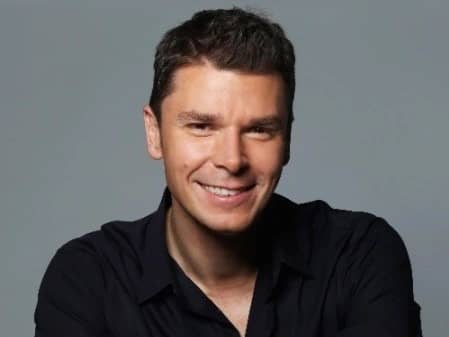
Matthew Roszak
Matthew Roszak is the chairman and co-founder of the blockchain technology company Bloq, a co-founder of the Bitcoin Layer 2 protocol Hemi, and the founding partner of Tally Capital, a private investment firm focused on digital assets. Roszak is also the chairman of the Chamber of Digital Commerce, a key advocacy group for the blockchain industry in Washington, D.C. [1] [2] He is known as one of the earliest investors in the cryptocurrency sector and often describes his investment strategy as that of a "'picks and shovels' guy," focusing on building and supporting the foundational infrastructure of the digital asset ecosystem. [1]
Education
Roszak attended Lake Forest College, where he graduated around 1995 with a Bachelor of Arts degree in Economics. [1] [3]
Career
Venture Capital and Early Career
Before entering the blockchain industry, Roszak built a career spanning over two decades in private equity and venture capital. [4] [1] During this period, he invested over 1 billion. [3] Other entrepreneurial ventures included serving as the principal and founder of InterAct 9-1-1 from 1996 to 2001 and as CEO of SolidSpace from 2002 to 2011. [3]
Entry into Cryptocurrency
Roszak became an early adopter of cryptocurrency, making his first investment in Bitcoin around 2011 after reportedly first hearing about it during a poker game. [1] He purchased his first Bitcoin in 2012 from Bryan Stiffle, who later became a managing partner at Tally Capital. [3] He was a participant in some of the first-ever Initial Coin Offerings (ICOs), including those for Mastercoin, Maidsafe, and Factom. [5] [3]
Tally Capital
In 2013, Roszak founded Tally Capital, a private investment firm and multi-family office focused exclusively on blockchain technology and digital assets. [1] [3] Tally Capital became an early investor in many foundational companies and projects within the crypto ecosystem. The firm's portfolio grew to include over 40 investments. [6] Portfolio companies listed in various sources include 21.co, Abra, Binance, Bitfury, BitGo, Block.One, Blockstream, Circle, Civic, Coinbase, Etherscan, Factom, Genaro, Kraken, Orchid, Polymath, Qtum, Rivetz, Spacechain, Tierion, and tZERO. [7] [8] [3]
Bloq
In 2015, Roszak co-founded Bloq with Jeff Garzik, a veteran Bitcoin core developer, and has since served as its Chairman. [1] [2] Bloq is an enterprise-focused blockchain technology company that builds infrastructure, software, and applications for global enterprises and blockchain-native businesses. [2] The company's work focuses on creating solutions for a multi-chain environment. [2]
Bloq's development efforts have been organized into several key areas: [2]
- DeFi: Vesper and Metronome
- Metaverse: Atmos and Capsule NFT
- Mining: Titan and Lumerin
- Web3 Tools: BloqCloud and Pure Finance
Metronome (MET)
Roszak and Garzik co-created Metronome (MET), a cryptocurrency designed for cross-blockchain portability and long-term, autonomous self-governance. [1] [5] It has been described by Roszak as "the first cryptocurrency that is not tied to any one blockchain" and was "built to be a thousand-year cryptocurrency." [9]
Vesper Finance
In October 2020, Bloq launched Vesper Finance, a decentralized finance (DeFi) platform that Roszak co-founded, to provide a suite of yield-generating products. [10] [3] Vesper was designed to simplify the DeFi experience, particularly for institutional investors. A core product, Vesper Grow, allowed users to deposit a digital asset and earn yield paid out in that same asset, abstracting away complex yield farming strategies. [10]
The platform's native token, VSP, was used for distributing rewards. Vesper implemented a 0.6% withdrawal fee and a 15% platform fee on generated yield. Security was a stated priority, with every contract undergoing two external audits. By April 2021, Vesper had surpassed $1.5 billion in Total Value Locked (TVL). [10]
Hemi
Starting in 2023, Roszak co-founded Hemi, a Bitcoin Layer 2 protocol designed to create a fully decentralized, capital-efficient, and fraud-proof infrastructure on top of Bitcoin. [1] The project, which his X (formerly Twitter) bio stated he was "building," evolved from previous work on Vesper Finance and a Babylon Chain fork known as "Project PoP." [11] [1] Hemi aims to enable a new wave of BTC-native DeFi and other applications by allowing users to use their Bitcoin on the L2 without relying on centralized bridges or custodians. The protocol combines elements of both optimistic and ZK rollups. [1]
Roszak has stated Hemi's purpose is to unify major blockchains and define the "next era of programmable value," adding, "Money is technology. And Hemi is how we’re turning that insight into the future." [9]
Advocacy and Public Profile
Roszak is a prominent advocate for the blockchain industry, engaging with policymakers, regulators, and the public. [12]
Chamber of Digital Commerce
In 2014, Roszak became a founding member of the Chamber of Digital Commerce, a leading trade association representing the blockchain industry in Washington, D.C., and serves as its Chairman. [1] [12] Through his role at the Chamber, he has testified as an expert witness before the U.S. Congress and spoken at the U.S. Federal Reserve. [4] Roszak advocates for proactive education and engagement with policymakers to foster innovation. [12]
Industry and Community Initiatives
Roszak has been involved in several other industry and non-profit organizations. He founded the Token Alliance, an industry-led group focused on developing best practices for token issuance, and the Chicago Blockchain Center, a public-private partnership with the State of Illinois, CME Group, DRW, and Lightbank to promote innovation. [8] He has also served on the boards of the Bitcoin Foundation and BitGive, a non-profit that uses blockchain for philanthropic impact. [1] [2]
As a form of advocacy and education, Roszak is known for "gifting" Bitcoin to influential figures. He reportedly gave former U.S. President Bill Clinton his first Bitcoin on April 29, 2016, to promote "financial sovereignty." [11] [1] He has also given Bitcoin to Sir Richard Branson, Apple co-founder Steve Wozniak, and Kim Kardashian. [1] [11]
Roszak has also engaged in public political commentary. On January 20, 2025, he posted a message congratulating President Donald Trump, stating, "Exciting new era of innovation, technology, and leadership begins!" [11]
He has been a featured speaker at numerous global forums, including the OECD Global Blockchain Policy Forum, Money20/20, CES, and events in Davos during the World Economic Forum. [13] [14] Roszak was also a producer for the 2014 documentary The Rise and Rise of Bitcoin, cited as the industry's first such film. [8]
Views and Investment Philosophy
Roszak's investment philosophy is centered on supporting the core infrastructure of the cryptocurrency market. [1] He has frequently remarked that his approach is focused on the "picks and shovels" of the industry rather than speculation on individual assets. [1]
On Institutional Adoption
Roszak has been a vocal proponent of simplifying DeFi to attract institutional capital. In 2021, he stated, "What we see in DeFi is there’s some $50 billion in TVL and it’s all crypto-centric capital. But there’s a lot more capital, outside of DeFi, that wants to get into the DeFi." [10] He believes that for institutional adoption to accelerate, platforms must become easier to use. In November 2023, he commented:
Institutions aren’t going to be managing their own keys and signing their own transactions with a hardware wallet... You need to have these easy buttons and these easy platforms to plug into. [15]
He has made similar remarks about building a "Metamask for institutions" to abstract away the underlying complexity of DeFi protocols. [3]
On Regulation and Industry Growth
As chairman of the Chamber of Digital Commerce, Roszak has consistently called for clear regulatory frameworks in the United States. He has said, "We need to work with regulators to establish a smart, light touch framework that protects consumers and fosters innovation." [3] He highlighted the professionalization of the industry, stating, "This is not little garages and hoodies anymore. This is boardrooms and suits." [1]
In a pinned post from December 2020, he wrote, "Bitcoin is one of the greatest technological, financial, industrial and humanitarian inventions of our time." [11]
Interviews
Money as Power and Money as Technology #01
In an interview published on the TEDx Talks YouTube channel on October 31, 2017, Matthew Roszak discusses his interpretation of changes in the role of money within economic systems. He describes a transition from a framework in which money is primarily associated with centralized power to one in which money operates as a technological construct through cryptocurrencies and blockchain based assets.

Roszak characterizes Bitcoin as an early example of a digitally scarce asset, enabled by cryptographic mechanisms rather than reliance on centralized institutions. He attributes its relevance to the underlying technical design and mathematical properties, rather than to the identity of its creator, and frames blockchain systems as technological protocols whose functions are independent of individual authorship.
The interview also addresses Ethereum, which Roszak presents as a decentralized computing network designed to support programmable transactions and token issuance. Within this context, tokens are described as digital units that may represent access, usage, or participation within blockchain networks, rather than equity in a single organization.
Roszak further discusses tokenization as the representation of assets or rights in digital form on a blockchain. Examples mentioned include real estate, digital identity systems, data storage services, and other categories of assets. He notes that these systems operate continuously and across jurisdictions, differing from conventional financial infrastructure and interacting variably with existing regulatory frameworks.
Overall, the interview outlines Roszak’s view that blockchain based systems introduce alternative methods for organizing economic activity, with money and assets embedded directly into software governed by distributed networks rather than centralized intermediaries. [17]
The Future of Mining and Hashpower #02
In an interview published on January 27, 2020, on the YouTube channel WAGMI Events, Matthew Roszak, Chairman and Co-Founder of Bloq, addressed topics related to the development and current structure of Bitcoin mining during the North American Bitcoin Conference 2020, held in Miami. The discussion examined changes in mining practices over time and outlined technical and organizational aspects of the sector as described by Roszak.
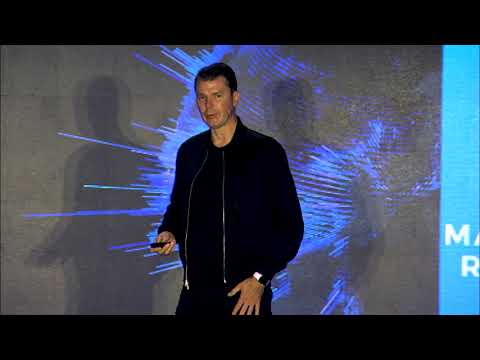
Roszak described Bitcoin mining as a process responsible for network security through the proof of work mechanism. He referenced early mining activity as largely individual and small scale, often performed using personal computing equipment. This period was contrasted with later stages in which mining operations became industrialized, involving specialized hardware, dedicated facilities, and participation by larger corporate entities. He noted that this transition altered the operational and economic characteristics of the mining sector.
According to Roszak’s statements, the increased scale of mining activity introduced structural challenges, including concentration of hash rate among a limited number of mining pools, operational complexity, and limited transparency in certain aspects of mining performance and economics. He indicated that these factors influence how mining operations are managed and evaluated.
Roszak also described Bloq as a company involved in blockchain infrastructure and software development. In the context of mining, he referenced the role of management software in monitoring, configuring, and operating mining equipment. He stated that software systems are used to support operational consistency and oversight within mining environments, alongside hardware and energy considerations.
During the interview, Roszak outlined concepts related to the organization of hashpower, including software based coordination, contractual access to mining capacity, and verification of mining activity through cryptographic methods. These concepts were presented as technical approaches discussed in the context of ongoing industry development, without reference to specific outcomes or performance claims.
The interview reflected Roszak’s perspective on Bitcoin mining as an evolving technical and economic activity, shaped by changes in infrastructure, software practices, and market participation. [18]
See something wrong?