0% read
Last updated:
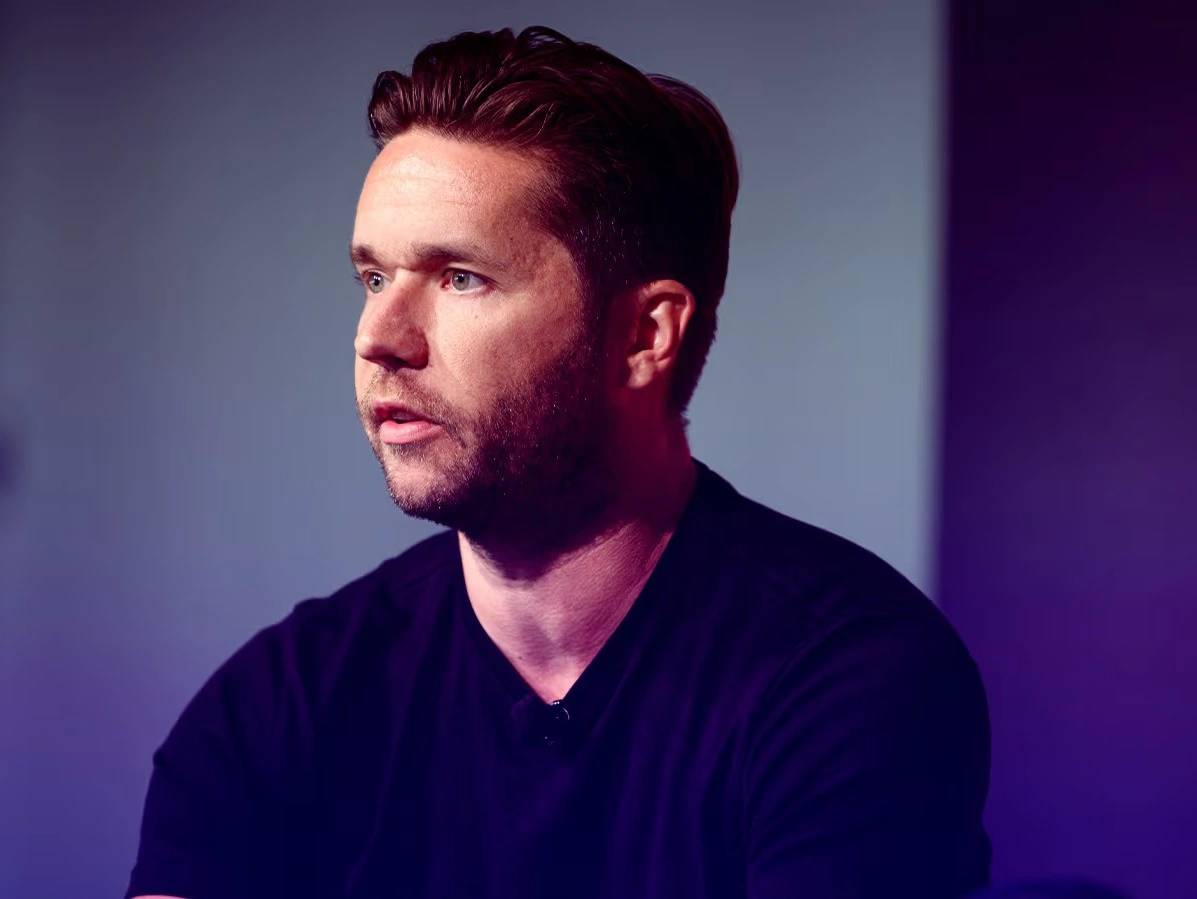
Sam MacPherson
Sam MacPherson is a software engineer and decentralized finance (DeFi) contributor known for his work in the MakerDAO ecosystem and as the co-founder and CEO of Phoenix Labs. His career has centered on protocol design, stablecoins, and on-chain liquidity infrastructure, with a particular focus on governance structures and the development of scalable financial systems. [3]
Education
MacPherson graduated from the University of Waterloo in 2012 with a Bachelor's degree in Computer Science. [1]
Career
Early Career
MacPherson's career began in the video game industry, where he was the co-owner of GigaBlast Games from 2006 to 2012. In this role, he served as a game programmer and designer, contributing to the technical development and design of various game projects. Following his time at GigaBlast, he founded SandBoxd Inc. in 2012, where he led the company's technical direction until it ceased operations in 2013. [1]
MakerDAO and Transition to DeFi
MacPherson entered the cryptocurrency space during the 2017 bull run. He later became a prominent contributor to the MakerDAO protocol (now part of the Sky ecosystem). While his formal contract role as a protocol engineer at MakerDAO was from 2022 to March 2023, his public activity shows he was an influential voice for the protocol's engineering team from at least March 2021.
During his time with the MakerDAO Protocol Engineering team, he gained a deep understanding of the protocol's technical and economic systems. He was involved in communicating and developing key initiatives, including the Optimism Dai Bridge in March 2021, which aimed to resolve withdrawal delays on Layer 2 networks. In November 2021, he announced the launch of the DAI Direct Deposit Module (D3M), which he described as a strategic shift for Maker "from a commercial lender to... the financial backbone of DeFi." His work also focused on the technical requirements for expanding MakerDAO's presence across multiple blockchains. [1] [2]
Phoenix Labs and Spark Protocol
In June 2023, MacPherson co-founded Phoenix Labs, a research and development company focused on smart contract development for DeFi protocols. He serves as the company's CEO. The formation of Phoenix Labs was a direct result of MakerDAO's "Endgame" plan, a major structural overhaul that dissolved its internal "Core Unit" system. MacPherson's Protocol Engineering team transitioned into the independent entity of Phoenix Labs to continue contributing to the Maker ecosystem.
Phoenix Labs' primary project is the development and ongoing support of the Spark Protocol, an on-chain capital allocation and lending market. Spark was created as a fork of the Aave V3 codebase and was designed to offer more advanced lending features to DAI users and serve as a "subDAO" within the new MakerDAO structure. Initially governed by Maker (MKR) holders, the long-term vision for Spark includes a transition to a more decentralized governance framework controlled by its own token holders. Spark is described as an on-chain capital allocator that deploys billions in stablecoin liquidity across DeFi and tokenized assets, governed by SparkDAO members. [1] [4]
Interviews
DeFi’s Liquidity Layer
In March 2025, MacPherson participated in an interview with Wallfacer Labs discussing his path into decentralized finance and his work within the MakerDAO ecosystem. He outlined his early involvement in cryptocurrency during the 2017 market cycle, his later contributions to MakerDAO projects focused on stability and governance, and the protocol’s evolution toward more pragmatic, cash flow–oriented structures. The interview also covered the creation of Spark as a specialized lending system, the development of a liquidity layer to improve capital efficiency across DeFi, and broader perspectives on stablecoins, institutional participation, and scaling capital deployment. [8]

Phoenix Labs
In March 2025, MacPherson appeared on the Stable School podcast to discuss the structure and direction of the Spark DAO and its relationship to Phoenix Labs. He described Spark’s governance model, which delegates decision-making to specialized sub-DAOs, and compared its lending operations to those of a commercial bank serving both protocols and users. The interview also addressed efforts to simplify access to decentralized finance through aggregated yields, plans for multi-chain expansion, potential new products, and a focus on improving user experience to broaden adoption. [10]

Sparking Evolution
In November 2023, MacPherson appeared on the StableLab podcast to discuss the formation of Phoenix Labs and the development of the Spark protocol following structural changes within MakerDAO. He described the transition from MakerDAO’s core units to an independent development organization, outlining how Spark was designed to address more advanced lending use cases for existing users while allowing for community participation in protocol development. The interview also covered MakerDAO’s Endgame strategy, the challenges of shifting to new governance models, and plans to expand Spark across multiple blockchains, with future governance expected to involve token holders in a more decentralized framework. [6]

Presentations
Solving Liquidity Fragmentation
In November 2024, MacPherson presented at the Stable Summit on liquidity fragmentation in decentralized stablecoins and approaches to addressing it. He outlined common classifications of stablecoins, distinguishing between fiat-backed models and on-chain decentralized designs, and discussed differences in reserve structures and yield mechanisms. MacPherson examined how yield is generated and supported through a combination of traditional assets, DeFi activity, and protocol-level safeguards, while also considering the constraints posed by liquidity depth and cross-chain scalability. He also described a proposed liquidity-layer approach intended to rebalance capital across networks and lending markets, with the aim of maintaining consistent stablecoin rates and improving usability across different chains. [9]

Panels
From App to Infra
In March 2024, MacPherson participated in a discussion at ETHDenver on the shift in decentralized finance from user-facing applications to underlying infrastructure. He discussed how newer protocol designs, such as Uniswap V4, can give developers greater flexibility while relying on established security frameworks, and he referenced MakerDAO’s organizational restructuring as an example of how protocols adapt to scaling challenges. The conversation also addressed the advantages of infrastructure-oriented systems, including improved security, scalability, and developer efficiency, as well as emerging approaches to specialization, risk management, protocol abstraction, and the implications of separating protocol functionality from branding in DeFi ecosystems. [7]

See something wrong?