0% read
Last updated:
Brad Stephens
W. Bradford "Brad" Stephens is the Co-founder and Managing Partner of Blockchain Capital, a venture capital firm established in 2013 that was one of the first to focus exclusively on the blockchain technology and cryptocurrency sector [1] [2]. Stephens is recognized for his role in pioneering institutional investment in the digital asset industry, including leading the creation of the first tokenized venture fund [3]. He has been named to the Forbes Midas List and The Midas Seed List for his work in venture capital [4].

Education
Stephens earned a Bachelor of Arts (B.A.) in Economics from Duke University, attending from 1994 to 1998 [1] [5]. He has also been affiliated with Sacred Heart Cathedral Preparatory and St. Ignatius College Preparatory in the San Francisco Bay Area [6] [5].
Career
Early Career in Finance
Stephens began his career in traditional finance. From 1998 to 2001, he worked as an Associate at the investment bank Robertson Stephens [1]. He then held positions at Credit Suisse First Boston (CSFB) and Furman Selz, where he was involved in technology research and helped raise over $1.3 billion for companies in sectors like internet infrastructure, which served as a basis for working with digital assets. [6].
In 2002, Stephens co-founded Stephens Investment Management LLC (SIM) with his brother, Bart Stephens. SIM operated as a family office and hedge fund, providing him with experience in international finance and venture capital [7] [5]. He subsequently served as a Senior Vice President at Fidelity Investments from 2004 to 2013, where he managed a multi-billion dollar business unit [1]. Other roles included serving as a Senior Analyst at Fidelity Ventures (now Volition Capital), where he led investments in internet security and founded the Fidelity Biometric Consortium to explore biometric technologies [6].
Entry into Cryptocurrency
Stephens' involvement in the cryptocurrency sector began with hands-on experience in its core infrastructure. In 2013, he started mining Bitcoin with his brother Bart, running a personal mining operation from his apartment. At its peak, this operation accounted for approximately 1% of the total global Bitcoin mining hashrate, providing him with deep technical knowledge of the network [3] [8].
He has stated that this experience was formative to his understanding of the technology: "It really taught my brother and me, at a gut level, how this technology works. It’s one thing to read the white paper... It’s a very different thing to have your capital at risk, to operate a data center, to protect the private keys." [9].
Blockchain Capital
In November 2013, Brad Stephens co-founded Blockchain Capital alongside his brother Bart Stephens and fellow crypto investor Brock Pierce [1] [10]. The firm is widely recognized as the first venture capital fund to focus exclusively on Bitcoin and the broader blockchain ecosystem [1] [4]. As a Co-founder and Managing Partner, Stephens is involved in all aspects of the firm's operations, including strategy, fundraising, and portfolio management [10].
The firm's initial portfolio was established through a unique strategy where the founders approached the CEOs of the top 20 crypto companies at the time, offering them a stake in a pooled fund in exchange for a small percentage of their own company's equity. This secured early positions in foundational companies like Kraken, Coinbase, and Ripple [3].
BCAP Security Token
In April 2017, Blockchain Capital launched the industry's first security token, the Blockchain Capital Token (BCAP) [10] [1]. This initiative represented the first-ever tokenized venture fund, raising $10 million in six hours for its third fund, Blockchain Capital III Digital Liquid Venture Fund, LP. The offering was executed as an Initial Coin Offering (ICO) and attracted approximately 1,000 investors from 76 countries, aiming to democratize access to venture capital investing [3] [8]. The BCAP token was created to be a liquid, tradable investment vehicle that pays on-chain dividends to its holders [1] [9]. Stephens has referred to the firm's use of its own portfolio company, Securitize, to execute the tokenization as "eating our own dog food" [9].
Fundraising and Portfolio
Under Stephens' leadership, Blockchain Capital has raised multiple funds. On September 18, 2023, the firm announced it had closed a 2 billion [11].
Through its funds, Blockchain Capital has invested in over 200 companies, protocols, and crypto assets since its founding [6]. Notable portfolio companies include Aave, Anchorage Digital, Circle, Coinbase, Kraken, Matter Labs (zkSync), OpenSea, Ripple, and Uniswap [1] [10]. Stephens has served on the board of directors for numerous portfolio companies, including Anchorage Digital, Securitize, Figment, and Uniswap [10] [8].
Investment Philosophy and Views
Stephens' investment philosophy is centered on a long-term, "picks and shovels" strategy, focusing on funding the foundational infrastructure of the crypto ecosystem rather than speculating on short-term market trends [10]. He has described Blockchain Capital's approach as being "long-term settlers" in the industry, in contrast to short-term "tourist" investors [10].
On the firm's investing thesis, Stephens stated, "We really do think of ourselves as a picks and shovels type of investor, so we are trying to provide the building blocks to this new sort of like digital nation that we see emerging" [10].
Key elements of his philosophy include:
- Focus on Founders: He prioritizes the integrity and sales ability of a CEO, considering it critical in a new industry [3].
- Technical Diligence: Blockchain Capital employs engineers to conduct deep technical analysis of code, smart contracts, and distributed systems before investing [3].
- Real-World Asset (RWA) Tokenization: He is a proponent of tokenizing real-world assets, believing it will be a major driver of value on blockchains [9].
- Future of Finance: Stephens predicts that traditional finance will migrate to blockchain-based "digital rails" over the next five to ten years due to superior efficiency and security, with regulation being the primary remaining hurdle [3].
Public Commentary and Philanthropy
Stephens is a public commentator on the blockchain industry and venture capital. He has contributed articles to publications such as TechCrunch, where he has written about security tokens, enterprise blockchain adoption, and the evolution of Web3 [7] [4]. He is also active on Twitter under the handle , where he shares news and commentary related to the industry [1].
He serves as a member of the Board of Directors for Gray Area, a San Francisco-based non-profit organization that explores the intersection of art and technology [5] [1].
Personal Security Incident
In January 2024, Stephens was the victim of a sophisticated "SIM swap" attack, a type of cyberattack where a hacker gains control of a person's mobile phone number to bypass security measures [10] [11]. The attacker used this access to compromise Stephens's password manager and drain his personal cryptocurrency wallets [10].
The incident resulted in the personal loss of approximately AUD 4.2 million at the time) in various digital assets, including Bitcoin and Ethereum [6]. The stolen funds were Stephens's personal assets and were not connected to Blockchain Capital's corporate or fund holdings. The high-profile attack served as a cautionary tale, highlighting the significant security risks associated with digital asset custody, even for experienced industry professionals [1] [10]. Some earlier sources had incorrectly dated a similar incident to 2017 or 2018 [7] [5].
Interviews
Views on Crypto Regulation and Industry Structure #01
In an episode of PGP (Pretty Good Policy) for Crypto, streamed live on July 23, 2023, Bart Stephens discussed his views on the development of the cryptocurrency sector, regulatory conditions, and cultural dynamics associated with the industry.
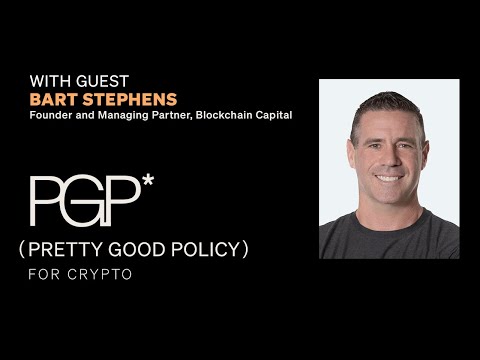
Stephens describes the crypto ecosystem as comprising three elements: blockchain technology, crypto assets, and what he refers to as “crypto culture.” He characterizes blockchain as an open protocol system for transferring value, and crypto assets as a category of digital instruments that do not align clearly with existing financial classifications. He also associates crypto culture with a set of social and political attitudes, including preferences for decentralization, transparency, and distributed participation.
Regarding regulation, Stephens states that existing legal frameworks in the United States were designed for financial systems based on intermediaries and are not directly compatible with decentralized network structures. He notes that this mismatch has contributed to legal uncertainty and enforcement actions. He also indicates that some market participants have chosen to operate in other jurisdictions in response to regulatory conditions.
Stephens references decentralized finance (DeFi) and open-source development as models that enable participation from a global base of contributors. He describes these systems as allowing individuals to engage in financial and technical activities without reliance on centralized institutions.
In relation to venture capital, Stephens states that periods of reduced market activity tend to coincide with lower levels of investment participation from generalist investors. He indicates that Blockchain Capital continues to invest in early-stage companies focused on blockchain-based infrastructure and applications.
He further characterizes cryptocurrency as having social and political dimensions, including associations with groups that express dissatisfaction with existing financial and institutional arrangements. He states that engagement with policymakers and the development of clearer legislative frameworks are relevant factors for the sector.
Stephens also addresses students and early-stage founders, indicating that participation in the cryptocurrency sector may involve experimentation and risk-taking, particularly in emerging technological fields. [12]
See something wrong?

Official Website:
Social Profiles: