0% read
Last updated:
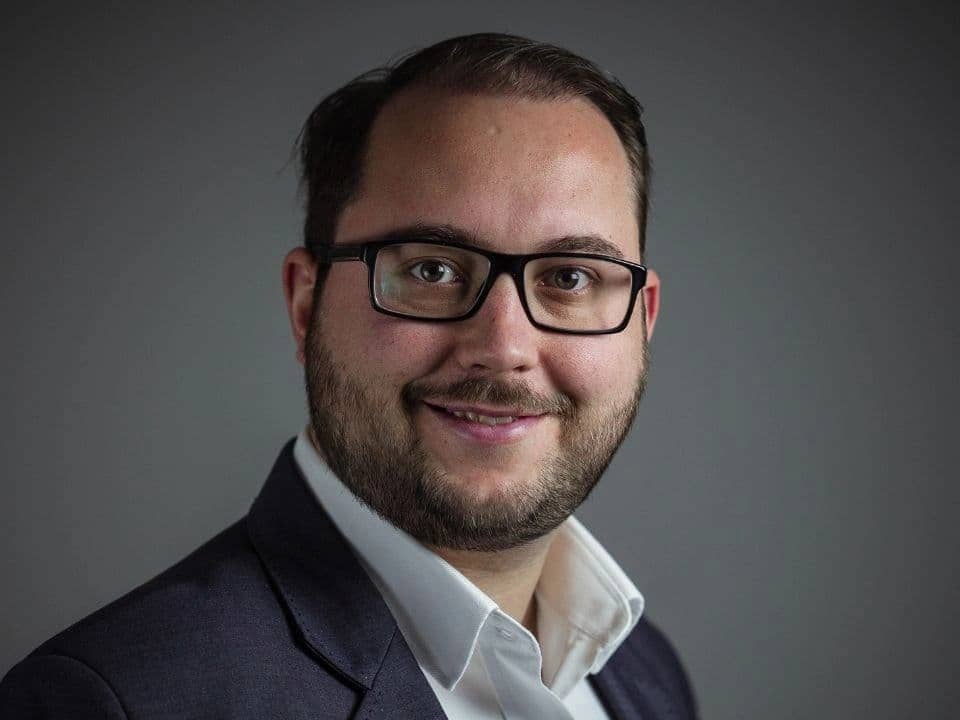
Johannes Kern
Johannes Kern is a business executive and blockchain specialist who serves as Managing Director of the Frankencoin Association, the non-profit steward organization behind the Frankencoin (ZCHF) Swiss franc stablecoin.[1] Over his career he has moved between traditional finance, venture investing, and blockchain technology, holding advisory and board roles across decentralized finance (DeFi) protocols, Swiss fintech, and blockchain infrastructure.[1]
Early Life and Education
Kern pursued his university studies primarily in Switzerland, earning both a Bachelor of Arts in Business Administration (2012–2015) and a Master of Arts in Business Management (2016–2019) from the University of St.Gallen.[3][4] His education was marked by substantial international exposure. During his bachelor's studies he completed an exchange semester at Stellenbosch University in South Africa (2014–2015) and a program in international business (Negocios Internacionales) at Universidad Privada del Norte in Peru in 2012.[3] He has said he carried out his own startup while still a student and recalled doing an exchange in South Africa in 2014 while studying in Stellenbosch.[5] In 2017 he additionally undertook master-level programs in management, finance, marketing, and economics and public policy at Universidad Adolfo Ibáñez in Santiago, Chile.[3]
Career
Early Career
Kern's earliest documented work experience was as a working student at Aegis Media Central Services AG from July 2011 to February 2012, where he handled reporting for management and maintained performance indicators for the company's England-based headquarters using SAP and other database tools.[3] In 2013 he completed a two-month internship in headquarters controlling at the wholesale group METRO AG in Düsseldorf, Germany.[6] Between 2015 and 2016 he carried out Swiss civil service (Zivildienst) in two placements: administrative and logistics work at the Zentralschweizer Interessengemeinschaft Gesundheitsberufe (ZIGG) in Alpnach, and a six-month assignment with the social services asylum division of the Canton of Zug.[3] In the Zug placement he supported a team of social workers in a camp for unaccompanied minor refugees, helping to build the camp's organizational structure, managing internal IT infrastructure and fundraising, and developing an in-house CRM to manage volunteers.[3]
cofoundme.org and KERST
In 2014 Kern founded cofoundme.org, a non-profit online platform for entrepreneurs and startup founders that he describes as one of Europe's largest networks of its kind, specializing in startup-teaming.[2] He has served as Founder Advisor to the platform since January 2015.[3] Between August 2015 and January 2016, cofoundme acted as the business partner for an Integration Workshop led by Professor Jost Hamschmidt at the University of St.Gallen in cooperation with ETH Zurich, a course in which business administration bachelor students applied their skills to a real-life case that cofoundme supplied along with mentorship.[3]
Also in 2014, Kern became a Partner at KERST, a Zug-based technology and consulting firm, where his work centers on advising on and delivering projects in the area of business process management.[3]
Swisscom Blockchain
From April 2018 to June 2019, Kern worked as a Consultant in the Tokenization Services team at Swisscom Blockchain AG.[2] He has said he joined the firm in 2018 to do initial coin offering (ICO) consulting.[5] His responsibilities included advising organizations on go-to-market strategies for their tokenization projects, designing architectures that applied distributed ledger and blockchain technologies—including Ethereum, Bitcoin, and Hyperledger Fabric and Indy—to complex real-world use cases, and positioning blockchain training offerings in the Swiss market.[3]
L1 Digital
Kern then moved into institutional crypto investing, working in blockchain research and business development at L1D AG (L1 Digital) from June 2019 to January 2023.[3] Founded in 2018, L1 Digital is a Switzerland-based investment management company that advises a multi-manager fund specializing in digital assets, investing in crypto-native managers and founders and aiming to help institutional investors gain exposure to decentralized networks.[2] It has been described as one of the largest institutional web3 investors in Europe.[4] Kern has also referred to this period of his career as working at a fund called Eleva Digital, which he says invested in the Celo blockchain.[5]
Nerif Network
In February 2023, Kern returned to the technical side of blockchain by co-founding Nerif Network, where he served as Co-Founder and Head of Growth until August 2024.[3] Founded in 2022 and headquartered in Zug, Nerif is a blockchain services company that built a smart contract automation platform.[8] Kern has described the project's goal as to "make web3 developer experience suck a bit less."[7]
Roam Network
Since August 2024, Kern has been Chairman of the Board of Roam Network, an IT services company founded in 2021 and headquartered in Zug that operates in the DePIN (decentralized physical infrastructure) sector.[3] The company's product allows users to share real-time mobile network performance data and earn rewards through a mobile application, the roamapp, which tracks internet speeds while keeping phone battery usage low.[3]
Frankencoin Association
Since November 2024, Kern has been Managing Director of the Frankencoin Association, a Swiss non-profit organization founded in 2024 and headquartered in Zug that acts as the steward of the Frankencoin protocol and its ZCHF stablecoin.[3] He joined the project alongside its inventor, Luzius Meisser, to help scale the Swiss franc stablecoin.[5] Kern has stated that the association has four full-time employees plus a number of associated freelancers, and that it supports the protocol across marketing, development, business development, and risk management.[5] He describes his own day-to-day role as holding the association together and publicly representing Frankencoin "on stage, or in podcasts, or in opinion papers."[5]
ZCHF and Protocol Design
Kern characterizes Frankencoin (ZCHF) as a fully decentralized, overcollateralized Swiss franc stablecoin built as an oracle-free collateralized debt position (CDP) platform.[8][1] A CDP is a mechanism in which users lock collateral to mint, or borrow into existence, stablecoins against it. According to Kern, the protocol's defining technical feature is that it is oracle-free, meaning it does not rely on external price feeds; he argues that avoiding oracles removes a major attack and risk vector for CDP systems, citing recent oracle failures such as the one affecting Ostium as cautionary context.[5] He has stated that ZCHF operates on Ethereum and six other chains and is accessible through six independent front ends, with the association itself preparing information, running a front end, and surfacing on-chain data for voters.[1][5] The association's profile reports the protocol holding roughly $65 million in total value locked and describes Frankencoin as one of the largest non-USD stablecoins in DeFi; Kern has stated it is the largest Swiss franc stablecoin and that it has held its peg since 2023 through on-chain collateral rather than a central counterparty.[1][5]
The protocol's risk model, as Kern describes it, places losses on holders of the governance token through an "equity pool" that is put at risk, while a decentralized autonomous organization (DAO) sets parameters such as which collaterals are accepted, liquidation prices and mechanics, and interest rates.[5]
Governance
Kern describes Frankencoin's governance as an "optimistic governance" model that he compares to Swiss political principles of consensus, slow-moving change, and decentralization across cantons.[5] Under this model, anyone can propose changes without holding governance tokens, with proposals costing 1,000 Swiss francs to submit; a proposal takes effect if it is not vetoed within a veto period, which he gives as around five days depending on the proposal type.[5] Any holder or group controlling at least 2% of the governance token voting power can veto any proposal, with voting power that is time-weighted so that longer holding increases influence.[5] The governance token is called FPS.[5] The association itself is non-voting but holds some FPS tokens, which it uses to finance itself rather than to vote actively.[5] Kern acknowledges that this design intentionally makes the system hard to change and slower to grow, a trade-off he frames as protection against governance attacks.[5]
Regulatory Milestones and Roadmap
Kern has reported that Frankencoin's white paper under the European Union's Markets in Crypto-Assets (MiCA) regulation was published and accepted in the European MiCA register at the end of June, a step he frames as opening Frankencoin to regulated European crypto markets and enabling regulated European exchanges to list the token.[5] He has outlined a near-term roadmap that includes launching a new version of the governance token and onboarding a shortlist of on-chain collaterals, which he argues will let Frankencoin scale because its oracle-free design permits a broader universe of eligible collateral; he has said the association faces "a massive six months ahead of us."[5]
Talks and Interviews
Kern is a regular speaker on stablecoin and DeFi topics, having appeared at events including EthCC, Stable Summit, Stablecon, ETHDenver, and Devcon.[1] His stated focus areas are stablecoin design, decentralized governance, and the macroeconomic case for the Swiss franc as a digital reserve asset.[1]
At Ethereum Zürich 2025, Kern presented a session titled "Zero-to-one vs one-to-ten: Bringing a CHF stablecoin from Switzerland to the world," on the theme of real-world assets (RWAs) as a way to anchor decentralized systems in tangible value, examining the potential of tokenized Swiss assets such as real estate and bonds to expand the franc's relevance in DeFi.[8] At Ethereum Zürich 2026, scheduled for 10 April, he was listed to deliver a 20-minute session titled "Frankencoinix and the Imperator Dollarus"—framed with an Asterix-style allusion to a world "entirely occupied by the Dollarus" except for "one small village of indomitable Helvetii"—and to appear on a panel titled "Price Shocks and Risk Management: Algorithmic Resilience or Institutional Stability?" alongside Michael Svoboda, Matthias Hafner, Miller Mendoza Jimenez, and Marco Mariani, examining how DeFi protocols, institutional gateways, and investment firms design risk frameworks and respond to market shocks.[9]
In an interview on the Trading Strategy podcast, Kern elaborated on his views of the broader stablecoin market, stating that the US dollar accounts for roughly 99.7% of all stablecoin market capitalization.[5] He criticized parts of the crypto and stablecoin market as "very much an extractive place," singling out some liquidity providers, exchanges, and wallets, and warned against short-term value extraction and "Ponzinomics."[5] He has advocated building useful products, summarizing his outlook with the maxims "make useful things" and "make banks optional."[5]
See something wrong?