0% read
Last updated:
Novastro
Novastro is a financial technology platform and modular infrastructure layer designed for the tokenization of Real-World Assets (RWAs). The platform transforms physical and traditional assets into liquid, cross-chain digital instruments by leveraging AI, a modular ledger, and a compliance-focused framework. [1] [2]
Overview
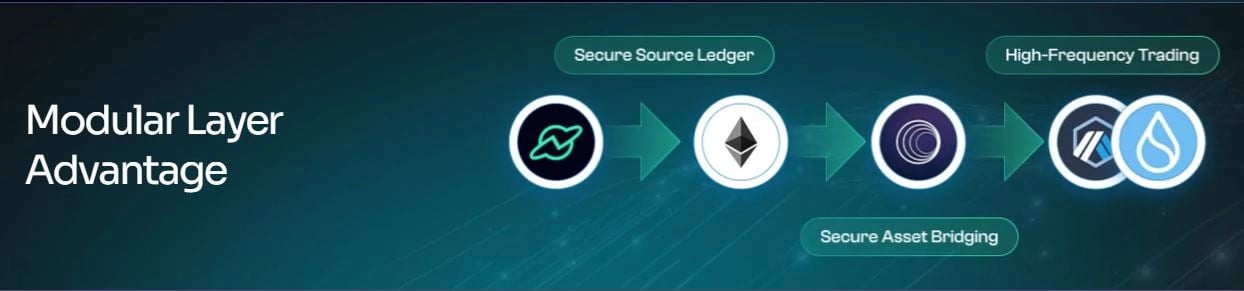
Novastro is a blockchain-based platform focused on real-world asset (RWA) tokenization. It uses a modular ledger system anchored to Ethereum for security while extending trading and interoperability to networks such as Arbitrum, Sui, and Solana. The platform enables cross-chain issuance and management of tokenized assets like real estate, metals, infrastructure, and intellectual property, aiming to improve liquidity and reduce barriers compared to traditional markets.
Through smart contracts and SPV-based frameworks, Novastro supports automated compliance, asset lifecycle management, and settlement, minimizing reliance on intermediaries. Its architecture provides developer tools and integration options for businesses to tokenize and trade assets across chains, with the $XNL token powering on-chain yield mechanisms and asset strategies. [3] [9]
Products
Digital Twin Container (DTC)
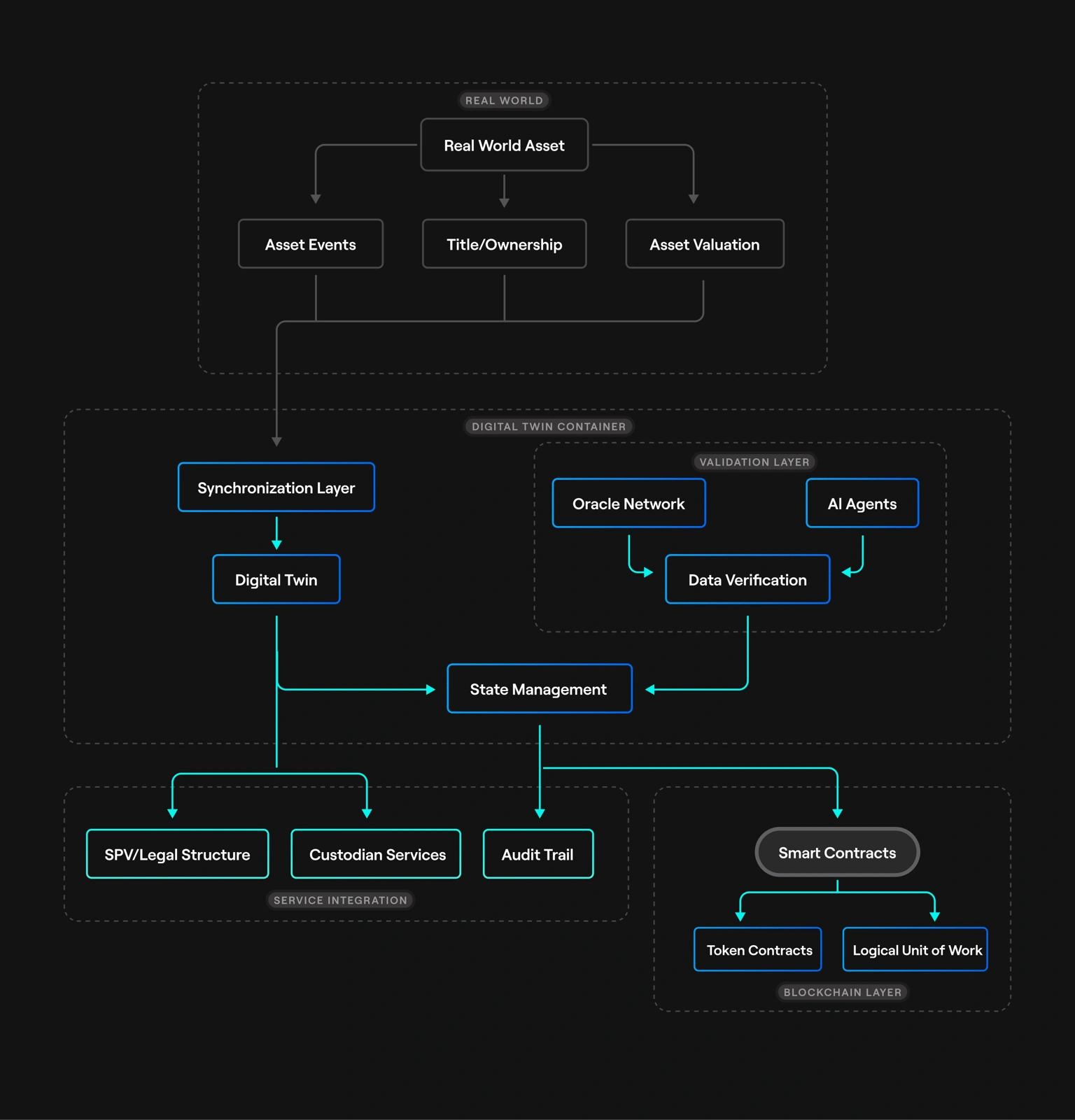
Novastro’s Digital Twin Containers (DTCs) are smart contracts that represent real-world assets on-chain, backed by legal structures to ensure enforceable ownership rights. They support token issuance, fractional ownership, compliance enforcement, dividend distribution, and cross-chain integration, making them functional tools for issuers, investors, and developers. Each DTC is tied to a Special Purpose Vehicle (SPV), which holds the underlying asset and embeds compliance mechanisms like KYC and jurisdictional restrictions directly into the contract.
The DTC architecture links physical and digital domains through multiple layers. The real-world layer manages assets, ownership, valuation, and event tracking, while the core components maintain synchronization, digital replicas, and state management. A validation layer uses AI agents and oracles for data accuracy, and the blockchain layer enforces compliance and tokenization. Service integrations such as SPVs, custodians, and audit trails provide regulatory and legal backing.
By combining synchronization, legal enforceability, compliance automation, and interoperability, DTCs transform real-world assets into programmable and composable financial instruments. They enable real-time asset tracking, cross-chain liquidity, and integration with DeFi applications while maintaining transparency, security, and regulatory alignment. [4]
Chain Router
Novastro’s Chain Router is the cross-chain bridge and messaging hub that enables Digital Twin Container (DTC) tokens to move seamlessly across Ethereum, Arbitrum, Solana, Sui, and other ecosystems. It uses a combination of on-chain contracts, off-chain relayers, and APIs to manage token transfers, enforce chain-specific logic, and abstract away gas fees. Instead of requiring users to maintain native tokens on each network, the system allows fees to be paid in ETH, $XNL, or other supported assets, simplifying multichain usability.
The process relies on secure third-party bridges like Wormhole, LayerZero, and Axelar. Tokens are locked on Ethereum, while equivalent wrapped tokens are minted on destination chains, ensuring supply consistency. When transferred back, the wrapped token is burned, and the original asset is released. This approach maintains asset traceability while outsourcing core interoperability security to audited bridge providers.
By integrating third-party infrastructure rather than building its own, Novastro reduces risk and accelerates deployment across chains. The Chain Router serves as the backbone of Novastro’s multichain strategy, ensuring that tokenized real-world assets can circulate across multiple DeFi ecosystems without compromising compliance, functionality, or user experience. [5]
RWA Marketplace
The RWA Marketplace is Novastro’s trading platform for tokenized real-world assets, designed to bring together liquidity, cross-chain execution, and accessible user interfaces. It supports two main trading models: AMM-based swaps on Ethereum and EVM-compatible chains for quick, low-cost trades, and order-book trading through integrations with high-performance DEXs like Injective and Serum for users preferring traditional market or limit orders. This dual approach allows both retail users and institutions to access fractionalized assets in formats suited to their needs.
The marketplace aggregates tokenized assets into a single portal, where users can browse listings with details such as asset type, valuation, yield rates, ownership structures, and compliance status. Cross-chain execution is handled through Novastro’s messaging hub, making assets tradable across ecosystems without requiring users to manage the technical complexities.
The platform’s interface prioritizes accessibility for non-crypto-native users, offering dashboards with portfolio summaries, price charts, and real-world financial metrics. Onboarding is flexible, supporting both wallet connections and email-based accounts, while the responsive design ensures usability across desktop and mobile. This setup positions the RWA Marketplace as a comprehensive venue for discovering and trading tokenized assets in a format familiar to traditional finance participants. [7]
Yield Farming & Structured Products
Novastro’s Yield Farming & Structured Products module transforms tokenized real-world assets into yield-generating instruments that integrate with DeFi. Users can stake RWA tokens in curated pools, earn incentives in $XNL or partner tokens, and participate in governance for additional rewards. These functions support ecosystem liquidity while creating opportunities for both passive and active investors.
The module also introduces structured products tailored for risk-managed exposure. Diversified vaults allocate stablecoin deposits into baskets of RWA tokens, automated pools rebalance based on oracle and DTC data, and cross-chain aggregators direct funds toward the strongest opportunities across ecosystems. Each product is legally tied to underlying assets through DTCs and enhanced with oracle-driven performance metrics, ensuring compliance, transparency, and adaptive risk management. [8]
Service Provider Layer
Novastro’s Service Provider Integration Layer connects tokenized real-world assets to the legal, financial, and operational systems they represent. By linking custodians, auditors, appraisers, KYC providers, insurers, and legal firms through standardized APIs, oracle bridges, and smart contract hooks, it ensures every Digital Twin Container (DTC) reflects verified off-chain data. Custodians can update ownership proofs, auditors and appraisers can feed financial reports and valuations, KYC providers can enforce participant eligibility, and insurers can encode coverage terms directly into token logic—maintaining compliance and transparency throughout the asset’s lifecycle.
For issuers, the layer provides a plug-and-play marketplace to embed trusted service providers at token creation, while developers gain a unified API for querying real-time service-backed data and integrating it into dashboards or DeFi applications. This creates a network effect where each new provider strengthens the ecosystem’s compliance and investor confidence, while also benefiting from broad exposure across Novastro’s platform. Over time, the integration layer evolves into a shared infrastructure of trust that scales alongside the tokenization of real-world assets. [6]
Architecture
Tokenization Layer
Novastro’s Tokenization Layer converts real-world assets into compliant digital tokens through a modular system that combines Special Purpose Vehicles (SPVs), Digital Twin Containers (DTCs), and smart contracts. SPVs hold legal title and manage off-chain assets, while DTCs mirror their financial and legal status on-chain, embedding valuation, compliance, and income data. This design supports fractional ownership, automated compliance, and integration with DeFi, enabling tokens to be issued, traded, and used for yield generation with enforceable legal backing.
The process begins with asset onboarding, where auditors and legal partners perform verification before linking an SPV to a DTC. Assets are then fractionalized into tokens representing claims on the underlying SPV, with compliance enforced through whitelisting, KYC/AML, and jurisdictional restrictions. Smart contract modules manage valuation updates, income distribution, access control, and audit trails, ensuring transparency and security. By reducing intermediaries and embedding compliance from the start, Novastro’s framework delivers scalable tokenization infrastructure that can adapt to multiple asset classes while maintaining regulatory alignment and operational efficiency. [10]
Trading Layer
Novastro’s Trading Layer provides a multi-chain infrastructure that transforms tokenized real-world assets into tradable, high-liquidity instruments while addressing fragmentation, high fees, and regulatory complexity. Ethereum Layer 2s, such as Arbitrum and Optimism, host trading contracts that mirror DTC logic, enabling bridged RWAs to participate in DEX liquidity pools, lending markets, and permissioned vaults. Solana supports high-speed, low-latency trading for assets such as tokenized equities or short-term debt, with Ethereum-based tokens bridged via Wormhole and listed on order-book DEXs like Serum. Sui leverages Move-based smart contracts for structured asset management and dynamic ownership, facilitating real-time execution of yield farming and tranche-based debt strategies.
The layer also integrates Cosmos chains, including Injective and Osmosis, for IBC-compatible deployments, supporting order-book and AMM trading models. A Cross-Chain Messaging Hub orchestrates interoperability across all chains, using Wormhole, LayerZero, and Axelar to manage bridging, messaging, and automated mint/burn or lock/unlock processes. This system ensures unified asset ID tracking, abstracts gas payments for users, and provides callbacks to notify smart contracts of cross-chain token movements, enabling seamless, compliant, and scalable RWA trading across multiple ecosystems. [11]
XNL
$XNL is Novastro’s native utility token, serving as the foundation for transactions, governance, and participation across the ecosystem. It functions as the gas token for transaction fees, powers staking to secure the network, and enables liquidity provision through its use as a base trading pair. Holders also gain governance rights, allowing them to influence upgrades, parameter changes, and ecosystem funding, tying community involvement directly to platform development.
Beyond its role in transactions and governance, $XNL underpins real-world asset management within Novastro. It is used to pay protocol fees, support liquidity in tokenized RWA markets, and operate Digital Twin Containers, which provide compliance and lifecycle management for tokenized assets. This multi-layered design positions $XNL as a central element of Novastro’s infrastructure, ensuring scalability, transparency, and community-driven growth. [12]
Partnerships
- ICB Labs
- Bhopal DAO
- Orochi Network
- Flexafina
- Kaito
- MAIV
- Stability WorldAI
- WIZZ
- Terminus Network
- DualMint
- Lumishare
- openledger
- nudge
- gains associates
- Demonopol
- Paal mind
- Collably
- Amano invest
- Allora labs
- plena
- tiamonds
- Atomic wallet
- Prop chain
- Pixlrwa
- rwa inc
Asset link
- Welf finance
- Brillion
- TVVIN
- Airas
See something wrong?