0% read
Last updated:
Bowen Wang
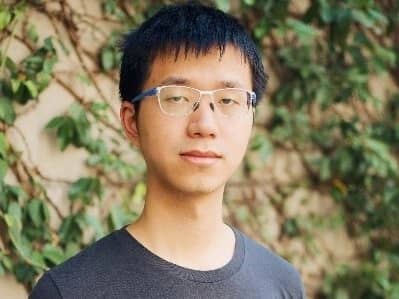
Bowen Wang is a blockchain engineer, entrepreneur, and the Chief Technology Officer (CTO) of NEAR Protocol. He is also the founder of NEAR One, a research and development organization focused on the core infrastructure of the NEAR ecosystem. [1]
Education
Wang attended the University of Chicago, where he earned a Bachelor’s degree in Computer Science and Mathematics. He continued his studies at the same institution, receiving his Master’s degree in 2018. [10]
Career
Wang joined NEAR Protocol as a software engineer in August 2018, during the project's early stages. In this role, he contributed to the development of core components of the blockchain, including its peer-to-peer network, runtime, consensus mechanism, and sharding architecture. He was also involved in organizing multiple test networks and supported the protocol's mainnet launch.
In January 2021, Wang was promoted to Engineering Manager. He led three engineering teams, comprising approximately 20 engineers, that were responsible for NEAR's consensus, sharding, runtime, networking, and storage components. During his tenure as manager, he oversaw the mainnet launch of Phase 0 of NEAR's sharding design in November 2021. From April 2022 to July 2025, Wang served as the Head of Protocol, where he was responsible for broader protocol development efforts.
By May 2025, Wang was publicly identified as the founder of NEAR One, a research and development hub dedicated to advancing NEAR Protocol's core technology and scaling roadmap. In August 2025, he was appointed Chief Technology Officer of NEAR Protocol, a position in which he continues to guide the technical direction and development of the NEAR blockchain. [9]
Near One
In a May 2025 interview with Bloomingbit, Wang discussed the technical direction of NEAR One and its long-term scalability strategy. He described leading the design and implementation of the protocol’s sharding architecture, Nightshade, as well as subsequent upgrades, including Nightshade 2.0, Stateless Validation, and planned integration of zero-knowledge proof systems to reduce verification costs and enable lightweight validation. Wang outlined efforts to scale throughput toward one million transactions per second through transaction and state sharding, expansion from six to eight shards on mainnet, and interoperability features such as Chain Signatures, which enable accounts to initiate transactions across external blockchains, including Ethereum, Solana, Cosmos, and Bitcoin. He also addressed the ongoing development of infrastructure intended to support AI agent-based applications operating within a decentralized blockchain environment. [2]
Interviews
Scaling Agentic Internet
In a July 2025 interview on the Epicenter Podcast, Wang discussed the intersection of AI and blockchain, focusing on the development of “shade agents”—autonomous AI systems that can own assets and operate within trusted execution environments on the NEAR Protocol. He described NEAR Protocol’s performance, noting a block time of roughly 600 milliseconds and finality of 1.2 seconds, and highlighted the advantages of its architecture, which leverages statistical validation, sharding, and asynchronous execution to achieve faster transaction speeds and greater scalability than networks like Ethereum and Solana.
Wang explained the current NEAR ecosystem, which supports both consumer-focused applications and more abstract services, such as multi-chain asset trading, emphasizing the benefits for developers, including speed, lower costs, and support for autonomous AI agents. He also addressed challenges, including regulatory considerations for AI on transparent blockchains, ongoing storage complexities that affect developer experience, and broader challenges in building an AI-focused ecosystem. Looking forward, Wang outlined his vision for NEAR as a foundational platform for user-controlled AI interactions, aiming to enhance privacy, ownership, and autonomy in digital interactions. [7]

Presentations
Tech Scaling for Agents
At NEAR’s AI Frontier conference in February 2025, Wang outlined the role of blockchain infrastructure in supporting autonomous AI agents within the NEAR Protocol ecosystem. He described the growing presence of AI agents in everyday activities and argued that large-scale agent coordination would require a decentralized financial and settlement layer capable of handling agreements without the need for centralized intermediaries. Emphasizing scalability, he stated that infrastructure must support potentially trillions of agents without network congestion. Wang detailed NEAR’s sharded architecture, which enables linear scalability by adding shards as demand increases and allows transactions to pause for off-chain computation. He discussed performance targets of up to one million transactions per second through additional shards and execution optimizations, including parallel and optimistic runtime execution, as well as plans to reduce block times from approximately 1.1 seconds to 400 milliseconds. He also described ongoing efforts to separate consensus and execution processes to further increase throughput, positioning the protocol as infrastructure for high-speed, AI-driven applications. [6]

Whiteboard with NEAR
In an April 2024 Whiteboard Series discussion, Wang and Illia Polosukhin examined the technical architecture of NEAR Protocol, focusing on consensus design and protocol updates since 2019. Wang described NEAR’s hybrid consensus mechanism, Doomslug, which combines Byzantine Fault Tolerance principles with a streamlined block production process that finalizes prior blocks as new ones are added, increasing throughput. He outlined the Nightshade sharding architecture, designed to reduce the complexity of traditional shard chains while preserving atomicity, and explained the use of data-availability sharding with erasure-coded chunks to ensure that validators can reconstruct required data. The discussion also covered stateless validation, which allows transaction verification without maintaining full local state; cross-shard transaction routing via receipt mechanisms; NEAR’s account model based on human-readable names and access keys; and the introduction of chain signatures to enable collective transaction signing for cross-chain functionality. [3]

Nightshade 2.0
In an August 2024 live collaboration on NEAR DevHub, Wang discussed the Nightshade 2.0 upgrade to the NEAR Protocol validation architecture. He described the transition from an earlier design that relied on fraud proofs to a stateless validation model intended to simplify implementation, improve performance, and enhance decentralization. The upgrade reduced hardware requirements for validators, lowering barriers to participation and enabling broader network security. Wang noted that the development and testing process lasted more than a year and included community stress testing prior to mainnet rollout.
He explained that Nightshade 2.0 was designed to prepare the network for additional shards and future scalability improvements, including dynamic sharding that could adjust capacity in response to network load. While some optimizations increased network usage, he indicated that future integration of zero-knowledge technologies could streamline validation. The upgrade was structured to minimize disruption for developers, with incremental user-facing performance improvements expected over time, particularly in storage efficiency and state access costs. He also addressed security considerations related to validator distribution and outlined a longer-term strategy focused on scalability and the general-purpose utility of the network. [5]

Core Protocol, Tech, and Omnibridge
In a presentation at the REDACTED conference in November 2024, Wang outlined NEAR Protocol's scalability strategy, focusing on its design as a high-speed, cost-efficient blockchain intended to support large-scale user activity and AI-driven applications. He described sharding as the core scaling mechanism, dividing global state into multiple shards while maintaining a single chain structure that coordinates shard “chunks,” an architectural approach introduced in 2019 to reduce complexity relative to earlier multi-chain shard models. Wang detailed a 2024 upgrade (Nightshade 2.0) that improved state validation by managing state more efficiently in memory, reducing hardware requirements for validators and enabling performance gains without network downtime. He also discussed dynamic sharding to adjust shard counts based on transaction load, sharded smart contracts capable of operating across shards, and a proposed separation of consensus and execution processes to increase throughput and better support both high-frequency transactions and computationally intensive applications. [4]

See something wrong?
Social Profiles:
Blockchains: