0% read
Last updated:
Etherfuse KTB
Etherfuse KTB (KTB) is a tokenized real-world asset (RWA) representing Korean Treasury Bonds. The project aims to bridge traditional finance (TradFi) with decentralized finance (DeFi) by providing on-chain access to government-backed securities. Throughout its development, the project has been associated with multiple blockchain platforms, including Ethereum, Monad, and most recently, Solana. The project is developed by the company Etherfuse (formerly Prestocks) in collaboration with the South Korean financial institution Shinhan Securities.
Compare Cryptoassets
Select an asset to compare its price and other stats against Etherfuse KTB.
Overview
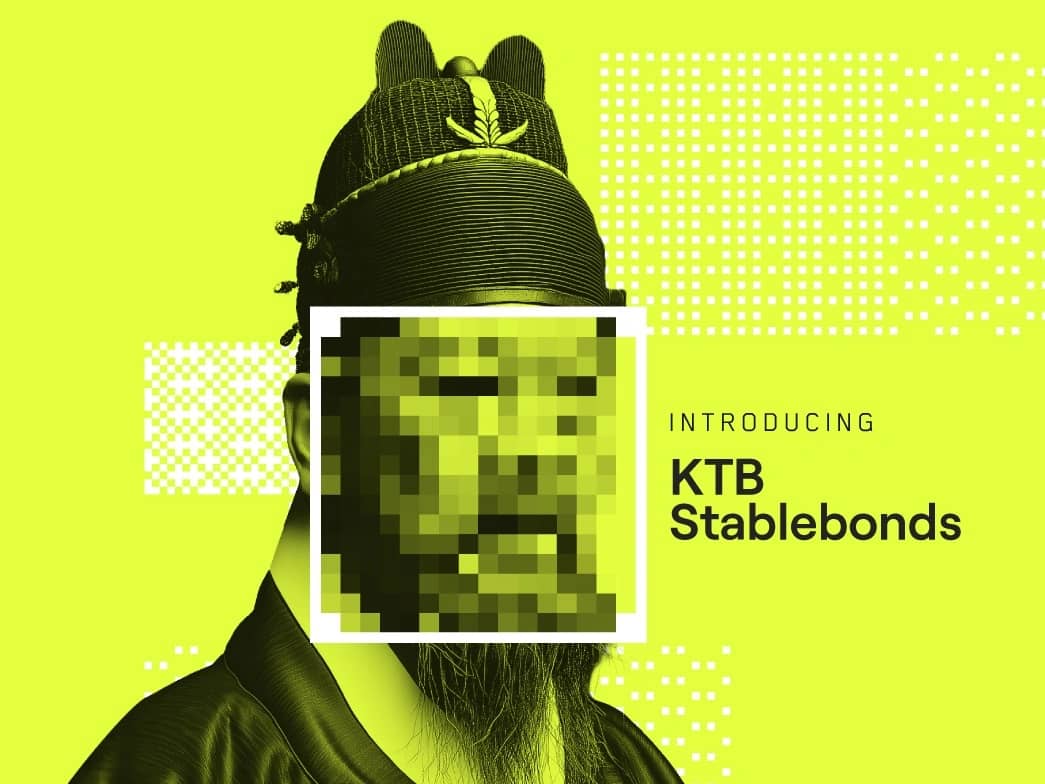
The core purpose of Etherfuse KTB is to tokenize Korean Treasury Bonds, making these traditionally stable, government-backed assets accessible within the DeFi ecosystem. By bringing these assets on-chain, the project aims to solve the problem of limited access to low-risk, yield-bearing traditional assets for crypto-native users. This allows global investors to gain exposure to South Korean sovereign debt without navigating conventional brokerage systems. The tokenized bonds, referred to as "KTB Stablebonds," are designed to diversify on-chain investment options beyond native crypto assets. [1] [2]
Tokenization is intended to enhance the liquidity and divisibility of government bonds, which typically trade in large denominations. By representing them as digital tokens, large bonds can be fractionalized into smaller, more affordable units, opening up the asset class to a wider range of investors. Furthermore, operating on a blockchain enables more efficient financial operations, such as 24/7 trading and near-instant settlement, compared to traditional bond markets. As a blockchain-native asset, KTB can be integrated into various DeFi protocols, where it could potentially serve as stable, yield-bearing collateral for lending, borrowing, and other decentralized financial strategies. [3]
Project History
The development of Etherfuse KTB is marked by several distinct phases across different blockchain ecosystems, reflecting an evolution in its strategy and technical foundation.
Initial Development on Ethereum (2023–2024)
The Etherfuse project was founded in January 2023 by Scott Lee in Seoul, South Korea. The initial vision was to build a DeFi protocol on the Ethereum blockchain to tokenize Korean Treasury Bonds. The project secured initial seed funding in 2023, and a token generation event (TGE) for the KTB token was conducted in late 2023. [4]
During this early phase, the KTB token briefly achieved an all-time high price of approximately $0.15 in early 2024. However, public-facing communications from the project's founder reportedly ceased around mid-2024. Subsequently, the project's visibility and market activity diminished significantly. By 2026, the official pages for KTB on major cryptocurrency data aggregators like CoinGecko and CoinMarketCap were no longer accessible, returning 404 "Not Found" errors. This indicates that the original Ethereum-based version of the project was either delisted or became defunct. [5] [4]
Relaunch on Solana (2026)
In late January 2026, the project resurfaced with a new strategic direction, launching on the Solana blockchain. The parent company, previously known as Prestocks, officially rebranded as Etherfuse. This relaunch was defined by a landmark partnership with Shinhan Securities, a major South Korean financial services company, to source and manage the underlying government bonds. [1]
The Solana-based iteration of KTB was integrated with Orca, a prominent decentralized exchange (DEX) on the network, to provide trading and liquidity infrastructure. This operational version of "KTB Stablebonds" became available for trading and liquidity provision, marking the project's official entry into the Solana DeFi ecosystem. [2]
Experimental Deployment on Monad (2026)
Concurrently with its Solana launch, a token also named Etherfuse KTB (KTB) appeared within the Monad blockchain ecosystem in February 2026. This version was listed on data aggregators as a "New Coin" with an exceptionally low market capitalization (under $100) and negligible trading volume. This deployment is considered to be a small-scale pilot or a test-phase project to explore the tokenization concept on the Monad network. It exists alongside another related experimental token, Etherfuse GILTS (GILTS), which represents UK government bonds. [3]
Technology
Blockchain Architecture
The current and primary operational version of Etherfuse KTB is built on the Solana blockchain. The choice of Solana allows the project to leverage the network's high throughput and low transaction costs for trading and DeFi applications. Historically, the project was first conceptualized for the Ethereum blockchain, and an experimental version also exists on the Monad blockchain. [1] [2] [3]
Asset Tokenization Mechanism
As a Real-World Asset (RWA), KTB's core technology involves a mechanism for representing off-chain government bonds as on-chain digital tokens. This process requires a custodian, in this case Shinhan Securities, to hold and manage the physical Korean Treasury Bonds. The Etherfuse protocol then mints KTB tokens equivalent to the value of the held assets. This is managed through smart contracts that govern the minting, redemption, and yield distribution processes, with an assumed audit trail to ensure that the on-chain tokens remain fully backed by the off-chain assets. [4] [1]
DeFi Integration
A key technological component of the Solana-based project is its integration with Orca's concentrated liquidity automated market maker (AMM). This allows KTB to be traded against other assets within the Solana ecosystem. Furthermore, token holders can act as liquidity providers (LPs) by depositing their KTB into trading pools on Orca. In return for providing liquidity, they can earn a share of the trading fees generated by the pool, creating a native yield-generation opportunity for the tokenized bonds. [2]
Tokenomics
The tokenomics of KTB have varied significantly across its different deployments.
Supply and Distribution
- Ethereum Version: The initial Ethereum-based token had a stated total supply of 100,000,000 KTB, with approximately 50,000,000 in circulation. Details of its initial distribution to the team, treasury, or investors were not made public. [4]
- Monad Version: The experimental version on the Monad blockchain has a much smaller supply. Based on its market data in February 2026, its total supply was calculated to be approximately 101,731 KTB, all of which appeared to be in circulation. [3]
- Solana Version: Specific details regarding the total supply and distribution model for the current Solana-based KTB token are not available in the provided materials. The supply of fully-backed RWA tokens typically scales with the amount of underlying assets held in custody.
Token Utility
The primary utility of the KTB token is to serve as a digital representation and claim on the underlying portfolio of Korean Treasury Bonds. Beyond its function as an investment vehicle, the token's utility includes:
- Governance: Holders of the original ERC-20 token were expected to have the ability to vote on protocol parameters and future developments. [4]
- Trading: The current Solana-based token can be actively traded on supported decentralized exchanges like Orca. [2]
- Yield Generation: Token holders can deposit KTB into liquidity pools on Orca to earn yield from trading fees, in addition to any yield generated by the underlying bonds. [2]
Partnerships and Ecosystem
Shinhan Securities
The primary institutional partner for Etherfuse KTB is Shinhan Securities, a major South Korean financial services and securities firm. This collaboration is crucial for the project's legitimacy and operations, as Shinhan Securities is responsible for sourcing, validating, and managing the underlying portfolio of Korean Treasury Bonds that back the KTB tokens. This partnership lends significant institutional credibility to the project. [1] [2]
Orca
Orca is the project's primary DeFi partner and provides the core infrastructure for KTB's trading and liquidity on the Solana network. Founded in 2021, Orca is a well-established DEX that raised $18 million in a Series A funding round from investors including Three Arrows Capital and Polychain Capital. Its integration offers KTB users a venue for trading and for earning yield through its concentrated liquidity pools. [2]
See something wrong?