0% read
Last updated:
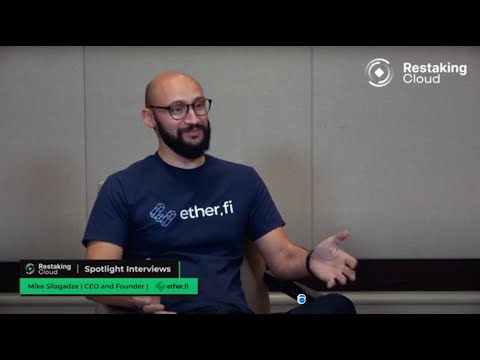
Mike Silagadze
Mike Silagadze is a Canadian software developer and entrepreneur best known as the founder and former CEO of Top Hat and as the founder and CEO of ether.fi. Ether.fi is a crypto‑native neobank on Ethereum that combines non‑custodial staking, automated yield and strategy vaults, and payment functionality in a single application, allowing users to save, grow, and spend crypto in one connected experience that includes staking ETH, deploying assets across decentralized finance (DeFi), accessing fiat on‑ and off‑ramps for global transfers, and paying for everyday goods with a linked payment card.[6][8][1]
Education
Silagadze graduated from the University of Waterloo in 2007 with a BASc in Electrical Engineering. He also worked as a developer at Miovision Technologies, a traffic solutions provider.[1]
Career
In 2009, Silagadze co‑founded and served as the CEO of Top Hat, a higher education app focused on replacing traditional education and making it more engaging for students.[1][2] Under his leadership, Top Hat grew to around 500 employees and became a leading provider of student engagement and dynamic courseware software in higher education.[1][16] Top Hat raised roughly C$300 million in venture funding, including a C$130 million round led by Georgian Partners, and in 2021 Silagadze stepped down as CEO while remaining on the company’s board.[17][16]
“I started Top Hat pretty much right out of undergrad and like a lot of good startups, good companies, the interest in the space and the problem that we were trying to solve really just grew out of my experience. In many ways, I was just solving a problem that I had when I was a university student.”
He later served as the CEO of Gadze Finance, a crypto‑focused quantitative DeFi asset management firm, from 2021 until February 2024.[1] According to coverage, Gadze Finance launched a DeFi crypto fund with around $25 million under management that used market‑neutral strategies such as market making, lending, borrowing, arbitrage, and dynamic hedging.[17] At the same time, he also became a venture partner at Ripple Ventures, a B2B SaaS startup investment venture fund in Canada and the U.S.[1] After selling his previous company, he relocated to the Cayman Islands to establish ether.fi and base its operations there.[9]

ether.fi
In October 2022, Silagadze founded ether.fi and serves as the CEO. In an interview with CryptoNews, he discussed why he started the company, his views on startup risk, and his interest in crypto.[3]
In November 2023, ether.fi launched its wrapped eETH product as part of its liquid restaking offering.[9] The protocol went on to raise a $23 million Series A round in February 2024, co‑led by Bullish Capital and CoinFund, bringing its total funding to $27 million when combined with a previously unannounced $4 million SAFE round that closed in late 2023.[6][7] According to DefiLlama data cited by CoinDesk, ether.fi’s total value locked rose from about $103 million at the start of 2024 to roughly $1.66 billion by late February 2024.[6] By March 2025, CoinDesk reported that ether.fi had around 2.6 million ETH staked on its platform, describing it as a leading restaking protocol by deposits at that time.[8]
Ether.fi later outlined a strategy to evolve from a restaking protocol into an “integrated DeFi bank” or crypto‑native neobank built around three main products: Stake, a staking and liquid restaking service; Liquid, an automated DeFi strategy product; and Cash, a wallet and credit card offering.[9][10][8] As part of this approach, ether.fi launched its Cash Visa card on the Scroll network, aiming to let users spend crypto while managing staking and DeFi positions within a single application as an alternative to traditional banking services.[8][10]
As the product suite expanded, ether.fi began describing itself as an onchain or crypto‑native neobank built on Ethereum, combining its restaking infrastructure with neobanking lines such as Stake, Liquid, and Cash, and emphasizing self‑custody and non‑custodial payment rails rather than traditional bank accounts.[8][9][10] In January 2026, Silagadze argued that crypto neobanks of this type were likely to be a major driver of Ethereum adoption in 2026 and subsequent years.[11]
According to industry coverage, ether.fi has operated a non‑custodial crypto card program since around 2024–2025, and by early 2026 partnered with exchange MEXC on a Visa card usable at more than 150 million merchants, offering up to roughly 4% cashback and availability across dozens of countries.[12] The card is integrated with the ether.fi Cash product so that users can either spend crypto directly or borrow against their onchain assets while retaining self‑custody.[12][10] Public comparisons between ether.fi’s card and competing offerings, such as KAST, have focused on fee structures, terms of service, and the distinction between custodial and non‑custodial card designs.[13]
In discussions of protocol risk, ether.fi has presented its approach as conservative compared with high‑leverage DeFi platforms, citing relatively low lifetime liquidation losses across its vaults and design choices intended to limit user leverage.[14] In 2026, ether.fi and Nexus Mutual announced a partnership to provide slashing cover for ether.fi validators of up to around 15,000 ETH, according to the companies, aimed at offering institutional‑scale protection against validator slashing events.[15]
“The first thing I would say is, look, most people shouldn't be starting companies. Doing a startup is a really, really bad idea, even joining a startup generally is a really bad idea for probably 99% of people or whatever the ratio is because the risk-reward, I mean, the fundamental sort of equation doesn't make sense for most people.”
He has emphasized the importance of being deliberate about startup commitments and co‑founder relationships, stating that founders should work with people they already know and trust rather than “pick a random person and [hope] it’ll just work out.”[3]
When asked why he moved to crypto, Silagadze described having followed the sector for years alongside his work on Top Hat, recalling that he bought Bitcoin in 2011 and experimented with early mining as a side project.[3] He explained that ether.fi’s design grew out of operating an ETH staking fund that used DeFi strategies, saying the team “evaluated all the different options available for [staking] and fairly quickly realized that there actually wasn't anything we were comfortable using ourselves,” which motivated them to build a protocol they would use.[3]
Towards the end of the interview, Silagadze outlined his preference for solo staking and described ether.fi’s Operation Solo Staker program, arguing that if the technical complexity could be managed “it's better [than pooled staking] in every way” and that subsidizing hardware and connectivity for solo node operators could help broaden participation.[3]

Presentations & Interviews
Decentralized RPC
Silagadze and Koray Koska discussed the potential of decentralized RPC with restaking. Silagadze highlighted that ether.fi is designed so that stakers retain control of their own keys, a setup that differs from many liquid staking protocols where assets are typically held by a central operator. Koska, the founder of ChainNodes, emphasized the benefits of decentralized RPC in enhancing security and censorship resistance while discussing technical aspects like load balancing and DNS decentralization via ENS. They explored the concept of restaking, where staked ETH automatically earns rewards without additional action, and its potential applications beyond Ethereum, including revenue generation for stakers.[4]

Staking and DeFi’s Future
On July 2, 2024, Mike Silagadze, CEO of Ether.Fi, appeared on the Nexo YouTube channel to discuss his views on staking, re-staking, and the future of decentralized finance (DeFi). According to Silagadze, one of the key focuses for Ether.Fi is enabling users to retain control of their private keys while staking, which promotes self-custody and reduces reliance on centralized entities. He highlighted Ethereum's transition from Proof of Work to Proof of Stake as a significant shift in the blockchain ecosystem, noting the challenges and opportunities that came with this evolution.

Silagadze discussed the rise of re-staking, a trend allowing users to stake their ETH across multiple networks, providing them with additional rewards. He emphasized that Ether.Fi has grown substantially, largely driven by this increasing interest in staking and re-staking solutions.
One of the central points he made was the importance of long-term thinking when it comes to both investing and building in the crypto space. He argued that prioritizing sustainable growth and value over short-term gains is key to mitigating risks and fostering lasting success.
From a technical perspective, Silagadze acknowledged the challenge of achieving full decentralization, particularly due to the concentration of Ethereum nodes in a few data centers. He sees a need for more solo stakers to help address this issue. Furthermore, he pointed to liquid staking, which offers flexibility by providing receipt tokens for staked ETH, as a tool for increasing participation in staking and securing the network.
Looking to the future, Silagadze envisions a shift in DeFi as real-world assets become tokenized and consumer applications are integrated, moving the industry beyond speculative trading. He also stressed the importance of navigating the complex regulatory landscape, noting that compliance will be crucial for the long-term viability of blockchain projects.
According to Silagadze, ether.fi’s product roadmap focuses on reducing technical barriers to staking, promoting self‑custody, and combining staking and DeFi functionality in a single application to make onchain financial services easier for everyday users to adopt.[5]
See something wrong?

Official Website:
Social Profiles: