0% read
Last updated:
Robinhood Chain
Robinhood Chain is a permissionless, Ethereum-compatible Layer 2 blockchain built to support the issuance and use of tokenized real-world assets alongside traditional onchain applications. It is designed to provide a developer-accessible network for deploying smart contracts and building financial applications with standardized tooling, lower transaction costs, and EVM compatibility. [5]
Overview
Robinhood Chain is a permissionless, Ethereum-compatible Layer 2 blockchain designed to support financial applications involving cryptocurrencies and tokenized real-world assets. The network is intended to enable the issuance, transfer, and management of onchain representations of assets such as equities, exchange-traded funds (ETFs), private assets, and other financial instruments, while supporting self-custody and continuous market access. It is open to developers and users alike, allowing anyone to deploy smart contracts, build decentralized applications, or operate network infrastructure, such as full nodes.
The blockchain is built on Arbitrum Dedicated Blockchains, leveraging Ethereum for security while delivering higher transaction throughput and lower fees via Layer 2 scaling. Robinhood Chain uses ETH as its native gas token and employs a first-come, first-served transaction-sequencing model to provide predictable transaction ordering. It is fully compatible with the Ethereum Virtual Machine (EVM), allowing existing Solidity and Vyper smart contracts to be deployed without modification and supporting common Ethereum development tools, wallets, and JSON-RPC interfaces. The network also includes native support for ERC-4337 account abstraction, enabling features such as programmable wallets, gas sponsorship, transaction batching, and session keys for developers building blockchain applications. [3]
Features
Agentic Trading
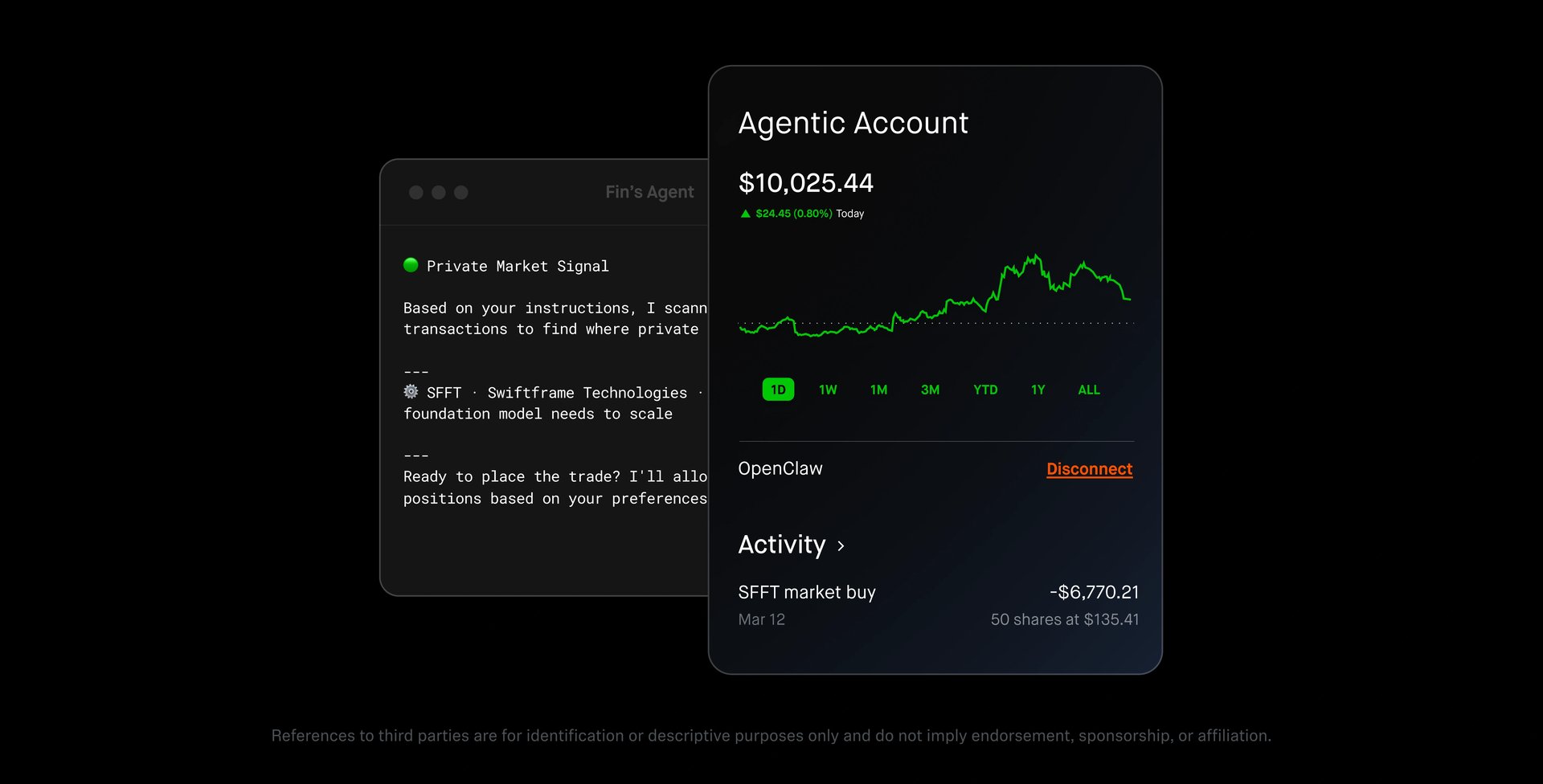
Agentic Trading is a Robinhood brokerage feature that enables users to connect third-party AI agents to dedicated trading accounts for automated investment analysis and order execution. The feature isolates agent-managed funds from a user's primary brokerage account, allowing the AI agent to analyze markets, build or rebalance portfolios, test trading strategies, and execute trades within a predefined budget. Users can monitor trading activity and portfolio performance through the Robinhood app, receive notifications when trades are executed, and disconnect the AI agent at any time. The service launched in beta with support for equity trading, with plans to expand to additional asset classes. Robinhood states that AI agents operate independently of its oversight, making users responsible for monitoring account activity and accepting the risks associated with automated trading decisions and third-party AI providers. [6] [10]
Agentic Credit Card

The Agentic Credit Card is a Robinhood feature that allows users to authorize third-party AI agents to make purchases using dedicated virtual credit cards linked to a Robinhood Gold Card account. Each virtual card can be assigned to a specific AI agent with configurable spending limits, optional manual transaction approvals, and no access to the user's primary card number or other Robinhood account information. Users can monitor transaction history, adjust spending controls, or revoke an agent's access by deleting the virtual card at any time. The feature enables AI agents to automate purchases based on user-defined criteria, such as price thresholds, product availability, or reservation openings. It is compatible with AI agents that support the Model Context Protocol (MCP), allowing agents to search for products, compare prices, and complete purchases within predefined limits. Transactions initiated by an authorized AI agent are treated as user-authorized purchases, with users retaining responsibility for configuring permissions and monitoring agent activity. [7] [10]
Stock Tokens
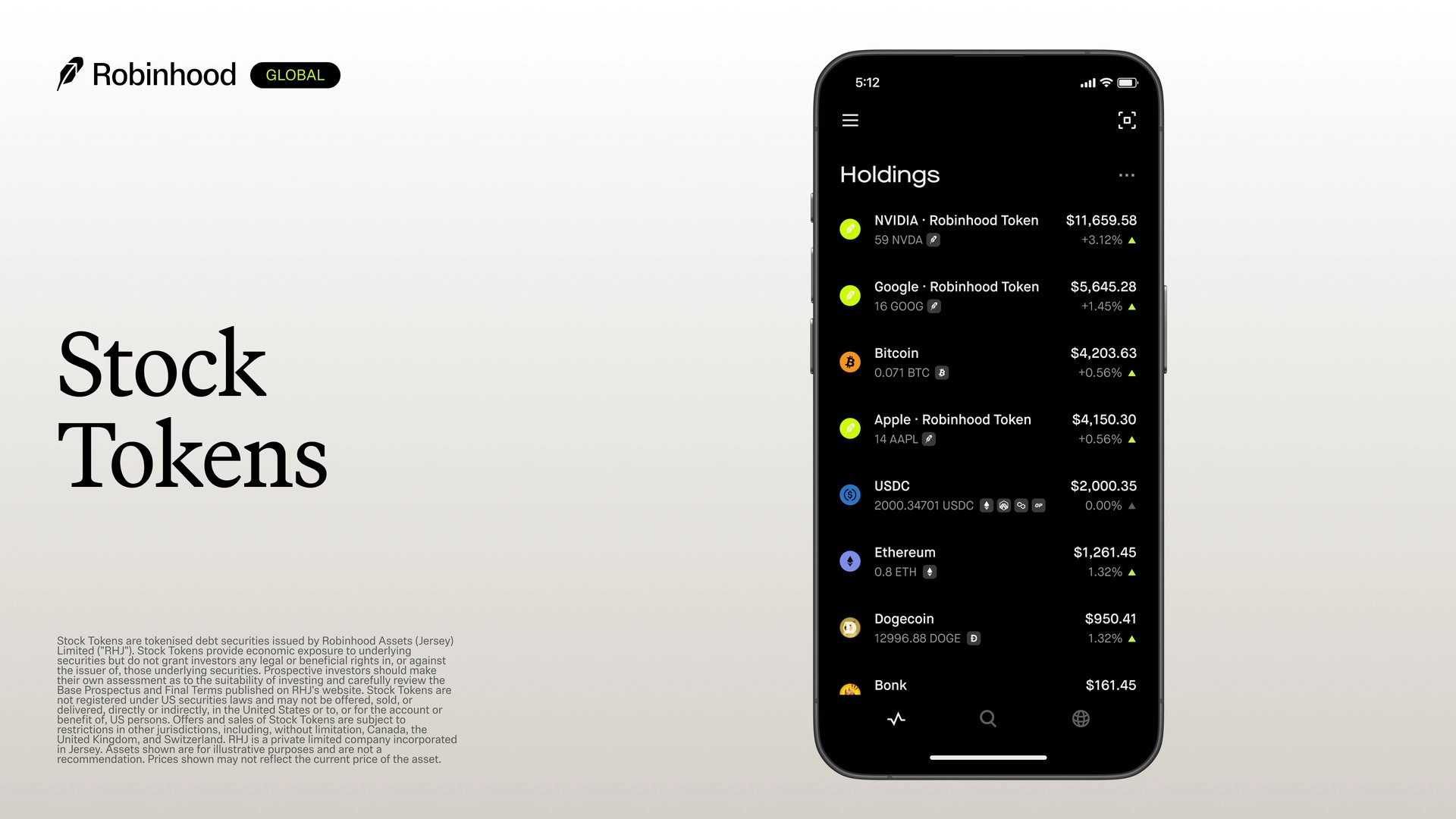
Robinhood Stock Tokens are tokenized real-world assets issued on Robinhood Chain as ERC-20 tokens that provide economic exposure to underlying U.S. stocks and exchange-traded funds (ETFs). The tokens are structured as tokenized debt securities issued by Robinhood Assets (Jersey) Limited rather than direct ownership of the underlying securities, meaning holders receive economic exposure but do not hold legal or beneficial ownership rights in the corresponding shares. Because they follow the ERC-20 standard, the tokens can be transferred, held in compatible wallets, and integrated into decentralized applications using existing Ethereum tooling. Each Stock Token represents a specific equity or ETF identified by its ticker symbol and includes an onchain Chainlink price feed that provides current pricing data for smart contracts. The tokens are designed to support a range of blockchain-based financial applications, including trading platforms, lending protocols, portfolio trackers, and other decentralized finance (DeFi) services. Corporate actions such as stock splits and dividend adjustments are managed through an onchain multiplier that updates the shares-per-token ratio while preserving token balances, allowing applications and price oracles to account for these changes without affecting onchain transfers or swaps. [4] [11]
Partnerships
See something wrong?